









The story of Clash of the Titans
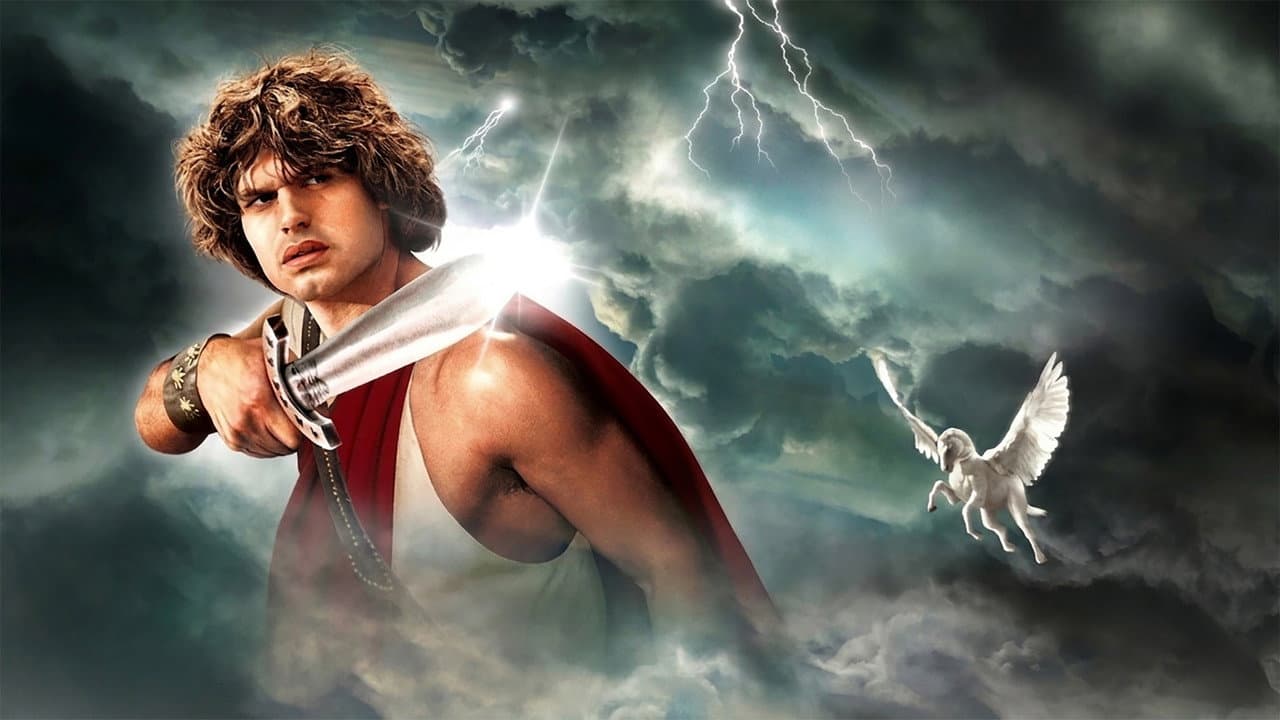
Clash of the Titans unfolds as an epic reimagining of Greek mythology, following Perseus, a half-mortal, half-divine hero tasked with an impossible series of quests. To win the hand of the beautiful princess Andromeda and secure his rightful place among the gods, Perseus must navigate a world of mythic dangers—taming the winged horse Pegasus, capturing the severed head of the Gorgon Medusa, and ultimately confronting the massive sea monster known as the Kraken. What makes this 118-minute adventure work isn't just the high stakes; it's the way the film treats these legendary trials as genuine obstacles rather than mere spectacle. The story builds momentum through each challenge, each one more daunting than the last, creating a narrative arc that feels earned rather than rushed.
The film opens with a rousing orchestral score from composer Laurence Rosenthal that immediately signals we're entering a world of grand, classical adventure. Right away, you're transported into a realm where gods meddle in mortal affairs, where fate isn't just a concept but an active force, and where a young man's courage—or lack thereof—will determine the fate of kingdoms. It's that combination of personal stakes and mythic grandeur that keeps viewers invested, whether they're watching for the first time or revisiting it decades later.
Behind the making of Clash of the Titans
Clash of the Titans arrived in 1981 as the culmination of decades of stop-motion innovation, directed by Desmond Davis and written by Beverley Cross, who crafted a script that honored Greek mythology while taking considerable creative liberties. The film was produced by the legendary partnership of Charles H. Schneer and Ray Harryhausen—the latter being the visual effects pioneer whose career spanned from the 1950s through this, his final major film work. That's significant: this wasn't just any fantasy adventure; it was the swan song of one of cinema's most influential craftspeople, and you can feel the care that went into every frame.
The cast assembled around Harry Hamlin's Perseus reads like a who's who of 1980s prestige cinema. Laurence Olivier lends gravitas as Zeus, Maggie Smith brings dry wit as Thetis, and Burgess Meredith—already a beloved character actor—steals scenes as the wise old seer Ammon. Judi Bowker plays Andromeda with a grace that elevates her beyond the typical "damsel" archetype, giving the princess agency and intelligence. These weren't B-list casting choices; they were actors who understood how to work within a fantasy framework without winking at the camera.
The production itself was a technical marvel for its time. Harryhausen's stop-motion animation—painstakingly created frame by frame—required months of work for sequences that lasted mere minutes on screen. The Kraken alone took weeks to animate. While the film didn't dominate the box office in the way some blockbusters do, it found its audience and has maintained a devoted following ever since, with an IMDb rating of 6.9 reflecting its status as a genuinely beloved classic rather than a critically overpraised curiosity.
What makes Clash of the Titans stand out
Here's what's striking about Clash of the Titans when you actually sit down and watch it: the stop-motion effects don't feel dated in the way you might expect. Yes, there's a handmade quality to them—you can see the craftsmanship, the slight jerkiness of stop-motion—but that's precisely what gives the film its charm and authenticity. When Perseus battles the skeletal soldiers in the tomb of the Stygian Witches, or when Medusa stalks through her lair, there's a tangible sense of danger because you're watching actual physical puppets interact with live actors, not a computer rendering something hypothetically. The effects work has weight.
What's equally important is that the film doesn't rely solely on spectacle. Harry Hamlin, though not the most charismatic lead, brings a genuine vulnerability to Perseus—he's not a cocky hero; he's a young man terrified of his own destiny, uncertain whether he can live up to the expectations placed upon him by gods and mortals alike. That internal conflict, that self-doubt, makes his eventual triumphs feel earned. The supporting cast, especially Olivier's commanding presence as Zeus and Smith's sharp-tongued Thetis, grounds the mythological elements in recognizable human emotion. They're not just spouting exposition; they're characters with conflicting agendas and real stakes in the outcome.
I keep coming back to one particular sequence: when Perseus first encounters Medusa, the film doesn't rush the moment. There's genuine dread in how the scene is paced, how the camera moves, how the sound design builds tension. It's not just a special effects showcase—it's filmmaking. That's the difference between a movie that's merely entertaining and one that endures. The film also doesn't shy away from darker moments: there's real tragedy woven throughout, a sense that not everyone will survive, that some choices carry permanent consequences. This wasn't a film made for a PG-13 world; it's genuinely adventurous in tone and scope.
Where to stream Clash of the Titans online
Clash of the Titans is currently available on major OTT services, so finding where to watch it isn't difficult—though availability can shift depending on your region and which streaming services you subscribe to. The Where to Watch widget at the top of this page will show you exactly which platforms are currently carrying the film in your area, making it easy to avoid the frustration of searching across multiple apps. Movie OTT tracks current streaming availability across major platforms, so you can jump straight to watching rather than wasting time hunting. Whether you're a longtime fan wanting to revisit this classic or a newcomer curious about what made 1980s fantasy cinema tick, the film is more accessible now than ever before. Just check the widget above to see which service has it available right now.
Frequently asked questions
Q: Is Clash of the Titans based on a true story?
No, it's based on Greek mythology—specifically the legend of Perseus. While the myths themselves are ancient, this 1981 film takes considerable creative liberties with the source material, inventing characters and plot points that don't appear in the original myths.
Q: Who directed Clash of the Titans?
Desmond Davis directed the film, with a screenplay by Beverley Cross. Ray Harryhausen, the legendary stop-motion effects artist, also served as co-producer alongside Charles H. Schneer.
Q: How long is Clash of the Titans?
The film runs 118 minutes, giving you nearly two hours of mythic adventure, monster battles, and special effects work.
Q: Was this Ray Harryhausen's last film?
Yes, Clash of the Titans represents the final major film work of Ray Harryhausen, making it a historically significant entry in cinema history and a fitting capstone to his groundbreaking career in stop-motion animation.
Q: What's the runtime and genre?
Clash of the Titans is a 118-minute adventure-fantasy-action film that blends mythological storytelling with spectacular visual effects and character-driven drama.
Final thoughts on Clash of the Titans
Clash of the Titans endures because it refuses to pick a lane. It's genuinely mythic yet deeply personal, spectacular yet intimate, a film that respects both its source material and its audience's intelligence. Forty-odd years after its release, it remains the gold standard for how to adapt classical mythology for the screen—not by pretending the myths are realistic, but by embracing their fantastical nature while grounding the characters in real emotion. Whether you're a fantasy fan, a cinema history buff, or just someone looking for a solid adventure film, this one delivers. Don't sleep on it.