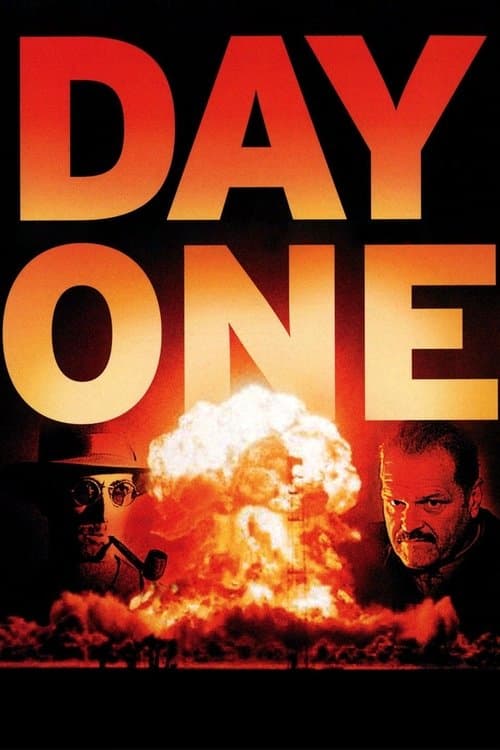
The Story of Day One: Science, War, and Moral Reckoning
Day One tells the true story of one of history's most consequential scientific undertakings—the Manhattan Project—through the eyes of those who built the bomb and those who came to doubt it. The narrative opens with Hungarian physicist Leo Szilard fleeing Europe in the 1930s, eventually reaching the United States where he and Albert Einstein persuade the American government that Nazi Germany might be developing atomic weapons. What follows is a race against time: the government assembles the brightest minds in physics and assembles them at Los Alamos Laboratory in New Mexico under the command of no-nonsense General Leslie Groves. As the war winds toward its end, Szilard—the man who helped spark the entire project—begins to question whether humanity is ready for such destructive power. The film's tagline captures the central tension perfectly: "This day will go down in history as a black mark against mankind." It's not a simple story of heroes or villains. Instead, it's about intelligent people wrestling with consequences they can't fully predict.
Behind the Making of Day One: Emmy-Winning Docudrama Excellence
Day One premiered on CBS on March 5, 1989, as a made-for-television movie produced by World International Network, Spelling Entertainment, and AT&T. Directed by Joseph Sargent and written by David W. Rintels, the film was based on Peter H. Wyden's historical account of the Manhattan Project. The casting alone signals serious ambition: Brian Dennehy brings gravitas to General Leslie Groves, while David Strathairn delivers a nuanced performance as J. Robert Oppenheimer, the brilliant physicist tasked with leading the Los Alamos effort. Michael Tucker plays Leo Szilard, the moral conscience of the narrative. That same year, at the 41st Primetime Emmy Awards, Day One won the Emmy for Outstanding Drama or Comedy Special—a significant recognition for a television movie that could have easily played as a dry historical recreation. The film's 141-minute runtime allows it to breathe, to develop character arcs and philosophical debates without rushing through the material. Critics praised it specifically for balancing historical accuracy with dramatic storytelling, a feat that's harder to pull off than it sounds. When a film about real events and real people gets the historical details right and keeps you engaged, that's worth noting.
What Makes Day One Stand Out: Performance, Pacing, and Moral Ambiguity
What's striking about Day One is how it refuses to simplify its characters into heroes or villains—everyone's trying to do the right thing, and everyone's partly wrong. Dennehy's Groves is a military man solving a military problem with discipline and focus, yet the film doesn't mock him for that. Strathairn's Oppenheimer carries the weight of leadership with visible strain. And Szilard's journey from convinced advocate to troubled conscience forms the emotional spine of the entire film. The dialogue crackles with the kind of intellectual debate you don't often see in television drama, where physicists and generals actually grapple with the ethics of what they're building rather than just the logistics. The script doesn't hand you easy answers. Instead, it presents policy makers debating how and when to use the bomb—a question that still haunts historians and ethicists decades later. One moment that lingers: Szilard's growing horror as he realizes the project has taken on a momentum of its own, that stopping it may now be impossible. The film trusts its audience to sit with moral complexity. That's rare in mainstream television, even now. Movie OTT catalogs films like this—thoughtful historical dramas that reward patient viewing—making it easier to find substantive entertainment among the noise of streaming catalogs.
Where to Stream Day One Online
Day One is currently available on major OTT services, and you can check the "Where to Watch" widget at the top of this page to see which platform has it in your region right now. Streaming availability shifts regularly, so that widget is your real-time guide. Whether you're subscribed to the usual suspects or you're hunting through less obvious platforms, Movie OTT keeps tabs on where this Emmy winner lives at any given moment. The advantage of a 1989 TV movie is that it's often in rotation on services that specialize in classic television and prestige dramas—so you've got options.
Frequently Asked Questions
Q: Is Day One based on a true story?
Yes. Day One dramatizes real events from the Manhattan Project during World War II, based on Peter H. Wyden's historical book. While the filmmakers took dramatic license with dialogue and some scenes, the core historical facts—the physicists involved, the government's decision to build the bomb, and the moral debates that surrounded it—are grounded in actual history.
Q: Who directed Day One and what awards did it win?
Joseph Sargent directed the film, which was written by David W. Rintels. Day One won the Primetime Emmy Award for Outstanding Drama or Comedy Special at the 41st Primetime Emmy Awards in 1989, a major achievement for a television movie.
Q: How long is Day One?
The film runs 141 minutes (just over two hours), which gives it plenty of time to develop its characters and explore the moral complexities of the Manhattan Project without feeling rushed.
Q: What's the main plot of Day One?
The film follows physicist Leo Szilard as he helps convince the U.S. government to build an atomic bomb, working alongside Albert Einstein and under the command of General Leslie Groves and physicist J. Robert Oppenheimer. As World War II winds down, Szilard has second thoughts about the weapon he helped create, and the film explores the debate over how and when to use the bomb.
Q: How is Day One different from other Manhattan Project films?
Day One focuses heavily on the moral and ethical dimensions of the project rather than just the technical achievement. The film gives significant weight to Szilard's growing doubts and the policy debates about deployment, making it as much a character study as a historical drama.
Final Thoughts on Day One: A Thoughtful Historical Drama Worth Your Time
Day One isn't flashy or manipulative. It doesn't lean on explosions or manufactured tension—it trusts you to care about smart people thinking hard about impossible choices. That's precisely why it won an Emmy and why it's held up so well over three decades. If you're looking for serious historical drama that respects both accuracy and storytelling craft, this one delivers. The performances are measured and intelligent, the writing doesn't talk down to you, and the 141 minutes fly by. It's the kind of film they don't make as often anymore, which makes finding it on your preferred streaming service all the more worthwhile.