

The Story of Nine Hours to Rama
Nine Hours to Rama reconstructs a pivotal moment in modern history through the lens of psychological suspense. The film follows a fictionalized account of Nathuram Godse—the man who would assassinate Mahatma Gandhi—across a single, tense day before the murder. Rather than a straightforward historical document, director Mark Robson crafted something closer to a noir procedural, tracking both Godse's internal turmoil and the desperate efforts of police investigators racing to prevent tragedy. It's a film that asks uncomfortable questions: What drives an ordinary person to commit an extraordinary act of violence? Can you understand motivation without excusing the act itself? The 124-minute runtime gives the narrative breathing room to explore these tensions without rushing toward the inevitable conclusion.
Behind the Making of Nine Hours to Rama
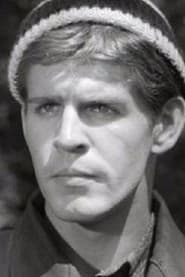
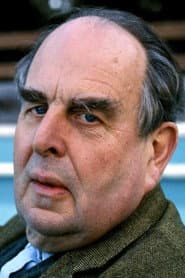
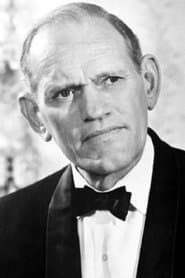
Nine Hours to Rama emerged from Stanley Wolpert's 1962 novel of the same name, adapted for screen by Nelson Gidding. The production itself was something of a logistical and political gamble. Shot in both England and India using CinemaScope DeLuxe Color, the filmmaking team faced a hostile environment—the picture was filmed clandestinely throughout India, a nation still raw from Gandhi's death just fifteen years prior. That caution proved prescient. Upon release, the film was banned in India, as was Wolpert's source novel, a decision that speaks volumes about how sensitive the subject remained in the country where it unfolded. The cast assembled was noteworthy: José Ferrer (an Oscar winner for Cyrano de Bergerac), Austrian-German actor Horst Buchholz, American actress Diane Baker, and British character actor Robert Morley brought substantial pedigree to what could easily have become a exploitative piece. Instead, 20th Century Fox and production company Red Lion invested in a serious dramatic work, even if the predominantly white casting in prominent roles—a choice that'd draw criticism today—reflected the era's Hollywood assumptions about international prestige pictures.
What Makes Nine Hours to Rama Stand Out
The film's strength lies in its refusal to offer easy answers. What's striking is how it doesn't simplify Godse into a caricatured villain—instead, Buchholz's performance captures something more unsettling: a man convinced of his own righteousness, trapped in a web of political ideology and personal grievance. The supporting cast anchors the investigation side of the narrative, where police work becomes almost as tense as the killer's internal monologue. Critics have noted that the film tries harder than it succeeds; the pacing can feel plodding, and the casting of white actors in Indian roles—particularly in smaller parts—creates a distance from the material that's difficult to overlook even six decades later. That said, the film's willingness to spend time in Godse's headspace, to make viewers uncomfortable by proximity to his thinking, remains its most provocative element. It's not comfortable viewing, and that's partly the point. The craftsmanship in the cinematography and editing deserves mention too—the CinemaScope framing captures both intimate psychological moments and the bustling streets of India with genuine visual interest.
Where to Stream Nine Hours to Rama Online
Nine Hours to Rama is currently available on major OTT services, and you can check the Where to Watch widget at the top of this page for real-time platform availability in your region. Streaming rights shift frequently, so Movie OTT keeps its database updated across Netflix, Prime Video, and other major platforms. If you're hunting for historical thrillers or 1960s crime dramas, this is worth tracking down—it's not as readily accessible as newer titles, but it surfaces regularly on curated classic film collections. The film's restoration in color and widescreen format actually plays better on modern streaming than it might've in earlier home video releases, so catching it now is genuinely worthwhile.
Frequently Asked Questions
Q: Is Nine Hours to Rama based on a true story?
Yes and no. The assassination of Gandhi is historical fact—it happened on January 30, 1948. The film fictionalizes the events leading up to it, based on Stanley Wolpert's 1962 novel, which itself dramatizes Godse's motivations and the police investigation. It's historical fiction, not a documentary.
Q: Why was Nine Hours to Rama banned in India?
The film was banned because it dramatized the assassination of a national hero still deeply mourned in India. The subject was (and remains) extraordinarily sensitive, and depicting Godse's perspective—even in a critical light—was deemed too controversial for Indian audiences at the time.
Q: Who directed Nine Hours to Rama?
Mark Robson directed the film. Robson was an accomplished Hollywood director known for his work on Peyton Place and later disaster films. His approach to this material was serious and methodical, treating the subject with dramatic gravity rather than sensationalism.
Q: How long is Nine Hours to Rama?
The film runs 124 minutes (just over two hours). That runtime allows the narrative to build tension gradually rather than rushing through the political and personal circumstances that led to the assassination.
Q: What's the IMDb rating for Nine Hours to Rama?
The film holds a 6.2 out of 10 on IMDb, reflecting mixed audience reception. Some viewers appreciate its ambition and willingness to tackle difficult subject matter; others find the pacing uneven or the casting choices problematic by modern standards.
Final Thoughts on Nine Hours to Rama
Nine Hours to Rama isn't a perfect film, but it's a necessary one—a historical thriller that refuses to simplify its subject or offer comfortable moral conclusions. It's worth watching precisely because it's uncomfortable, because it asks you to understand (without endorsing) the thinking of an assassin, because it takes seriously the idea that history isn't just about outcomes but about the human beings caught in its currents. If you're interested in 1960s cinema, historical drama, or the intersection of politics and personal conviction, this deserves your time. Movie OTT makes tracking down these older, harder-to-find titles straightforward—so give it a shot.