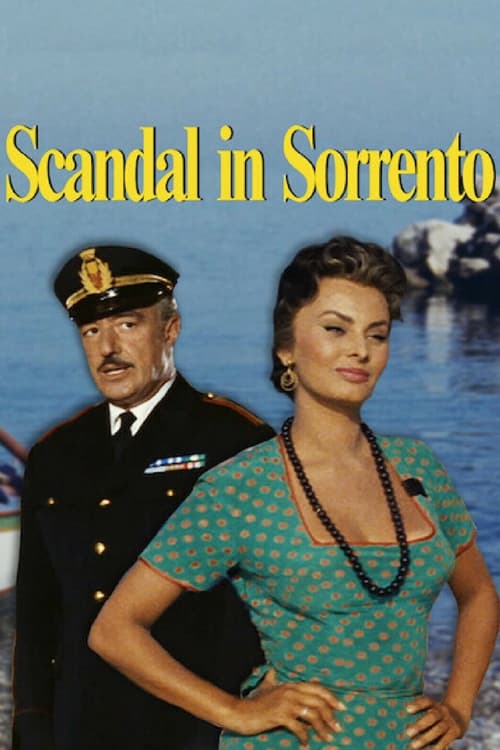
The Story of Ferdinand I King of Naples
Ferdinand I King of Naples is a 1959 comedy that takes a decidedly tongue-in-cheek approach to history. The film doesn't pretend to be a rigorous historical document—instead, it's a romp through the court of the Bourbon king, where scheming courtiers, romantic entanglements, and outright absurdity collide in ways that prioritize laughs over accuracy. What unfolds is a portrait of royal life filtered through the lens of Italian and French comedy sensibilities, where the pomp and ceremony of the throne becomes the backdrop for character-driven humor and situational chaos. The 105-minute runtime moves briskly through the various machinations of court life, never lingering long enough to bog down the narrative in heavy historical detail.
Behind the Making of Ferdinand I King of Naples
Director Gianni Franciolini assembled an ensemble cast that reads like a who's-who of mid-century European cinema. Marcello Mastroianni—already becoming one of the continent's most bankable stars—shares the screen with Vittorio De Sica, a titan of Italian neorealism who'd already won an Academy Award for Best Director by the time this film rolled cameras. The De Filippo siblings—Peppino, Eduardo, and Titina—bring their particular brand of Neapolitan comedic timing to the proceedings, a family legacy of vaudeville and theatrical comedy that had deep roots in Italian popular entertainment. Leslie Phillips, the British character actor, rounds out the international flavor of the production. The film's Franco-Italian co-production status reflects the postwar European cinema landscape, where filmmakers and studios increasingly collaborated across borders to finance and distribute ambitious projects. While Ferdinand I King of Naples didn't become a major box-office sensation or sweep awards ceremonies, it represents a moment when European studios were still willing to fund ensemble comedies with substantial casts and production values—a practice that'd become rarer as the decade wore on.
What Makes Ferdinand I King of Naples Stand Out
What's striking about Ferdinand I King of Naples is how it balances ensemble comedy with genuine affection for its characters. The performances anchor the whole thing—you've got Mastroianni doing his charming, slightly befuddled routine, while De Sica brings gravitas even to comedic moments, and the De Filippo trio steals scenes with the kind of physical and verbal humor that doesn't always translate cleanly across borders or decades. The thing nobody mentions is that historical comedies of this era often relied on broad caricature, yet here the filmmakers seem genuinely interested in giving their cast room to breathe and develop comic rhythms. There's a scene midway through where the court attempts to orchestrate a diplomatic dinner that descends into complete pandemonium—nothing revolutionary, but it's executed with enough charm and timing that you can see why these actors were sought after by major directors. The humor won't land the same way for modern audiences (it's got that 1950s sensibility that can feel both quaint and oddly dated), but there's craft here. The cinematography captures the period costumes and set design with a kind of Technicolor sheen that's visually pleasant, even if the IMDb rating of 5.7/10 suggests critical consensus has cooled considerably since its theatrical release.
Where to Stream Ferdinand I King of Naples Online
Ferdinand I King of Naples is currently available on Netflix, making it accessible to subscribers looking for classic European comedies from the late 1950s. Netflix's catalog includes a surprising depth of older international films, and this title fits neatly into that collection for viewers interested in mid-century cinema or the work of its ensemble cast. If you're using Movie OTT to track where films are streaming—which aggregates availability across major platforms—you'll find the Where to Watch widget at the top of this page shows Netflix as your current option. That said, streaming rights shift regularly, so it's worth checking that widget before you settle in to watch, especially if you're reading this months after publication.
Frequently Asked Questions
Q: Who directed Ferdinand I King of Naples?
Gianni Franciolini directed the film in 1959. Franciolini was an Italian director who worked across comedy and drama throughout the 1950s and 1960s, though he's not as widely remembered today as some of his contemporaries.
Q: Is Ferdinand I King of Naples based on a true story?
While the film is named after the historical King Ferdinand I of Naples (who reigned in the 18th century), the movie takes significant comedic liberties with history. It's more of a fictionalized romp inspired by the period than a biographical account, prioritizing entertainment over historical accuracy.
Q: What's the runtime of Ferdinand I King of Naples?
The film runs 105 minutes, which was a fairly standard length for European comedies of the era. It moves at a brisk pace without feeling rushed, though modern viewers accustomed to tighter editing might find some sequences leisurely.
Q: Can I watch Ferdinand I King of Naples with subtitles?
Since Ferdinand I King of Naples is a Franco-Italian co-production, availability of dubbed versus subtitled versions depends on your Netflix region and account settings. Movie OTT tracks current streaming availability, so check the platform details in the Where to Watch widget for subtitle and language options in your area.
Q: Who are the main actors in Ferdinand I King of Naples?
The ensemble includes Marcello Mastroianni, Vittorio De Sica, the De Filippo siblings (Peppino, Eduardo, and Titina), Aldo Fabrizi, and British actor Leslie Phillips. It's a genuinely star-studded cast for a mid-budget European comedy.
Final Thoughts on Ferdinand I King of Naples
Ferdinand I King of Naples won't change your life, and it's not destined for rediscovery as some lost masterpiece. But it's a solid example of mid-century European comedy craftsmanship—the kind of film that studios don't really make anymore. If you're a fan of Mastroianni or De Sica, or if you're just curious about how Italian and French filmmakers approached historical comedy in 1959, it's worth the 105 minutes. The fact that it's on Netflix makes sampling it a low-stakes proposition. Don't expect brilliance. Just expect competent, charming entertainment from a different era.