





The Story of Gate of Flesh: Survival in Occupied Tokyo
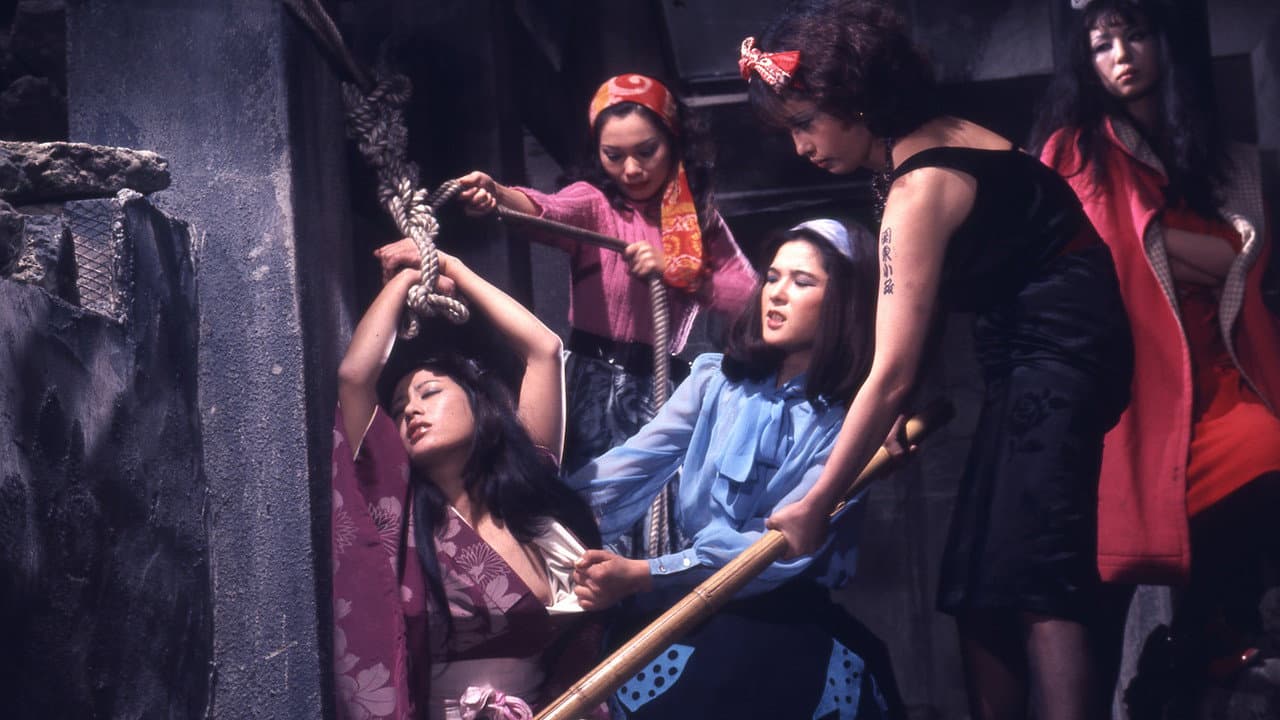
Gate of Flesh unfolds against the backdrop of Yuraku-cho, Tokyo's infamous red-light district during Japan's post-war reconstruction. The film follows a group of women who'd lived relatively sheltered lives before the war—women thrust into economic desperation by the collapse of the old order. What emerges isn't a melodrama of victimhood, but rather a portrait of how these women fought to stay alive, to maintain dignity, and to forge bonds of solidarity in circumstances that offered them almost no way out. Suzuki's lens doesn't flinch from the moral ambiguity of their survival. Instead, it examines how women navigated a system designed to exploit them, and what it cost.
Behind the Making of Gate of Flesh: Suzuki's Masterwork at Nikkatsu
Gate of Flesh arrived in 1977 as part of what critics would later call Seijun Suzuki's "flesh trilogy"—a series of films made during his most creatively fertile period at Nikkatsu Corporation, the legendary Japanese studio that produced everything from yakuza pictures to exploitation dramas. Suzuki, already known for his visual audacity and willingness to challenge studio conventions, crafted Gate of Flesh as a work of both artistic ambition and social commentary. The film drew on a novel by Taijiro Tamura, a writer who'd explored similar themes of post-war displacement and moral compromise. At 97 minutes, the film doesn't waste time; it moves with purpose and visual intensity. Nikkatsu's backing gave Suzuki the resources to make something that looked expensive and felt urgent—a combination that made the studio's output during this era the crowning achievement of its entire history. The cast brought a raw authenticity to their roles, performing in a style that avoided the theatrical excess of earlier Japanese cinema. This wasn't prestige drama in the traditional sense. It was provocation dressed in the language of commercial filmmaking.
What Makes Gate of Flesh Stand Out: Allegory, Craft, and Uncompromising Vision
What's striking about Gate of Flesh is how directly it works as both social document and allegory. The film doesn't hide behind metaphor—it shows you the women, the transactions, the hierarchy of the district, the violence that underpins the system. At the same time, Suzuki uses the specificity of this milieu to comment on something much larger: Japan's post-war settlement itself. The occupation had promised transformation, a break with militaristic authoritarianism and feudal social structures. Instead, what Suzuki captures is the reconstitution of those same hierarchies in a new form. The men who exploit these women aren't cartoonish villains; they're ordinary operators within a system that's been rebuilt to look modern while preserving all the old power dynamics. The performances anchor this critique—the women feel like actual people making impossible choices, not symbols or victims waiting for rescue. There's a specificity to how they move, speak, and relate to one another that keeps the film from becoming didactic. I keep coming back to how Suzuki refuses to let you look away, and refuses to let you feel comfortable with easy moral judgments. The cinematography is stark, sometimes almost documentary-like, which makes the moments of visual beauty—a reflection in a window, light through fabric—land with real force.
Where to Stream Gate of Flesh Online
Gate of Flesh is currently available on major OTT services, and Movie OTT tracks its current streaming availability across platforms so you can find exactly where to watch it right now. The film's availability does shift between services, so checking the Where to Watch widget at the top of this page will show you the most up-to-date options in your region. Given the film's historical significance and its place in Suzuki's career, it's worth seeking out wherever it's currently streaming—this isn't a title that plays on every platform, so if you spot it, that's your window.
Frequently asked questions
Q: Who directed Gate of Flesh?
Seijun Suzuki directed Gate of Flesh in 1977. It was made during his most acclaimed period at Nikkatsu Corporation and is considered the first film in what became known as his "flesh trilogy," a series that represents some of the studio's finest work.
Q: What is Gate of Flesh based on?
The film is based on a novel by Taijiro Tamura, a writer who explored themes of post-war displacement and moral compromise in occupied Japan. Suzuki adapted the source material into a visual critique that goes beyond the original story.
Q: Is Gate of Flesh a true story?
While Gate of Flesh isn't a direct account of specific historical events, it's grounded in the real conditions of post-war Tokyo's red-light districts and the actual experiences of women who survived the occupation period. It functions as both fiction and social document.
Q: How long is Gate of Flesh?
The film runs 97 minutes, making it a lean, focused work that doesn't waste time establishing its world or its critique.
Q: Where can I watch Gate of Flesh?
Gate of Flesh streams on major OTT platforms. Use the Where to Watch widget on this page to see current availability in your region, as streaming rights shift regularly.
Final Thoughts on Gate of Flesh: A Film That Demands Attention
Gate of Flesh isn't comfortable viewing, and it's not meant to be. Sixty-plus years after its release, Suzuki's film still feels urgent because the questions it asks—about power, survival, dignity, and how systems perpetuate themselves—haven't gone away. If you're interested in Japanese cinema beyond the samurai and yakuza films that dominate international awareness, or if you want to understand how post-war Tokyo actually looked and felt, this is essential. It's a work of both artistic craft and moral seriousness, rare in any era.