The Story of Hare Splitter
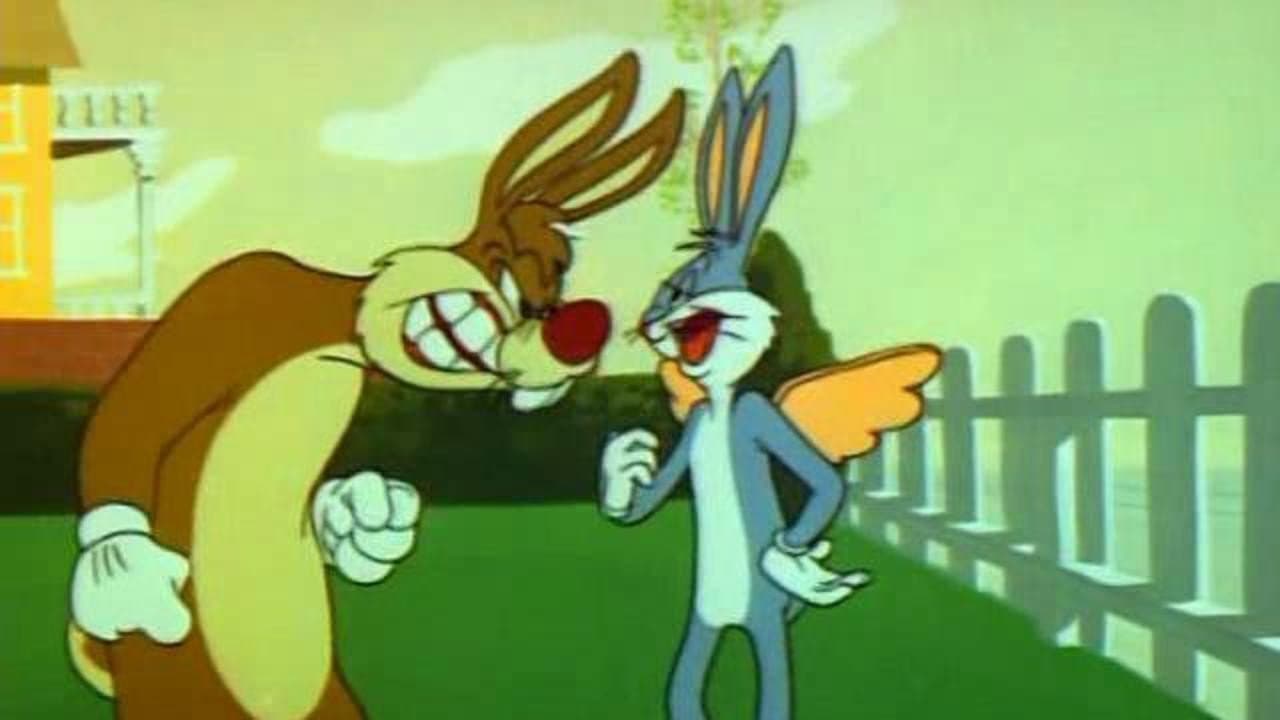
When Bugs Bunny arrives for a romantic date with Daisy Lou, he finds her out shopping—leaving him alone with an unexpected problem. His rival, Casbah, has shown up with the same intentions. Rather than accept defeat, Bugs does what Bugs does best: he improvises. He raids Daisy's closet, slips into her clothes, and sets out to confuse and manipulate Casbah into sabotaging his own chances. It's a setup that sounds simple, maybe even a bit thin for a seven-minute short, but in the hands of Friz Freleng and the Warner Bros. animation team, it becomes something much sharper—a commentary on obsession, competition, and just how far a rabbit will go to win a date.
The title itself is a clever pun. "Hair splitting" usually means getting bogged down in trivial details, but here it works on two levels: Bugs is literally splitting hairs (and a relationship) to get what he wants. That kind of wordplay was standard for Merrie Melodies shorts, where the title often set the comedic tone before the first frame even rolled.
Behind the Making of Hare Splitter
Hare Splitter emerged from Warner Bros. Cartoons on September 25, 1948, directed by Friz Freleng—one of the studio's most prolific and inventive animators. Freleng had spent years refining the Bugs Bunny formula, and by 1948, he knew exactly which buttons to push. The short was produced during the final golden age of theatrical cartoon shorts, when studios still funded seven-minute pieces that played before feature films. This was before television, before streaming, when these cartoons were a guaranteed draw at the box office.
Warner Bros. Pictures and Warner Bros. Cartoons invested heavily in their animation department during this era. The voice acting came courtesy of the studio's regular talent roster—Mel Blanc as Bugs, naturally, along with supporting voice work that brought Daisy Lou and Casbah to life. The animation itself was handled by a team of skilled in-betweeners and key animators whose names rarely made the credits but whose work defined an entire generation's sense of humor and movement.
Though specific box office figures for individual shorts aren't well-documented the way feature films are, Merrie Melodies cartoons were consistently profitable and popular. They won Academy Awards, they filled theaters, and they've survived in the cultural memory far longer than many live-action films from the same year. Hare Splitter itself carries an IMDb rating of 6 out of 10—respectable for a short that's now over 75 years old and still watchable on Movie OTT and other major streaming platforms.
What Makes Hare Splitter Stand Out
What's striking is how much character work Freleng packed into seven minutes. Bugs isn't just a trickster here—he's vain, competitive, and weirdly committed to the bit. When he puts on that dress, he doesn't just throw it on; he commits to the performance in a way that feels almost method. The physical comedy lands because the animators understood weight, timing, and the exact milliseconds needed for a gag to register before moving to the next one.
The thing nobody mentions about these old Warner Bros. shorts is how they relied on a kind of visual shorthand that audiences understood instantly. A character's walk, a raised eyebrow, the angle of a hat—these told you everything. Bugs's exaggerated feminine movements when dressed as Daisy Lou aren't just funny; they're a commentary on performance itself. He's playing a role, and the cartoon knows it's a role, and the audience knows it too. It's a layer of meta-humor that feels surprisingly modern for 1948.
Casbah, the rival, is drawn and voiced as a kind of smooth-talking schemer—the type of character who'd twirl a mustache if he had one. The conflict between these two personalities, one adaptive and clever and the other rigidly confident, creates a comedic engine that doesn't run out of gas in seven minutes. I keep coming back to how economical the storytelling is. There's no wasted movement, no padding. Every scene advances the gag or deepens the character dynamics. That's craft. That's why people still watch this thing.
Streaming services and animation historians have kept these shorts alive, and if you're tracking where classic cartoons live online, Movie OTT maintains a current database of which platforms carry them and when they rotate in and out of availability.
Where to Stream Hare Splitter Online
Hare Splitter is available on major OTT services, and you can check the "Where to Watch" widget at the top of this page for current streaming availability. The specific platforms rotate their classic Warner Bros. content based on licensing agreements, so it's worth checking which service has it in your region right now. Some streamers focus on family-friendly content and keep these cartoons permanently in their libraries, while others cycle them seasonally. The widget above will save you time—it's updated in real-time and shows you exactly where you can watch without hunting through three different apps.
Frequently Asked Questions
Q: Who directed Hare Splitter?
Friz Freleng directed Hare Splitter. Freleng was one of Warner Bros.' most accomplished animation directors and worked extensively with Bugs Bunny throughout the character's career, creating some of the most memorable cartoons of the golden age.
Q: When was Hare Splitter released?
Hare Splitter premiered on September 25, 1948, as a theatrical short distributed by Warner Bros. Pictures. It was part of the Merrie Melodies series, which meant it was in color and designed to play before feature films in cinemas.
Q: How long is Hare Splitter?
The short runs seven minutes, which was standard length for theatrical cartoon shorts of that era. That runtime allowed for a complete story arc without feeling rushed or overstaying its welcome.
Q: Is Hare Splitter appropriate for kids?
Yes. Though it's from 1948, Hare Splitter contains no objectionable content by modern standards. It's slapstick comedy with cross-dressing humor that's played for laughs rather than anything mean-spirited. Kids and adults both enjoy it.
Q: What's the title's meaning?
"Hair splitting" typically refers to obsessing over minor details. The title works as a pun because Bugs is literally trying to "split" (separate) Casbah and Daisy Lou so he can have her to himself. It's the kind of clever wordplay Warner Bros. Cartoons specialized in.
Final Thoughts on Hare Splitter
Hare Splitter doesn't need to be "rediscovered." It never really went away. Animation fans, Warner Bros. completists, and anyone curious about where modern comedy comes from will find something to love here. The short proves that you don't need a feature-length runtime to tell a satisfying story or land consistent laughs. Seven minutes. That's all Freleng and his team needed. Watch it if you're a Bugs Bunny fan, watch it if you care about animation history, or watch it if you just want to see how comedy used to work—before everything got so complicated.