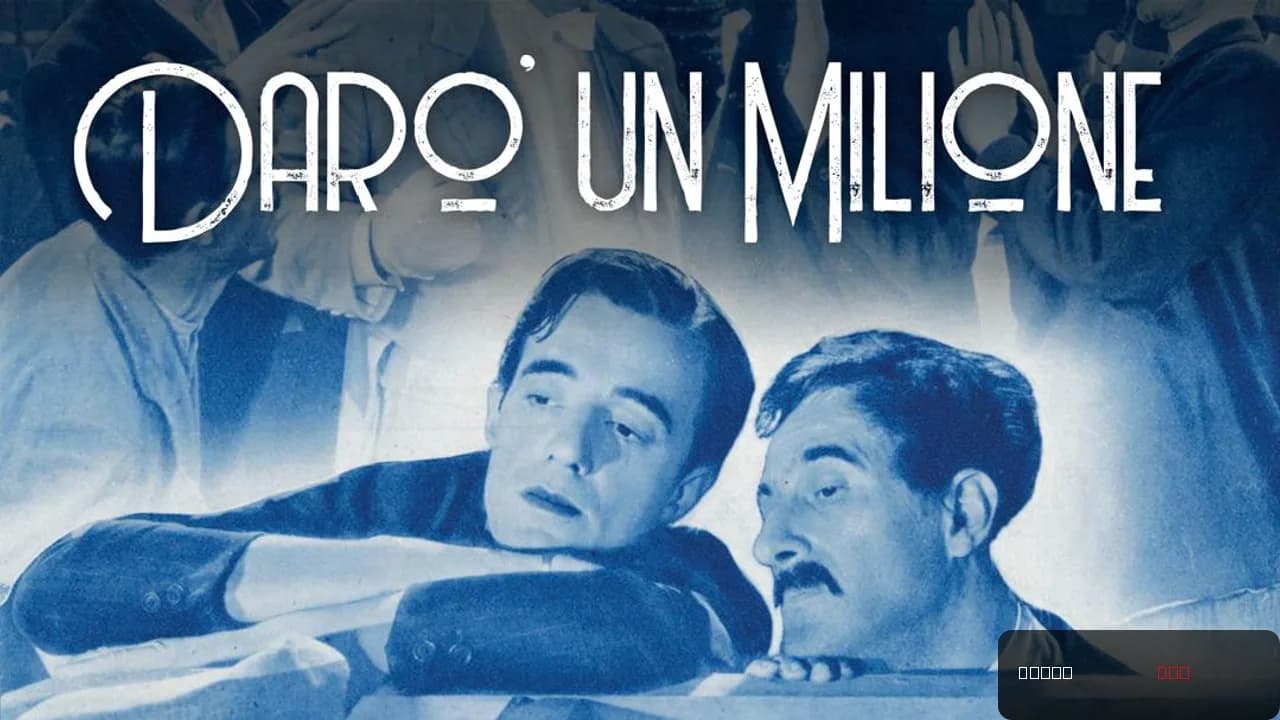

The story of I'll Give a Million and its premise of wealth versus authenticity
I'll Give a Million tells the story of a man who has everything except what actually matters. Warner Baxter plays Newlander, a millionaire so suffocated by the hypocrisy surrounding his wealth that he's willing to abandon it all—at least temporarily—to discover who he really is when nobody knows his bank account. The setup is deceptively simple: after rescuing a drowning man from his yacht, Baxter's character proposes a wager. He'll exchange clothes and identities with the vagrant, living as a penniless wanderer while offering a substantial reward—one million francs—to anyone who can convince him that they value him for himself alone, not his money. What unfolds is a surprisingly tender exploration of class, belonging, and what we're really searching for when we claim to want freedom.
Behind the making of I'll Give a Million as a Hollywood remake
I'll Give a Million arrived in 1938 as an American adaptation of an Italian film from three years prior, directed by Walter Lang, who'd already proven his knack for blending comedy with heart. The decision to remake the Italian original speaks to the film's universal appeal—the fantasy of shedding one's identity, if only for a moment, transcends borders. Baxter, a reliable leading man of the era, carries the film with the kind of earnest charm that makes his character's transformation believable rather than precious. The supporting cast is nothing to overlook: Peter Lorre, always magnetic even in smaller roles, brings a peculiar melancholy to the vagrant Louis; Jean Hersholt lends gravitas; and John Carradine rounds out an ensemble that feels genuinely committed to the material. At 74 minutes, the film moves briskly—no wasted scenes, no padding—which was typical of the era's studio system efficiency. While the picture didn't become a box office phenomenon, it found an audience among viewers who appreciated its lighter touch on what could've been a heavier social commentary.
What makes I'll Give a Million stand out among Depression-era comedies
The thing that strikes you about I'll Give a Million is how it manages to be both frivolous and sincere without tipping into saccharine territory. Here's a film that could've easily become a sermon about the corrupting nature of wealth, yet it resists that temptation. Instead, it's genuinely funny—not in the broad slapstick way, but in the small, observational moments when Baxter's character bumbles through life without money, discovering that poverty comes with its own indignities and complications he never anticipated. What's striking is how the film doesn't pretend that living on the streets is some romantic adventure. Peter Lorre's Louis isn't a noble pauper waiting to be saved; he's a man who didn't even want to be rescued in the first place, and that refusal to sentimentalize his situation gives the whole enterprise a welcome edge. The performances anchor the film in a kind of reality—even as the premise itself is pure fantasy. Baxter brings a vulnerability to wealth that you don't always see in 1930s Hollywood; he's not playing a villain or a fool, just a man who's bored and searching. The chemistry between Baxter and Marjorie Weaver, who plays the romantic interest, feels earned rather than imposed. There's a patience to how their relationship develops that reflects the film's overall refusal to rush toward easy resolutions.
Where to stream I'll Give a Million online
I'll Give a Million is currently available on Prime Video, making it accessible to anyone with an Amazon subscription. The film's availability on a major streaming platform means you don't need to hunt through specialty distributors or wait for a cable broadcast—it's right there whenever you want to watch. If you're using Movie OTT to track where classic films are streaming, you'll find the Where to Watch widget at the top of this page shows all current platforms carrying the title. Since streaming rights shift regularly, it's worth checking that widget to confirm availability in your region before you settle in. The print quality on Prime Video is generally solid for a film of this age, though don't expect a pristine restoration—this is a working copy of a 1938 picture, and it shows its age in the best way.
Frequently asked questions
Q: Who directed I'll Give a Million?
Walter Lang directed the film in 1938. Lang was a prolific Hollywood director known for his ability to blend comedy with emotional sincerity, and I'll Give a Million showcases that skill across its 74-minute runtime.
Q: Is I'll Give a Million based on a true story?
No, it's not based on a true story. However, it is a remake of an Italian film also titled I'll Give a Million from 1935, which means the story concept originated abroad and was adapted for American audiences.
Q: What's the runtime of I'll Give a Million?
The film runs 74 minutes, which was typical for comedies and dramas of the 1930s studio era—lean and focused, without the extended runtimes common in modern filmmaking.
Q: Where can I watch I'll Give a Million?
I'll Give a Million is currently streaming on Prime Video. You can check the Where to Watch widget on this page for real-time availability across all platforms.
Q: Who stars in I'll Give a Million?
Warner Baxter leads the cast as the millionaire protagonist, with Peter Lorre playing the vagrant Louis. The ensemble also includes Marjorie Weaver, Jean Hersholt, John Carradine, and J. Edward Bromberg.
Final thoughts on I'll Give a Million as a curiosity worth revisiting
I'll Give a Million isn't a masterpiece, and at 5.8 on IMDb, it doesn't pretend to be one. But it's the kind of film that rewards patience and an appetite for 1930s sensibilities. If you're already exploring the era—or if you're curious about how Hollywood tackled themes of class and authenticity before it became fashionable—this one's worth 74 minutes of your time. It's a gentle film. Unassuming. The sort of picture that doesn't demand your full attention but absolutely benefits from it. Don't go in expecting social revolution; go in expecting a well-crafted story about a man learning that money can't buy what he's actually looking for. That's enough.