






The Story of Inner Sanctum
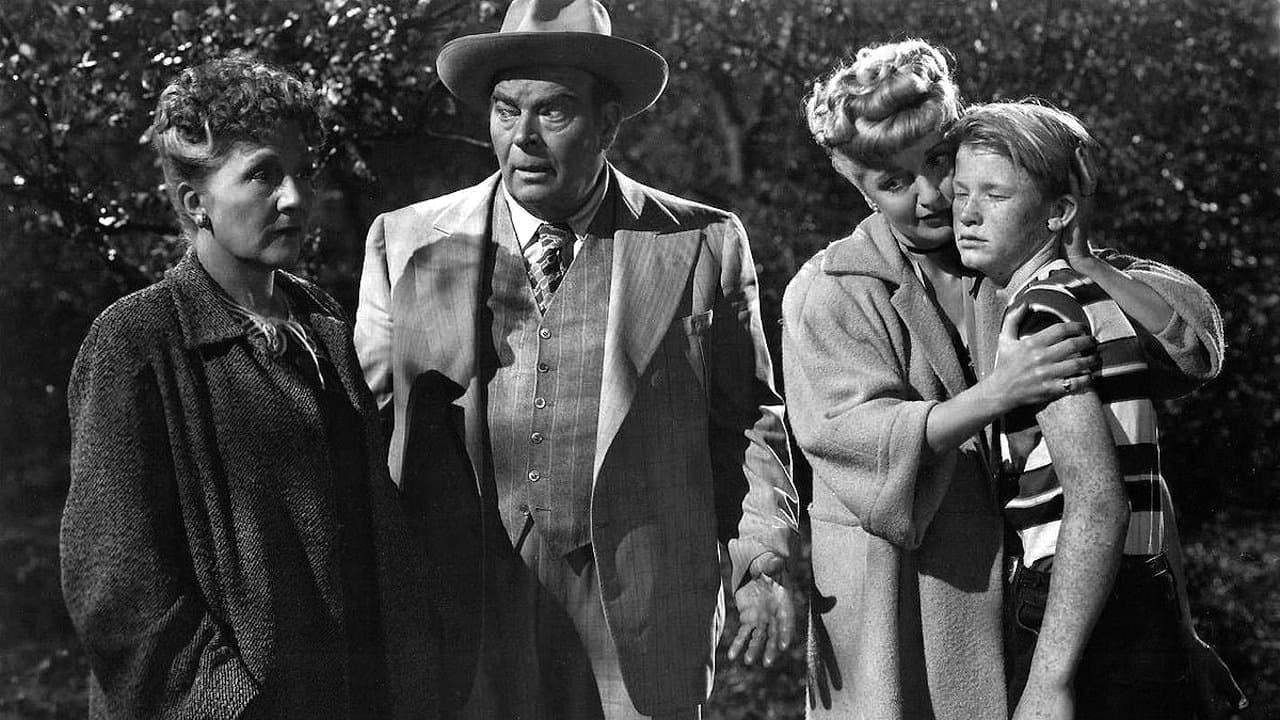
Inner Sanctum follows Harold Dunlap, a man on the run after a terrible accident at a railway station—one that cost his fiancée her life. Rather than face the law, he disappears into the anonymity of a small-town boarding house, hoping time and distance will let him fade into obscurity. But small towns have a way of noticing things. When Mike, the observant son of one of the other boarders, begins putting pieces together about Dunlap's presence at the station that fateful day, the fugitive's carefully constructed refuge starts to crumble. What unfolds is a cat-and-mouse game played out in the cramped quarters of a boarding house—a space that should feel safe but becomes increasingly claustrophobic as suspicion grows.
The film's premise taps into a distinctly post-war anxiety: the idea that violence and deception can hide in plain sight, that the person next to you at breakfast might be harboring a dangerous secret. At just 62 minutes, Inner Sanctum doesn't waste time with exposition or lengthy character introductions. It moves along briskly, letting tension build through observation and inference rather than dramatic confrontations. The boarding house itself becomes a character—a confined space where every hallway, every overheard conversation, every glance carries weight.
Production, Cast, and the Sole Film from M.R.S. Pictures
Inner Sanctum arrived in 1948 as something of an anomaly in Hollywood's ecosystem. The film was produced by M.R.S. Pictures Inc., a production company named after its three principals: Richard B. Morros, Samuel Rheiner, and Walter Shenson. Notably, this was the first and only film the company would ever produce—a single-shot effort that makes the picture a kind of historical oddity, a one-off experiment that never led to a second venture. Director Lew Landers, a journeyman filmmaker who'd worked across multiple genres, helmed the project with a no-nonsense approach suited to the material.
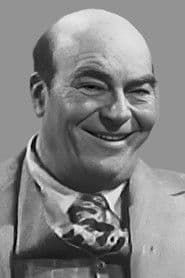
The film drew its source material from multiple wells: the Inner Sanctum Mystery radio series, which had proven popular with audiences, and the Simon & Schuster book series that had built a devoted following. Universal Pictures had already produced a series of Inner Sanctum films throughout the 1940s, so M.R.S. Pictures was stepping into territory with existing audience recognition—though also with high expectations to clear. The cast included Charles Russell in the lead role as Dunlap, alongside Mary Beth Hughes, Dale Belding as the perceptive boy Mike, and supporting players like Billy House, Fritz Leiber, Nana Bryant, and Lee Patrick. Leon Klatzkin composed the score, while cinematographer Allen G. Siegler lensed the picture with the kind of shadowy, economical style that defined low-budget noir work of the era.
While box office records for this particular film are scarce in the historical record, its existence speaks to the commercial viability of mystery and thriller content in the immediate post-war period. The picture arrived without major studio backing—no MGM logo, no Paramount fanfare—yet it managed to secure distribution and reach audiences. That achievement alone, combined with the fact that M.R.S. Pictures never made another film, suggests the company either achieved its singular goal and moved on, or simply couldn't replicate whatever conditions allowed this one project to come together.
What Makes Inner Sanctum Stand Out as a Lean Thriller
What's striking about Inner Sanctum is how much tension it wrings from restraint. There's no bombastic score swells, no overwrought dramatic speeches. Instead, the film relies on the slow accumulation of suspicion—the way a child's innocent questions can become a noose around a guilty man's neck. Charles Russell carries the film as Dunlap with a kind of quiet desperation; you can see the calculation behind his eyes, the constant mental arithmetic of how much the boy knows, how close he is to putting it all together. That's the real horror here—not a monster or a killer revealed in a twist, but a man watching his fragile disguise unravel one conversation at a time.
Dale Belding, playing young Mike, grounds the picture in a perspective that's neither fully sympathetic nor purely innocent. The boy isn't a genius detective or a precocious narrator; he's just observant in the way kids can be, noticing details adults miss because he's not yet learned to filter out the mundane. When he starts connecting dots, it's organic to his character, not a plot convenience. The boarding house setting—claustrophobic, intimate, filled with the everyday rhythms of shared living—becomes the perfect pressure cooker for this dynamic. There's nowhere to run, nowhere to hide, and that's precisely the point.
I keep coming back to the film's economy of storytelling. At 62 minutes, it doesn't pad scenes or linger on exposition. Every moment serves the escalating tension, every character interaction moves the narrative forward. The cinematography by Allen G. Siegler captures the shadowy, unglamorous reality of a small-town boarding house—not the glossy noir of major studio productions, but something grittier and more tactile. What the picture loses in budget, it gains in focus. There's no subplot about a romantic interest or a police investigation running parallel to the main action. It's just Dunlap, Mike, and the slow-motion collision course between them.
Where to Stream Inner Sanctum Online
Inner Sanctum is currently available on major OTT services, making it accessible to anyone curious about this obscure corner of 1940s cinema. If you're tracking down where to watch it, Movie OTT maintains an up-to-date listing of which platforms carry the film at any given moment—streaming rights shift constantly, so it's worth checking the Where to Watch widget at the top of this page to see current availability in your region. The film's brief runtime (just over an hour) makes it an easy addition to a weekend watch list, whether you're exploring classic noir, digging into the history of mystery adaptations, or simply hunting for lesser-known gems from the 1940s. The fact that it's readily available now is itself a small miracle; many films from this era, especially from minor production companies, have vanished into obscurity or remain locked in studio vaults.
Frequently asked questions
Q: Is Inner Sanctum based on a true story?
No, Inner Sanctum is adapted from the Inner Sanctum Mystery radio series and the Simon & Schuster book series of the same name. While the premise of a fugitive in hiding is a classic thriller setup, the specific story of Harold Dunlap and his time at the boarding house is a work of fiction created for those source materials.
Q: Who directed Inner Sanctum?
Lew Landers directed the film. Landers was a prolific director who worked across multiple genres throughout the 1930s and 1940s, known for his efficient, no-frills approach to filmmaking—a style well-suited to the lean, tension-focused narrative of Inner Sanctum.
Q: Why was Inner Sanctum the only film M.R.S. Pictures ever made?
Historical records don't provide a clear answer, but the company's singular output suggests either that the three principals (Richard B. Morros, Samuel Rheiner, and Walter Shenson) accomplished their goal with this one picture and moved on to other ventures, or that the production faced circumstances that prevented a second film from being greenlit.
Q: How long is Inner Sanctum?
The film runs 62 minutes—a tight, economical runtime that was fairly standard for B-pictures and mystery thrillers of the 1940s. That brevity works entirely in its favor, as the story doesn't overstay its welcome.
Q: How does Inner Sanctum compare to other Inner Sanctum films?
Universal Pictures produced a series of Inner Sanctum films throughout the 1940s before M.R.S. Pictures made this entry in 1948. This version stands apart as a low-budget independent production, leaner and less polished than the Universal releases, but arguably more focused in its narrative approach.
Final Thoughts on Inner Sanctum
Inner Sanctum doesn't have the polish of a major studio production or the star power of a prestige picture. The IMDb rating of 5.1/10 reflects the fact that it's not for everyone—it's a modest, understated thriller that demands patience and rewards close attention. But that's precisely what makes it worth seeking out. Here's a film that trusts its premise, respects its audience's intelligence, and delivers tension through implication rather than spectacle. If you're the kind of viewer who appreciates the slow-burn approach to suspense, who finds more to admire in the economy of a 62-minute film than in bloated three-hour epics, then Inner Sanctum deserves a place on your watchlist. It's a small picture, easily overlooked, but genuinely crafted—a reminder that some of the best cinema comes not from the biggest studios or the most famous names, but from filmmakers who knew exactly what story they wanted to tell and told it without wasting a frame.