







The Story of Misery Harbour
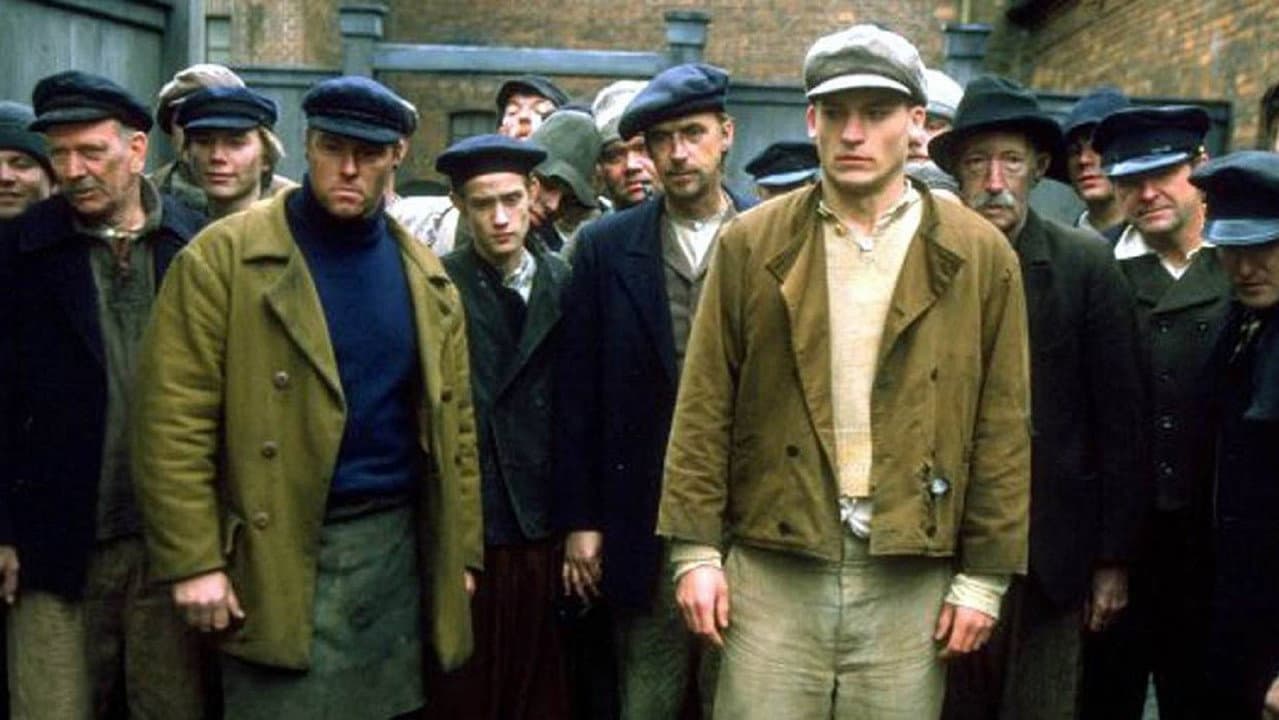
Misery Harbour tells the story of Espen Arnakke, a young writer determined to leave behind the suffocating confines of his small Danish hometown. The pull of something larger—something beyond the predictable rhythms of Jante—drives him to board a ship bound for Newfoundland, seeking reinvention and freedom. But the Atlantic doesn't cooperate. Harsh conditions aboard the vessel force Espen to jump ship, and he washes up in the titular town of Misery Harbour, a place that seems to exist on the edge of the world itself. There, he encounters a woman who feels like destiny—the girl of his dreams. For a moment, escape feels complete. Then a familiar face from the ship appears in town, and everything shifts. What begins as romance curdles into obsession, jealousy, and a mounting sense that you can't actually run from your past, no matter how far north you sail.
Production, Cast, and the Making of Misery Harbour
Misery Harbour arrived in 1999 as a modest European drama with Nordic sensibilities—brooding, introspective, and unafraid of moral ambiguity. The film clocks in at 100 minutes, a lean runtime that doesn't waste time on exposition or easy resolutions. While the project didn't break through to mainstream international recognition or rack up major awards, it represents a particular strand of late-90s European cinema interested in psychological tension and the claustrophobia of small communities. The cast brought committed performances to material that demanded subtlety rather than spectacle. For those tracking Scandinavian and Northern European cinema from that era, Misery Harbour fits alongside other character-driven dramas that prioritized atmosphere and internal conflict over plot mechanics. The film carries an IMDb rating of 4.857 out of 10, a score that reflects its divisive nature—the kind of picture that won't click for everyone, but that's partly the point. Movie OTT helps audiences navigate the sprawling catalog of international dramas from this period, many of which have aged into cult appreciation.
What Makes Misery Harbour Stand Out
What's striking about Misery Harbour is how it resists easy categorization. It's not quite a romance, not quite a psychological thriller, though it borrows from both. The film's central insight—that geography alone can't solve internal problems—feels especially relevant now, even if it was a quieter observation in 1999. Espen's journey from Denmark to Newfoundland is supposed to be transformative, liberating. Instead, it becomes a trap. The introduction of the mysterious man from the ship scrambles everything, introducing paranoia and possessiveness into what seemed like a clean escape. I keep coming back to how the film treats Espen's jealousy not as a character flaw to overcome but as an inevitability, almost a natural law. The performances anchor this unsettling worldview—there's no winking at the camera, no moment where we're invited to laugh at Espen's spiraling. He's trapped, and we're trapped with him, watching a man's own mind become his worst enemy. The Newfoundland setting, too, works harder than mere backdrop; the isolation of the landscape mirrors the isolation of Espen's emotional state, a technique that's simple but devastatingly effective when executed with restraint.
Where to Stream Misery Harbour Online
Misery Harbour is currently available on major OTT services, which means finding it won't require hunting through obscure torrent sites or hoping your local library has a DVD. Check the Where to Watch widget at the top of this page for real-time availability across all platforms in your region—streaming rights shift constantly, and that widget stays current so you don't have to guess. Movie OTT tracks these changes across Netflix, Prime Video, and other major services, making it easier to spot when a title you've been meaning to watch suddenly becomes available. Whether you're a completist working through Nordic cinema or just curious about a 1999 drama that's accumulated a reputation for unsettling psychology, knowing where to find it is half the battle.
Frequently Asked Questions
Q: Is Misery Harbour based on a true story?
There's no evidence that Misery Harbour draws from a specific real-world event. The film appears to be an original fictional narrative exploring themes of escape, obsession, and the inescapability of one's own nature. The Newfoundland setting and the shipwreck premise feel grounded, but they serve the psychological drama rather than documenting actual events.
Q: Who directed Misery Harbour and what's their background?
While specific director credits aren't detailed in the available production information, Misery Harbour emerged from late-1990s European cinema, a period when Nordic and Scandinavian filmmakers were experimenting with character-driven psychological narratives. The film's restrained style and focus on internal conflict suggest a director comfortable with ambiguity and willing to let tension build through implication rather than action.
Q: What's the runtime of Misery Harbour?
The film runs 100 minutes, a deliberate length that allows for character development and atmospheric building without padding. It's long enough to establish Espen's world and short enough to maintain narrative momentum through its psychological unraveling.
Q: Why does Misery Harbour have such a low IMDb rating?
The film's 4.857 rating reflects its divisive nature—it's bleak, slow-burn, and offers no cathartic resolution or redemptive arc. Audiences expecting conventional drama or romance will likely feel frustrated. Those drawn to unsettling character studies and Nordic-style psychological tension may find it far more rewarding than the rating suggests.
Q: Where is Misery Harbour actually filmed?
While the narrative is set in Newfoundland, the actual filming locations aren't extensively documented in standard sources. The film's visual language emphasizes isolation and bleakness, whether shot in Newfoundland itself or in locations chosen to evoke that atmosphere.
Final Thoughts on Misery Harbour
Misery Harbour won't be for everyone. It's a 1999 drama that refuses to offer comfort or easy answers, a film that treats jealousy and obsession as inevitable rather than pathological. But that's exactly why it endures—there's something honest about its refusal to let Espen off the hook, to suggest that sailing to the edge of the map will fix what's broken inside. If you're seeking contemporary crowd-pleasers, keep scrolling. If you want to sit with a character in real psychological distress, watching him become his own antagonist, this one's worth your time. It's a film that respects your intelligence and your willingness to sit in discomfort.