

The Story of Miss Austen Regrets
When we think of Jane Austen, we think of her novels—those perfectly calibrated stories of marriage proposals and social maneuvering that have captivated readers for two centuries. But what about the woman who wrote them? Miss Austen Regrets strips away the literary mythology to ask a more human question: what did Jane Austen actually want? The film follows Austen as she approaches her fortieth birthday, reflecting on the romantic opportunities she passed up, the marriage she didn't accept, and the relationship that might have been. It's a portrait of a writer caught between duty to her family and hunger for her own life—between the happy endings her heroines receive and the more complicated reality she lived. Rather than a straightforward biography, the narrative weaves between past and present, allowing us to see both the young woman Austen was and the aging author she's become, each version haunted by roads not taken.
Behind the Making of Miss Austen Regrets
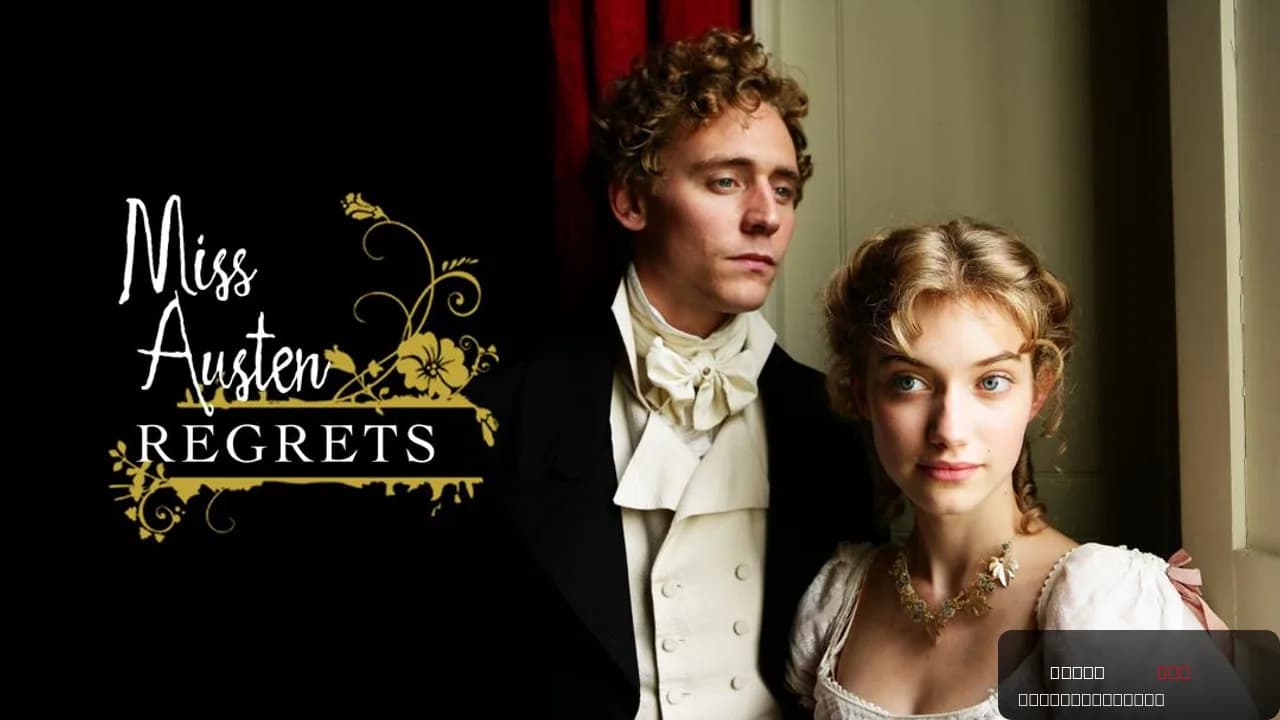
Miss Austen Regrets arrived in 2008 as part of a larger cultural moment—a British-American co-production directed by Jeremy Lovering and written by Gwyneth Hughes that premiered on BBC One in August 2007 before reaching American audiences via PBS's Masterpiece anthology series in February 2008. The film earned genuine recognition from the industry: it won a BAFTA Award and claimed two wins total at various ceremonies, a modest but meaningful validation for a television drama about a writer's inner life rather than her public triumphs. Rated TV-G despite its thematic sophistication, the 85-minute runtime is lean and purposeful—Hughes's script doesn't waste time on period decoration but instead focuses on character and emotional truth. Olivia Williams carries the film as Austen herself, supported by a cast that reads like a roster of British acting talent: Greta Scacchi as her mother, Imogen Poots as her younger self, Hugh Bonneville, Phyllida Law, and a young Tom Hiddleston in a supporting role that hints at the actor he'd become. The ensemble approach allows the film to move fluidly between timelines and perspectives, never feeling stagebound despite its television origins. IMDb users have rated it a respectable 7 out of 10 across more than 3,600 votes—not a masterpiece, perhaps, but a film that finds its audience and holds their attention.
What Makes Miss Austen Regrets Stand Out
What's striking about this film is how it refuses to sentimentalize its subject. There's no sweeping romance score, no dramatic confrontation that resolves everything in the final act. Instead, there's Olivia Williams—her face lined, her eyes intelligent and slightly sad—sitting with the fact that she made choices, and some of those choices foreclosed other possibilities. The performances anchor everything: Williams moves between Austen's youthful optimism and her mature resignation with barely a gesture, while Imogen Poots, as young Jane, carries the energy and hope that time will eventually temper. Greta Scacchi brings a particular kind of maternal complexity to the role, neither villainous nor entirely sympathetic—just a woman managing her household and her daughters' prospects as best she knows how. The film's real insight, though, is structural. By moving between past and present, between the Jane who might have married and the Jane who became a writer instead, it suggests that these aren't opposing outcomes but entangled ones. She didn't become a novelist because she didn't marry; she didn't marry because she was already becoming a novelist. That's harder to dramatize than a simple tragedy, and harder to resolve, which is exactly why it rings true. The 19th-century setting is rendered without fuss—no costume drama excess, just the material reality of women's limited options and the particular loneliness of being unmarried, accomplished, and aware of both facts.
Where to Stream Miss Austen Regrets Online
Miss Austen Regrets has found a comfortable home across multiple streaming platforms, which means you've got genuine options depending on what services you already subscribe to. The film is available on Amazon Prime Video (including the ad-supported tier), BritBox—the natural home for British television dramas—and through various BritBox channels on Apple TV and as an Amazon add-on. It's also on Hulu, The Roku Channel, and internationally on ARD Mediathek and Kanopy. Movie OTT tracks current availability across all these platforms, so you can see exactly where it's streaming in your region right now via the Where to Watch widget at the top of this page. That kind of aggregation matters when you're trying to decide whether to sign up for a new service or dig through your existing subscriptions—and with Miss Austen Regrets spread across this many options, there's a decent chance you can watch it without adding another bill.
Frequently asked questions
Q: Who directed Miss Austen Regrets?
Jeremy Lovering directed the film, working from a script by Gwyneth Hughes. It was a British-American co-production that premiered on BBC One in 2007.
Q: Is Miss Austen Regrets based on a true story?
Yes and no. The film draws on the documented facts of Jane Austen's life—her unmarried status, her family relationships, and the marriage proposal she received and declined—but it dramatizes her inner emotional life, imagining her thoughts and feelings in ways that go beyond what the historical record can verify.
Q: What awards did Miss Austen Regrets win?
The film won a BAFTA Award and earned two wins total at various ceremonies, a recognition of its quality as a television drama despite its modest scale.
Q: How long is Miss Austen Regrets?
The film runs 85 minutes, a lean runtime that keeps the focus tight on character and emotional arc rather than sprawling biographical detail.
Q: Where can I watch Miss Austen Regrets?
The film is available on multiple platforms including Amazon Prime Video, BritBox, Hulu, The Roku Channel, and several others. Check the Where to Watch widget on Movie OTT to see current availability in your area.
Final Thoughts on Miss Austen Regrets
There's something quietly radical about a film that doesn't try to redeem its subject's loneliness or wrap it up in a neat bow. Miss Austen Regrets sits with ambivalence, with the possibility that a life can be both rich and incomplete, both accomplished and marked by loss. Olivia Williams gives a performance that deserves to be remembered more widely than it is. If you're drawn to character-driven drama, to stories about writers and the gap between their public work and private selves, or simply to intelligent, unsentimental examinations of how women navigate constrained choices—this film is worth your 85 minutes. It won't give you the satisfaction of a neat resolution, but it will give you something rarer: a honest reckoning with what it costs to become yourself.