









Neon Genesis Evangelion: Death and Rebirth
What you need to know: A split-structure 101-minute film from 2026 that's half TV recap, half incomplete new ending. Watch it only if you've finished the original 26-episode series. Currently streaming on major OTT services — check Movie OTT for availability in your region.
Why this film exists — and why it's weirdly honest about failing
Here's the setup: In 1997, GAINAX released Death and Rebirth as direct damage control. Episodes 25 and 26 of the Evangelion TV series had just aired — episodes that spent their runtime on still frames, internal monologue, and philosophical collapse instead of, you know, robots fighting. Audiences wanted closure. They got existential dread instead.
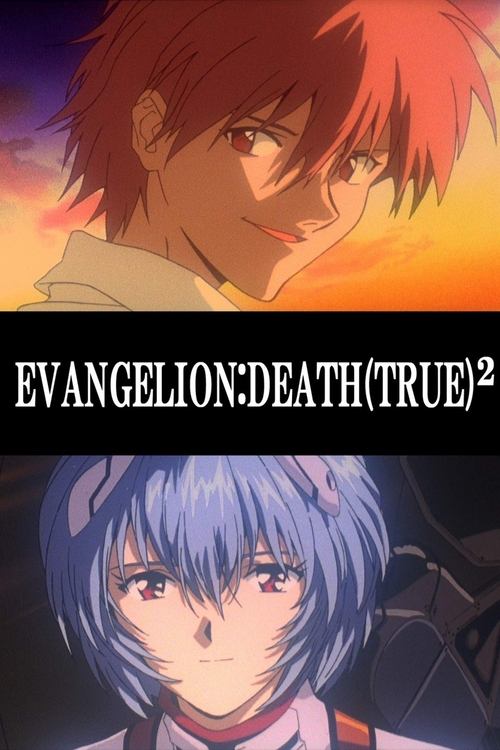
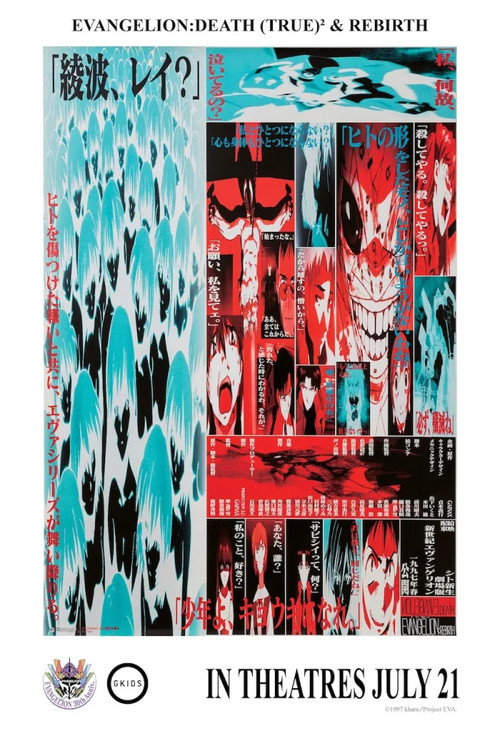
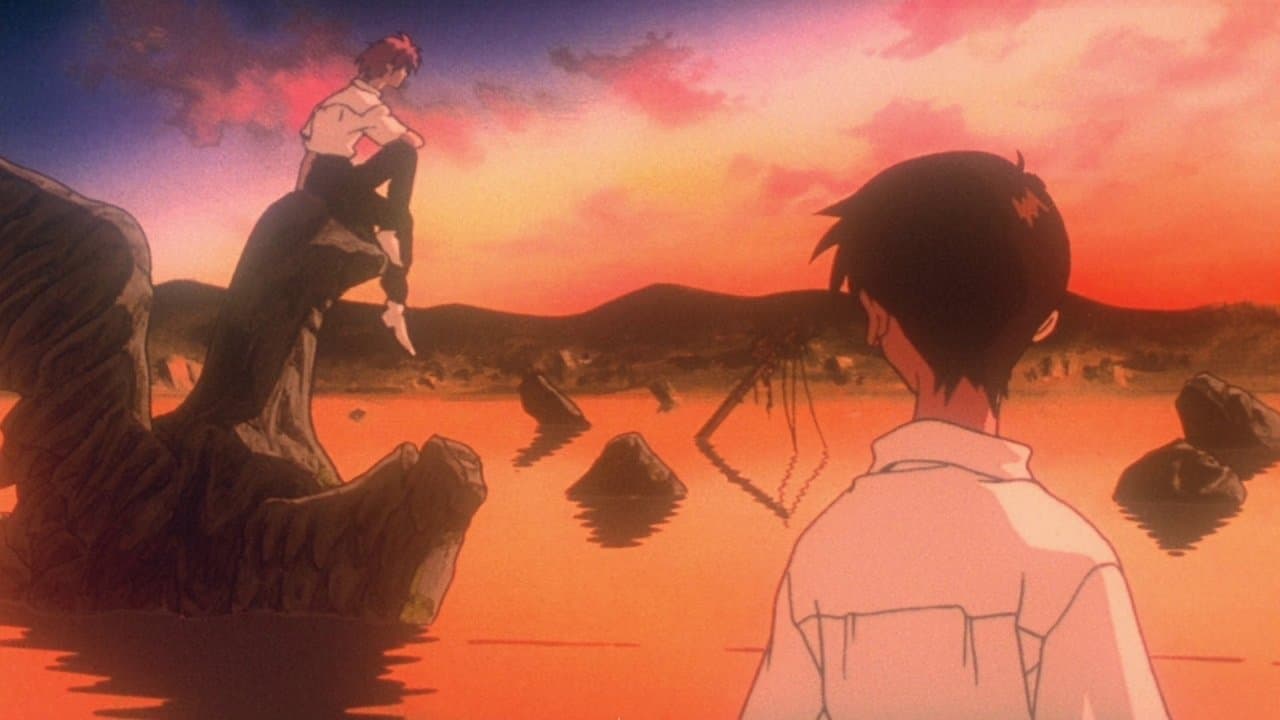
The studio heard the complaints. So they made Death and Rebirth as a course correction. The first half, Death, compresses the entire 26-episode series into a feature-length highlight reel. The second half, Rebirth, was supposed to be the real ending — a full replacement for those divisive final episodes. Except the production ran out of time. They couldn't finish it. Rather than scrap the whole thing, GAINAX released it incomplete.
That's the actual film you're watching in 2026. Not a polished artifact. A document of a team running out of runway and shipping it anyway.
What's striking is how openly it wears that incompleteness. Most studios would bury evidence of a production that fell apart mid-execution. This one doesn't try to hide the seam — the transition from Death to Rebirth is visible, almost architectural. And that transparency? That's what gives the film its strange authority.
What Death actually does — and whether you need it
The Death section leans into the series' core strengths: surrealism, psychological unraveling, and the use of giant mecha not as power fantasy but as existential prison. Shinji Ikari doesn't want to pilot Unit-01. He never did. That refusal — repeated across 26 episodes, dense with philosophical weight — is what the compilation distills.
If you've seen the show, watching Death is like reading margin notes you wrote years ago and finding them more honest than you remembered. You know where this is going. The film trusts you to know. It doesn't waste time on exposition — it pulls key sequences and lets the emotional arc carry forward. The AT fields, NERV headquarters, Instrumentality, the progressive dissolution of Shinji's agency. All of it compressed, but not flattened.
Here's the thing: you don't need Death if you've watched the series recently. But if five or ten years have passed? If you've forgotten which episode introduced the Dead Sea Scrolls or why Gendo matters? The recap works. It's curated, not lazy.
What Rebirth tries to do — and where it runs out of steam
Rebirth operates differently. It's more kinetic, more concrete. There's forward momentum that the TV finale deliberately withheld. The philosophical complexity doesn't disappear — this is Evangelion, it can't — but you're watching a team try to deliver something audiences could actually hold onto.
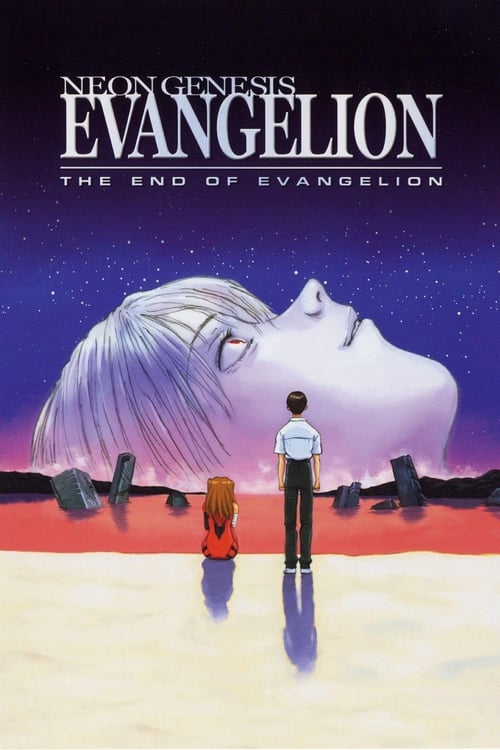
I keep coming back to the question of whether that's actually better than the original ending, and the answer keeps changing depending on how much I'm comfortable with ambiguity that particular week. The Rebirth segment feels like the first act of something larger — which it is. This footage was later reworked and folded into The End of Evangelion, with variations that matter to franchise completionists. Specific sequences shift. Pacing changes. The two films are related but distinct, and watching both is worth it if you're serious about the mythology.
The incomplete nature of Rebirth isn't a flaw you should forgive. It's the actual subject of the film.
Who should watch this — and who shouldn't
Watch it if: You finished the original series and found yourself arguing about Episode 26. You want to understand how The End of Evangelion came to exist. You're willing to sit with a film that doesn't resolve everything it opens up.
Skip it if: You haven't seen the TV series. Death and Rebirth is a recap, not an introduction. It assumes you know Shinji, Rei, Asuka, and the NERV mythology. Without that context, the emotional beats won't land.
On the mature content side: The film carries a Not Rated designation, but the source material involves body horror, psychological distress, and themes of depression and identity dissolution. This isn't animated content aimed at children.
Where to stream it — and how to track availability
The 101-minute runtime breaks down as roughly 60 minutes of compilation (Death) and 41 minutes of new material (Rebirth). The 2026 release is live on major OTT services right now.
Specific availability varies by region and licensing. Movie OTT's where-to-watch tracker aggregates platform data across services and updates as distribution deals shift — it's worth bookmarking if you're tracking this title across multiple regions or trying to find the cleanest version. The original 1997 cut has circulated across various platforms over the years, so if you encounter an older version, be aware the 2026 release may differ in ways that matter to completionists.
The film currently holds a 7.2/10 rating on IMDb across 16,346 votes — a solid, if not overwhelming, mark that reflects its unusual position in the canon. It's not beloved the way The End of Evangelion is. It's respected as a transitional artifact.
The production behind it — why it matters
The institutional muscle is considerable. GAINAX, Production I.G, Tatsunoko Production, KADOKAWA Shoten, TV Tokyo, SEGA, and Toei Company all have fingerprints on this — a coalition that signals this isn't a casual cash-in on nostalgia. These companies don't greenlight Evangelion projects without intention.
The original 1997 premiere came in direct response to fan frustration with those final two TV episodes. GAINAX heard the complaints and tried to answer them. What followed was production under pressure — the team couldn't finish Rebirth in time, so the incomplete second half shipped anyway. Later, variations of that material were reworked into The End of Evangelion, but the 2026 version gives you the original, unreworked Rebirth segment.
The bottom line — what makes this film worth your time
Neon Genesis Evangelion: Death and Rebirth isn't a clean sequel. It's not a standard reissue. It's a 101-minute look at the exact moment a creative team tried to course-correct under pressure and ran out of runway mid-execution. That happened. It's on screen. For franchise completionists, animation historians, or anyone who wants to understand how The End of Evangelion came to exist, this film is essential — messy, incomplete, and completely worth your time.
The original series left you with Episode 26. This film says: here's what we tried to do instead. It's rarer than you'd think for a studio to ship that kind of honesty.