









The story of Neon Genesis Evangelion: The End of Evangelion
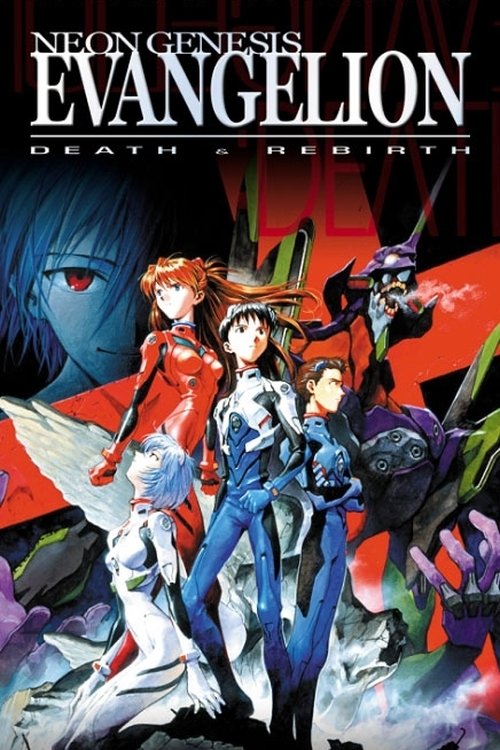
Neon Genesis Evangelion: The End of Evangelion picks up where the television series left off — or rather, where it refused to. The film opens with SEELE's coordinated assault on NERV, the underground military organization defending humanity against monstrous interdimensional beings called Angels. But this isn't a straightforward action climax. Instead, the narrative becomes a descent into psychological torment as Shinji Ikari, the reluctant pilot of a giant biomechanical robot called an Eva, finds himself trapped between competing visions of humanity's future. Gendo, Shinji's father and NERV's commander, has his own apocalyptic plan in motion — the Human Instrumentality Project — while SEELE seeks to destroy the Evas before he can execute it. Shinji is pushed to the limits of his sanity as he's forced to decide the fate of humanity itself. What unfolds isn't a conventional battle narrative but rather an exploration of meaningless existence, rebirth, and the philosophical weight of choice itself.
Behind the making of Neon Genesis Evangelion: The End of Evangelion
The End of Evangelion was born from a very specific crisis in anime history. When Neon Genesis Evangelion's television series concluded in 1996, it ended not with a traditional climax but with a series of abstract, introspective episodes that prioritized Shinji's internal collapse over external spectacle — a decision that baffled and alienated much of the audience at the time. Director Hideaki Anno and co-director Kazuya Tsurumaki, working with studios Gainax and Production I.G, were tasked with delivering an alternate ending that could satisfy both the narrative hunger of fans and Anno's own artistic vision. The result was a film that's arguably more unsettling than the television conclusion it replaced.
The production involved a constellation of major Japanese media companies: TV Tokyo, KADOKAWA Shoten, Toei Company, SEGA, and Star Child Recording all contributed to bringing this 87-minute feature to life. While box office figures for the original 1997 release aren't universally documented in Western sources, the film's cultural impact was immediate and divisive — exactly as intended. The IMDb rating of 8.254/10 reflects a fanbase that's passionate, if not entirely unified. What's striking is that Anno didn't soften his vision for the theatrical format; if anything, he leaned harder into the psychological horror and philosophical ambiguity that made the series controversial in the first place. The animation itself, handled by some of the most skilled artists in the industry, oscillates between gorgeous mechanical design and deliberately crude, almost crude sequences that mirror Shinji's fractured mental state.
What makes Neon Genesis Evangelion: The End of Evangelion stand out
Here's the thing about this film: it doesn't care if you're comfortable. Most anime — even ambitious anime — wants to entertain you. Neon Genesis Evangelion: The End of Evangelion wants to challenge you, disturb you, maybe even make you question whether entertainment is the right frame at all. The film operates in a mode that blends psychological terror with avant-garde narrative structure, creating something that feels less like a traditional climax and more like a fever dream where the rules of storytelling keep dissolving. Shinji's journey through the film isn't about heroic triumph; it's about the dissolution of self, the terror of connection, and the possibility that even rebirth might not redeem meaningless existence.
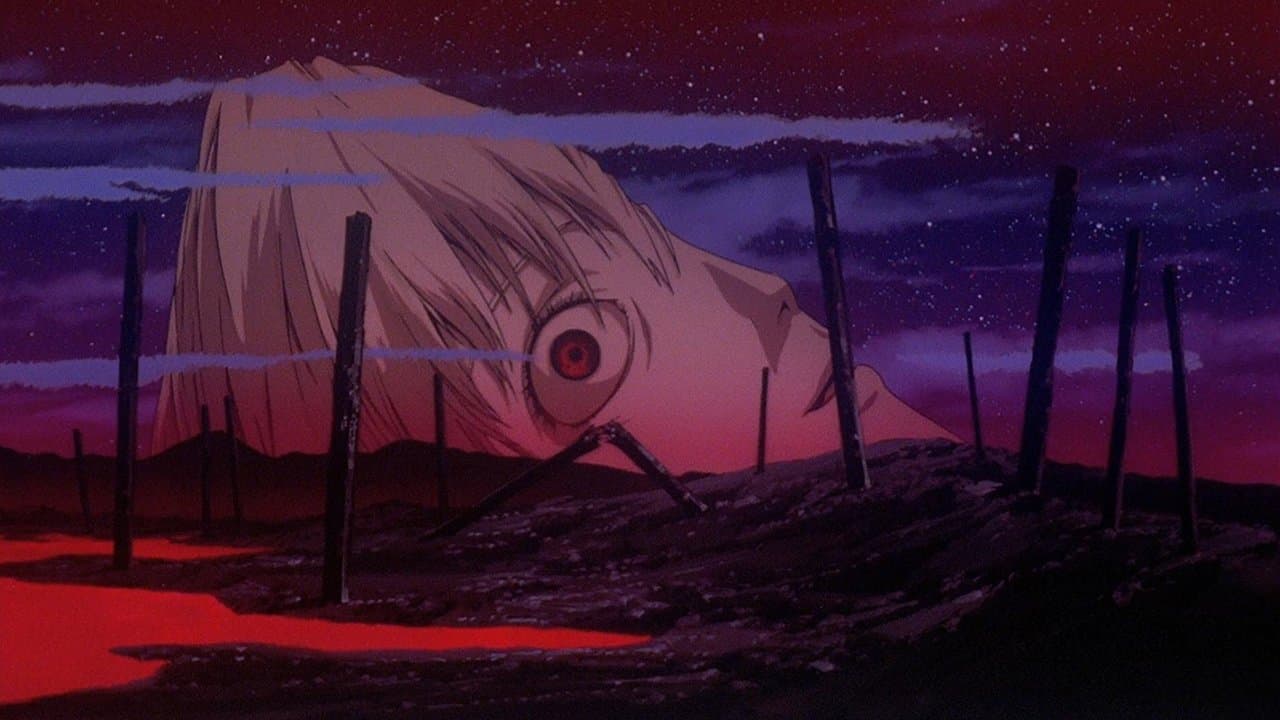
What audiences often respond to — and what critics have debated for over two decades — is how unflinchingly the film commits to its philosophical premise. The voice acting performances, particularly the English and Japanese dubs, capture the raw desperation of characters pushed beyond their psychological limits. The film doesn't offer catharsis in any traditional sense. Instead, it offers something harder to categorize: a confrontation with the void. The visual language shifts from mecha action to surrealism to something almost documentary-like in its depiction of human suffering. Some viewers find this brilliant; others find it deliberately antagonistic toward the audience. That tension — that refusal to resolve — is precisely what makes it enduring. When you're tracking streaming availability across platforms through Movie OTT, you'll notice this title maintains a devoted following precisely because it refuses easy answers.
I keep coming back to one moment in the film where the narrative essentially stops moving forward and instead turns inward — the camera lingers on Shinji's face, and for several minutes, the film becomes almost uncomfortably intimate. It's not a scene designed to be enjoyed; it's designed to be felt, and that distinction matters. The film asks what it means to pilot a machine that might destroy the world, to be the only person who can save humanity, and to hate yourself so thoroughly that even saving the world feels like an act of selfishness. That's not typical blockbuster material.
Where to stream Neon Genesis Evangelion: The End of Evangelion online
Neon Genesis Evangelion: The End of Evangelion is available on major OTT services, though availability can vary by region and subscription tier. The film's home on streaming platforms means you can experience this philosophical sci-fi apocalypse without hunting down physical media or bootleg copies — a significant shift from the early 2000s, when accessing this film internationally was genuinely difficult. Check the "Where to Watch" widget at the top of this page to see which services currently carry it in your area. Whether you're planning a first viewing or a rewatch after years away, streaming access has made this essential alternate ending far more accessible than it was during the theatrical era. Movie OTT tracks current availability across platforms, so you won't waste time searching.
Frequently asked questions
Q: Is Neon Genesis Evangelion: The End of Evangelion a sequel to the TV series?
No — it's an alternate ending. The television series Neon Genesis Evangelion aired from 1995 to 1996 and concluded with abstract, introspective episodes. The End of Evangelion (1997) offers a different narrative conclusion to the same story, directed by Hideaki Anno and Kazuya Tsurumaki.
Q: Do I need to watch the Neon Genesis Evangelion TV series before watching The End of Evangelion?
Yes, absolutely. The film assumes you're familiar with the characters, the Angels, the Eva units, and Shinji's psychological journey through the series. Without that context, the film will feel like watching someone's fever dream with no foundation.
Q: What's the runtime of Neon Genesis Evangelion: The End of Evangelion?
The film runs 87 minutes, making it a relatively compact theatrical experience — though those 87 minutes are dense with philosophical and psychological material.
Q: Who directed Neon Genesis Evangelion: The End of Evangelion?
Hideaki Anno and Kazuya Tsurumaki co-directed the film, with Anno also serving as writer. Anno is the original creator and director of the Neon Genesis Evangelion television series.
Q: Is Neon Genesis Evangelion: The End of Evangelion appropriate for younger viewers?
No. The film contains intense psychological content, existential despair, and mature themes that make it unsuitable for younger audiences. It's a film for viewers who've engaged with the series and are prepared for a challenging, uncompromising artistic statement.
Final thoughts on Neon Genesis Evangelion: The End of Evangelion
Neon Genesis Evangelion: The End of Evangelion isn't a film that asks you to like it — it asks you to reckon with it. Nearly three decades after its release, it remains one of anime's most uncompromising artistic statements, a work that refuses to soften its vision or provide easy emotional resolution. If you're seeking a conventional climax with heroic triumph and narrative closure, look elsewhere. But if you're willing to sit with philosophical complexity, psychological intensity, and the kind of storytelling that lingers in your mind long after the credits roll, this film is essential. It's the kind of work that separates casual anime viewers from those genuinely invested in the medium as an art form — and that's exactly as it should be.