








The Story of Premonition: One Man's Race Against Tomorrow
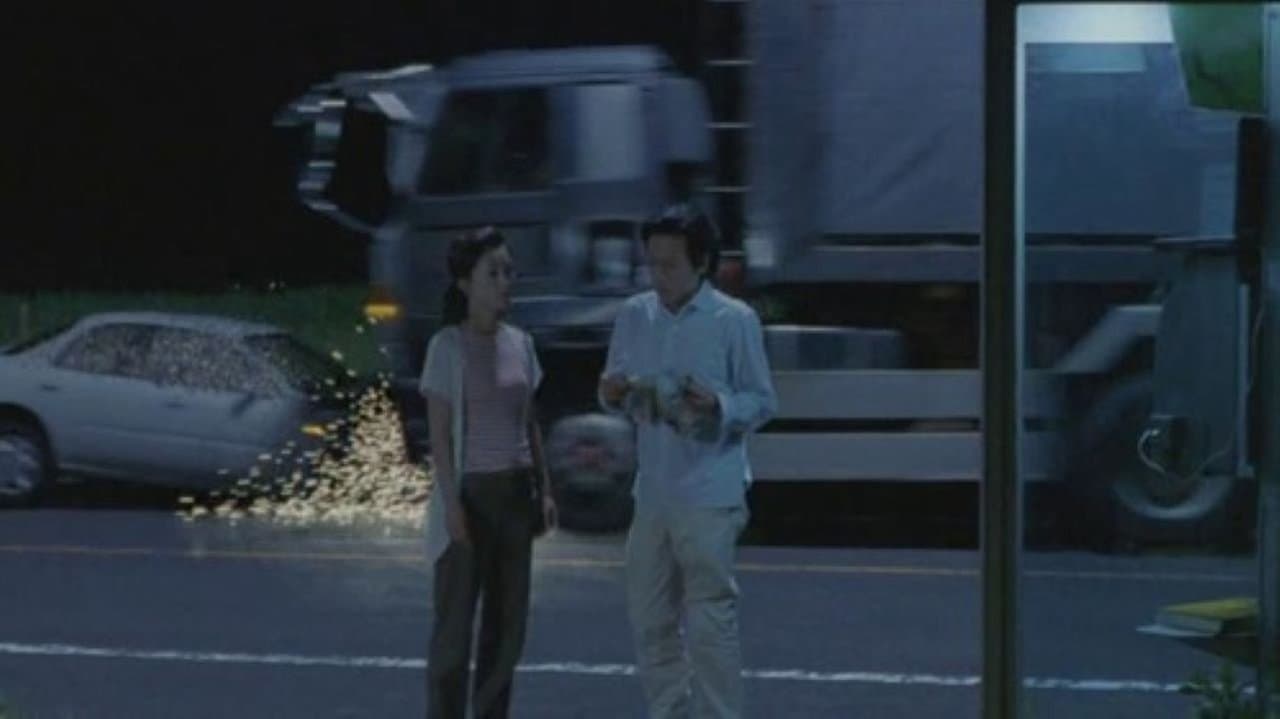
Picture this: you're stopped at a roadside phone booth, just trying to transmit work files to the university. Routine. Forgettable. Then you notice something in the trash—a scrap of newspaper, and in the obituary section, a photograph of your five-year-old daughter. Premonition, the 2004 Japanese horror film directed by Tsuruta Norio, begins with this single, devastating image and refuses to let go. Professor Hideki Satomi's discovery isn't just unsettling; it's the kind of moment that rewires your brain, that makes you question whether the future is written or whether some forces exist specifically to torment us with knowledge we can't change. What follows is a 95-minute descent into a world where newspapers don't report the past—they announce it before it happens.
The film's premise carries the weight of genuine existential horror. Satomi doesn't just panic; he spirals, because the logical response to finding your child's death notice is to prevent it, except the newspaper keeps appearing, keeps showing the same date, and—here's where it gets cruel—keeps being right. The setup is deceptively simple, but Premonition uses that simplicity like a blade. You don't need elaborate mythology or supernatural exposition dumps when the core idea is this terrifying. A man at a phone booth. A newspaper. A daughter he can't save. That's the whole engine.
Behind the Making of Premonition: Manga Source, Production, and Cast
Premonition didn't emerge from nowhere. The film is based on Kyoufu Shinbun (literally "Fear Newspaper"), a manga serialized in Shōnen Champion back in 1973 by Jirō Tsunoda—a work that had already proven its staying power across three decades before the screen adaptation arrived. Entertainment Farm, Fellah Pictures, and Geneon Entertainment collaborated to bring this manga to life, and the production team understood something crucial: they weren't making a special-effects showcase. They were adapting a property built on psychological dread, the kind that doesn't require a massive budget, just precision and nerve.
The 2004 release placed Premonition squarely in the era when Japanese horror was experiencing a global renaissance, riding the wave of The Ring and The Grudge. That context matters—audiences were primed for this kind of atmospheric, character-driven terror. The runtime clocks in at 95 minutes, which is actually ideal for this material. There's no flab, no subplot that wanders for twenty minutes only to fizzle out. Every scene serves the mounting dread. While the film didn't dominate international box offices the way some of its J-horror contemporaries did, it found its audience among genre enthusiasts and manga adaptations fans who recognized the source material's pedigree. On Movie OTT, where streaming availability varies by region and platform, Premonition has become easier to access than ever for viewers hunting down the deeper cuts of 2000s horror cinema.
What Makes Premonition Stand Out in 2004 Horror
Here's what's striking about Premonition: it refuses the easy scares. There's no jump-scare soundtrack sting when Satomi opens that newspaper again. Instead, the horror lives in the quiet moments—in a man realizing that knowledge of the future might be worse than ignorance, that seeing tomorrow's obituary section is a kind of curse disguised as foresight. The film trusts its audience to understand that the real terror isn't the supernatural mechanics; it's the moral paralysis. What do you do when you know? How do you act? And—this is the question that haunts the whole picture—can you actually change fate, or are you just a passenger watching your own tragedy unfold in slow motion?
The performances ground everything in recognizable human panic rather than melodrama. Satomi isn't a action hero; he's a professor, someone whose job is to think through problems rationally, which makes his helplessness even more agonizing. The classroom and university settings create an ironic backdrop—spaces of knowledge become spaces of ignorance, where all the intellectual tools at his disposal become useless against something that simply is. I keep coming back to how the film uses mundane locations—the phone booth, the newspaper stand, the university hallway—as if they're already haunted, already weighted with dread, before anything supernatural even happens. That's the craft at work. That's why Premonition lingers.
The pacing is deliberate without feeling slow, and the cinematography treats ordinary spaces like crime scenes, finding shadows and angles that make a classroom or a street corner feel claustrophobic. Tsuruta Norio's direction understands that horror isn't about what you see—it's about what you're forced to think about after you see it. The film doesn't try to explain the newspaper away with pseudo-scientific mumbo-jumbo; it just lets the premise exist and watches Satomi unravel.
Where to Stream Premonition Online
Finding Premonition is easier than it used to be, thanks to the proliferation of streaming services carrying international horror titles. The film is currently available on major OTT platforms—check the "Where to Watch" widget at the top of this page for real-time availability in your region, since streaming rights shift frequently and vary by country. Movie OTT tracks current streaming availability across Netflix, Prime Video, and other major services, so you'll know exactly where to find it without hunting through multiple apps. Whether you're a longtime manga fan revisiting Tsunoda's source material or a horror completist filling in gaps from the 2004 J-horror wave, the logistics of actually watching Premonition are no longer the barrier they once were.
Frequently asked questions
Q: Is Premonition based on a true story?
No, it's based on the 1973 manga Kyoufu Shinbun by Jirō Tsunoda, which was serialized in Shōnen Champion. The manga itself is a work of horror fiction, not inspired by real events.
Q: Who directed Premonition?
The film was directed by Tsuruta Norio and released in 2004. It was produced by Entertainment Farm, Fellah Pictures, and Geneon Entertainment.
Q: What's the runtime, and is it worth the watch?
Premonition runs 95 minutes, making it a lean, focused experience with no wasted scenes. If you're into psychological horror and Japanese cinema, absolutely—the pacing is tight and the premise is genuinely unsettling.
Q: How does the film compare to other J-horror from the 2000s?
Unlike The Ring or The Grudge, which lean into supernatural spectacle, Premonition is quieter and more philosophically minded. It's about the terror of knowledge rather than the terror of ghosts, which gives it a different flavor entirely.
Q: Can I watch Premonition with subtitles or dubbed audio?
Availability depends on your streaming platform—check the "Where to Watch" widget for language options, as different services carry different versions.
Final Thoughts on Premonition
Premonition doesn't need a sequel or a remake to justify its existence. It's complete, it's unsettling, and it trusts you to sit with its central question: if you could see the future, would you want to? The film argues—quietly, without preaching—that sometimes the answer is no. It's a reminder that the best horror doesn't scream; it whispers. Watch it if you want to experience a film that understands that terror and helplessness are the same thing.