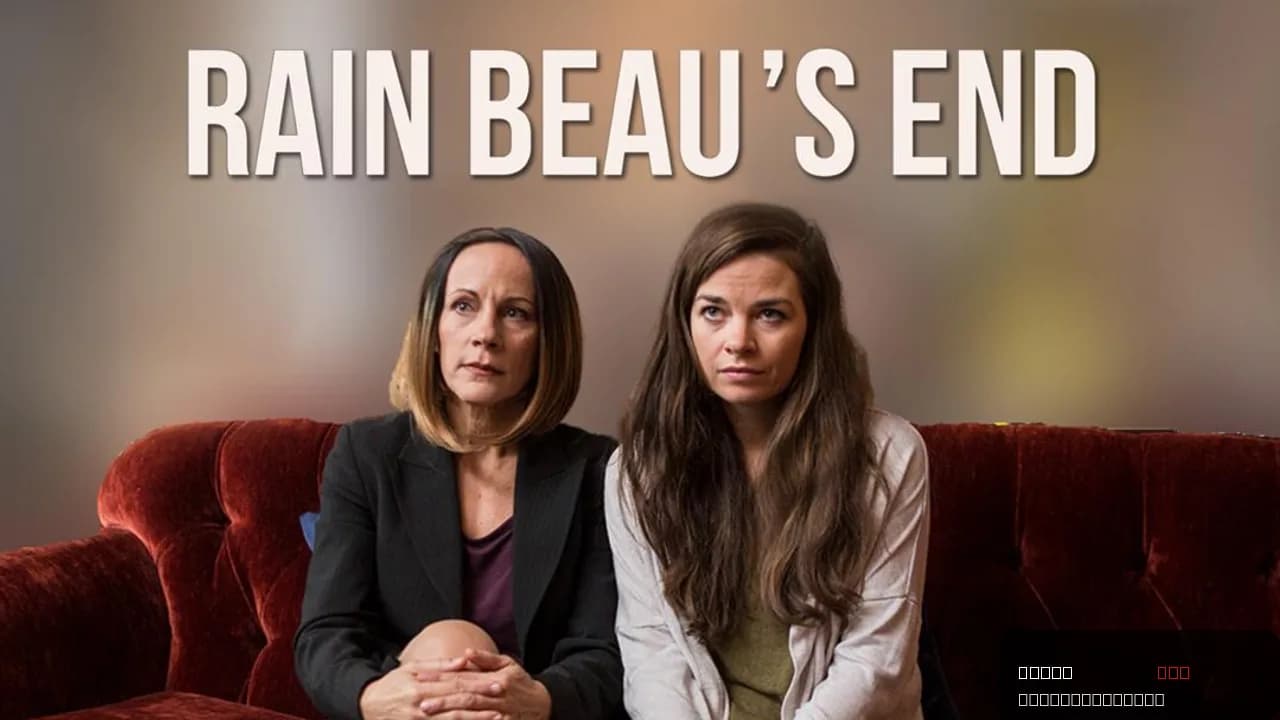
The story of Rain Beau's End and its central moral crisis
Rain Beau's End is a 2020 American drama that centers on a prominent lesbian couple forced to confront the gap between their stated values and their actual instincts when their adopted son receives a genetic diagnosis suggesting a predisposition to violence. The film doesn't offer easy answers—it asks harder questions. What do you do when the child you've chosen to love comes with a biological ticking clock? How do progressive ideals hold up when they collide with raw parental fear? It's the kind of premise that sounds like a thought experiment until it becomes your life.
Director Tracy Wren builds the narrative around this central tension: two women who've built their identity around acceptance and understanding suddenly facing a future they can't control or predict. The early scenes establish their world—stable, intentional, built on principle—before the diagnosis arrives and everything shifts. What's striking about Wren's approach is the refusal to paint either character as villain or hero. They're just two people trying to figure out what comes next.
Behind the making of Rain Beau's End and its cast ensemble
Rain Beau's End brought together a cast with real dramatic weight. Janelle Snow and Amanda Powell carry the film as the couple at its emotional core, while Ed Asner—the legendary actor behind Lou Grant—appears in a supporting role that adds gravitas to the proceedings. Sean Young, Melanie Kannokada, and Christian Stolte round out an ensemble that treats the material with the seriousness it demands. That's not a light roster. These are actors who know how to inhabit complexity.
The film ran 102 minutes and premiered in 2020, arriving in a landscape already saturated with prestige dramas about identity and family. Wren's script doesn't lean on melodrama or artificial tension—instead it builds its power through quiet scenes where characters sit with their own contradictions. No big speeches, no moments designed to make you cry on cue. Just people talking in kitchens, staring out windows, trying to articulate fears they've never had to name before. The production values reflect an indie sensibility: intimate framing, naturalistic dialogue, the sense that you're watching something real rather than performed.
While Rain Beau's End didn't generate major awards buzz or blockbuster box office returns, it found an audience among viewers willing to sit with uncomfortable questions. The film carries an IMDb rating of 4.8/10, which speaks to its divisive nature—some viewers found it unflinching and necessary, while others felt it didn't resolve its tensions satisfyingly. But that division itself is interesting. A movie that splits audiences usually means it's actually trying to say something.
What makes Rain Beau's End stand out in contemporary family drama
What makes Rain Beau's End worth watching isn't spectacle or surprise twists—it's the willingness to sit in moral ambiguity without flinching away. Too many films about family crisis resolve themselves with either redemption or tragedy, neat narrative bows that let us leave the theater feeling like we understand something. Wren's film doesn't work that way. The couple's journey doesn't lead to a place where we can comfortably judge their choices as right or wrong.
I keep coming back to how the film treats its central premise without sensationalism. A genetic predisposition to violence could be the setup for a thriller—something with jump scares and escalating danger. Instead, Rain Beau's End treats it as a philosophical problem. What does it mean to love someone whose future you can't guarantee? How do you parent a child when science suggests he might be capable of harm? These aren't questions with clean answers, and the film respects that. It refuses to tell you what to think. Snow and Powell deliver performances that capture the specific exhaustion of people trying to hold themselves together while everything they believed about choice and consequence gets questioned.
The supporting cast works in concert with this restraint. Asner's presence alone—he carries decades of gravitas—reminds us that this isn't some indie experiment in provocation for its own sake. These are serious actors taking serious material seriously. Stolte and Young contribute moments of friction and perspective that prevent the film from becoming insular. The dialogue feels earned rather than written, which matters when your entire film depends on conversation rather than action.
Honestly, the film's divisive reception probably says more about viewers' expectations than the film itself. We want our dramas to move us toward certainty. Rain Beau's End moves us toward questions instead.
Where to stream Rain Beau's End online
Rain Beau's End is currently available on Prime Video, where you can add it to your watchlist and stream it on demand. The film works well in the home viewing context—it's intimate enough that the smaller screen doesn't diminish its impact. If you're tracking where this title lives across different platforms, Movie OTT maintains up-to-date streaming availability across major services, so you can check there for any changes to where Rain Beau's End streams. The Where to Watch widget at the top of this page will also show you current platform options in your region.
Frequently asked questions
Q: Who directed Rain Beau's End?
Tracy Wren directed the film. Wren's approach emphasizes character and dialogue over plot mechanics, creating a intimate family drama that refuses easy resolutions.
Q: What's the runtime of Rain Beau's End?
The film runs 102 minutes, a lean runtime that keeps the focus tight on the central couple and their moral dilemma without padding.
Q: Is Rain Beau's End based on a true story?
Rain Beau's End is a fictional drama written by Tracy Wren. While it explores themes that resonate with real parenting anxieties and identity questions, the specific narrative is an original creation.
Q: Who stars in Rain Beau's End?
The film features Janelle Snow and Amanda Powell as the central couple, with Ed Asner, Sean Young, Melanie Kannokada, and Christian Stolte in supporting roles.
Q: What's the IMDb rating for Rain Beau's End?
Rain Beau's End holds a 4.8/10 rating on IMDb, reflecting its divisive reception among viewers—some appreciate its moral complexity while others find its ambiguous ending unsatisfying.
Final thoughts on Rain Beau's End
Rain Beau's End isn't a film that resolves neatly or leaves you feeling uplifted. But that's precisely why it's worth your time. In an entertainment landscape crowded with feel-good narratives and tidy character arcs, here's a movie willing to ask hard questions and sit with uncomfortable silence. It trusts its audience to think rather than telling them what to feel. The performances anchor the material with real human vulnerability, and Wren's direction respects the weight of what's being explored. If you're drawn to dramas that challenge rather than comfort, that ask more questions than they answer, Rain Beau's End deserves a place in your queue.