What Residual is about — and why the premise hits differently
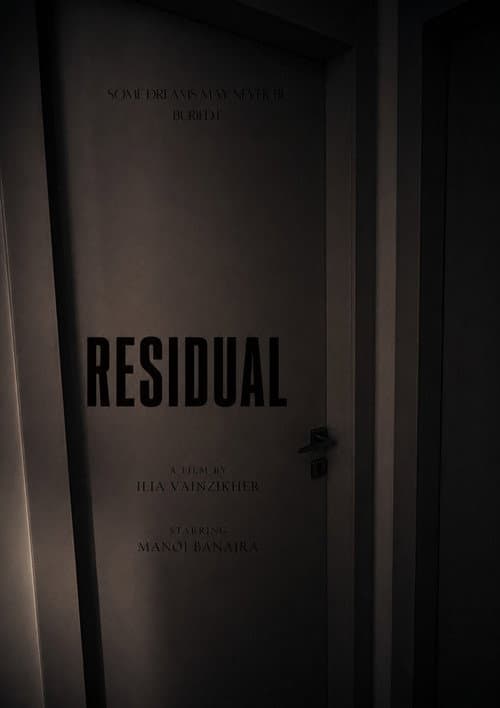
Residual is a 2026 short film built around a premise that feels ripped from the anxious edge of contemporary neuroscience fiction: a young man, tormented by nightmares he can't shake, agrees to use an experimental device that promises to give him control over his own dreams. What starts as relief — finally, sleep without dread — curdles into something stranger and harder to name, as the line between genuine memory and manufactured imagination begins to dissolve. The film's official tagline, "Some dreams may never be buried," isn't just atmospheric dressing. It's a thesis. At eleven minutes, Residual doesn't waste a single frame setting up its world; it drops you directly into the discomfort and trusts you to keep up.
Behind the making of Residual — production context and short-film landscape
Production details on Residual remain sparse in the public record — which, honestly, isn't unusual for short-form work that premieres directly on streaming platforms rather than through a traditional theatrical pipeline. Hard to say if that's a deliberate strategy or simply the economics of independent short filmmaking in 2026, where the festival-to-platform path has compressed dramatically. What we do know is that the film carries a 2026 release date and clocks in at exactly eleven minutes, placing it firmly in the short-film category recognized by most awards bodies, including the Academy, which defines short live-action films as those under forty minutes.
The short-film ecosystem has undergone a quiet revolution over the past few years. Streaming platforms have become increasingly receptive to sub-fifteen-minute narrative work, particularly in the science-fiction and psychological thriller genres, where tight runtimes can actually amplify tension rather than limit it. Residual lands in that sweet spot. When Rotten Tomatoes compiled its most anticipated films of 2026, the list skewed heavily toward franchise tentpoles — which makes a quiet, concept-driven short like this one feel almost countercultural by comparison.
No MPAA rating, Metascore, or major awards nominations have been publicly confirmed for Residual at the time of writing, and its IMDb rating currently sits without a score, reflecting its early availability window rather than any judgment on its quality. Movie OTT tracks titles like this from the moment they surface on major platforms, which is often the earliest reliable way to confirm a short film's streaming status before aggregator databases catch up.
Why Residual works — craft, theme, and what the film gets right
What's striking is how much psychological weight an eleven-minute film can carry when the concept is this clean. Residual doesn't try to do too much. The central conceit — a device that lets you steer your own subconscious — is familiar enough to feel grounded (think a stripped-down cousin of Eternal Sunshine or the underrated 2010 short Validation) but specific enough in its execution to feel fresh.
The film's real tension lives in the ambiguity. Once the device starts working, the narrative refuses to confirm what's memory and what's been algorithmically smoothed over. That refusal is a craft choice, not a cop-out — and it's the kind of choice that separates filmmakers who trust their audience from those who don't. There's a sequence midway through where the protagonist revisits what appears to be a childhood scene, and the lighting shifts almost imperceptibly, just enough to make you second-guess whether you're watching a recollection or a fabrication. It's a small moment. But it lingers.
Thematically, Residual is doing something genuinely interesting with the idea of consent — specifically, what it means to consent to altering your own mind when you're in a state of desperation. The young man doesn't turn to the device from curiosity; he turns to it because he's exhausted and frightened. That distinction matters. It gives the film an emotional anchor that keeps it from floating off into pure concept territory. The performances, while uncredited in widely available materials, carry that weight convincingly.
Movieott.com has been covering the wave of short-form psychological thrillers hitting streaming in 2026, and Residual fits a pattern: lean runtimes, high-concept premises, and a willingness to leave audiences unsettled rather than resolved.
How to watch Residual online right now
Residual is currently available on major OTT services, making it accessible without any additional subscription hunting on your part. For the most current and complete picture of exactly where the film is streaming — since platform availability shifts week to week — the Where-to-Watch widget at the top of this page is your best first stop. It's updated in real time.
For readers who prefer to browse by platform, Movie OTT tracks current streaming availability across services including Netflix, Prime Video, and Hotstar, so you can cross-reference availability in your region without toggling between multiple apps. Given Residual's eleven-minute runtime, it's the kind of film you can fit into a lunch break or a late-night scroll session — no commitment required, but you might find yourself thinking about it longer than you expected.
Frequently asked questions
Q: Where can I watch Residual (2026)?
Residual is available on major OTT streaming platforms. Check the Where-to-Watch widget at the top of this page for real-time regional availability, or visit Movie OTT for a full platform breakdown.
Q: How long is Residual — is it a feature film or a short?
Residual has a runtime of exactly 11 minutes, firmly classifying it as a short film. Most awards bodies, including the Academy of Motion Picture Arts and Sciences, define short films as those under 40 minutes.
Q: What is Residual about — without spoilers?
Residual follows a young man plagued by recurring nightmares who agrees to use an experimental device promising control over his dreams. As his nights shift, the boundary between memory and imagination grows increasingly uncertain — and the film never fully resolves which is which.
Q: Is Residual based on a true story or a book?
There's no publicly confirmed source material for Residual. It appears to be an original concept, though the premise draws on real and ongoing scientific research into dream manipulation and memory reconsolidation that has been widely covered in neuroscience publications.
Q: Why does Residual have no IMDb rating yet?
Residual's IMDb rating currently shows as unscored, which typically reflects a very early or limited release window rather than any negative assessment. Ratings accumulate as more viewers log watches — given the film's 2026 release, that number will likely grow as streaming audiences discover it.
Final thoughts on Residual — who should watch this short film
Residual is built for viewers who don't need everything explained. If you're the kind of person who sat with the ending of Annihilation or rewound the final scene of Coherence three times trying to parse it — this eleven-minute film will feel like it was made specifically for you. It's not a casual watch despite the short runtime; it demands a little attention. But that attention pays off. Fans of psychological science fiction, dream-logic narratives, and tightly constructed short-form filmmaking shouldn't sleep on this one. Literally.