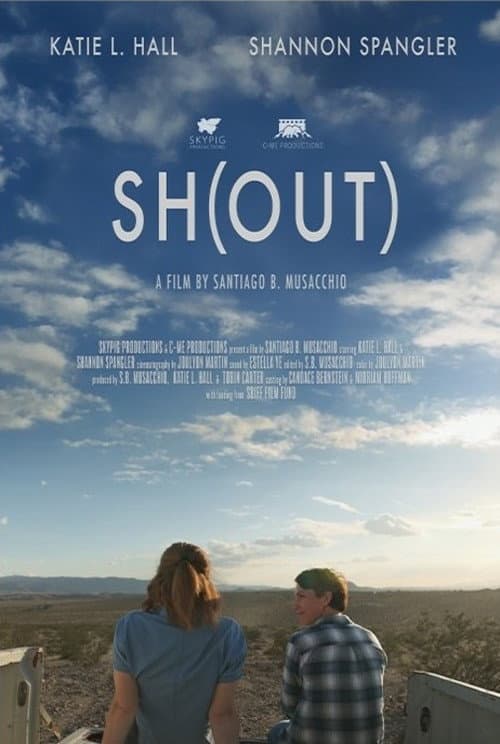




Sh(Out): A 20-Minute Road to Remembering Yourself
Sh(Out) is a 2026 streaming short about a 43-year-old mother who gets in a car and leaves — not dramatically, not angrily, just quietly. After 20 years of marriage, she drives toward the only thing that scares her more than staying: figuring out who she is when nobody needs her to be anything at all. It's 20 minutes long. It doesn't waste a single one.
What actually happens: the story, stripped down
The film opens on a woman behind the wheel. Bags in the back seat. The road ahead empty in a way that feels both terrifying and necessary. She's not running from a villain. She's not having a crisis in the conventional sense — the kind with dramatic music and a third-act breakdown. What's happening here is quieter and, honestly, harder to watch: a person trying to remember herself.
There's a scene in a diner where she sits in a booth, orders coffee, and just looks out the window. No voiceover explaining her pain. No swelling score telling you how to feel. Just a woman occupying space on her own terms, maybe for the first time in years. That's the whole film, in miniature — restraint doing the heavy lifting.
What strikes me most is that the screenplay doesn't frame her marriage as evil or her motherhood as a trap. That's the smart choice, and rare. She's not escaping cruelty. She's escaping invisibility — the slow erosion of self that happens when you spend two decades being defined entirely by your relationships to other people. The longing to be seen isn't a dramatic demand in this film. It's a whisper. And the film trusts you to hear it.
Why the 20-minute runtime isn't a limitation — it's the point
A lot of filmmakers pad. They explain. They add scenes because they have the time. The director of Sh(Out) does the opposite. Every image has to carry weight. The road becomes a character — wide, indifferent, offering no answers, just space. That's the confidence of someone who trusts the audience not to need everything spelled out.
Short-form cinema on streaming platforms has shifted in the last few years. Movie OTT has been tracking this wave — filmmakers using compression as an artistic tool, not a budget limitation. Sh(Out) fits squarely in that tradition. The 20 minutes force a discipline that longer films avoid, and what emerges is something that doesn't feel short at all. It feels complete.
Where to watch Sh(Out) right now
Sh(Out) is currently streaming on major OTT platforms. The exact availability depends on your region — streaming rights for short films shift more often than feature releases do. Check the Where to Watch widget at the top of this page on Movie OTT, which updates in real time as those rights change.
The runtime makes it easy to fit into an actual life: a lunch break, late night after everyone's asleep, the kind of stolen half-hour that feels, fittingly, like exactly what the film is about. That's not accidental. It's the whole design.
Why Sh(Out) doesn't show up on standard release calendars
You won't find this film on The Numbers' 2026 theatrical schedule or IMDb's release calendar. That's not a mystery. It's a streaming-first short that bypassed traditional theatrical distribution entirely — which is the standard path for short-form work. No theatrical announcement. No festival circuit coverage (at least none that made the trades). Just a film that exists on platforms and gets discovered when people stumble across it or hear about it from someone who watched.
Hard to say if that was strategic or just how short films get made outside the studio system these days. Either way, that's where you'll find it.
If you liked quiet character studies, watch this
If you're drawn to films like Nomadland or First Reformed — stories about solitude and self-discovery that don't need explosions or plot reversals — Sh(Out) will land differently for you. It's in that register of cinema that trusts silence. That believes a woman sitting alone in her car, thinking, is enough. That's rare. Protect it.
The film also works if you've ever felt like you disappeared inside your own life. Which, statistically, includes most of the people reading this.
The questions people actually ask
Where is it streaming? Check Movie OTT's where-to-watch tracker for your region. Availability varies, and short films rotate faster than features.
How long is it? Exactly 20 minutes. Runtime matters here — it's not padding.
Who's in it? A 43-year-old mother. The film doesn't center on star power.
Is it family-friendly? No content warnings have been publicly flagged. That said, it's a quiet adult story about marriage and identity — better suited to viewers who appreciate character-driven work over plot-driven.
Is it based on a true story? No confirmed autobiographical connection has surfaced. But it has the specificity of something drawn from lived experience — the kind of detail you can't invent.
Worth your time?
Twenty minutes. That's the ask. And what you get back is harder to articulate — a recognition, maybe a small permission slip to want more than the role you've been cast in. The film doesn't shout. It murmurs. That's exactly why it stays.
If you find a spare half-hour and you're willing to sit with something real, this is where to spend it.
