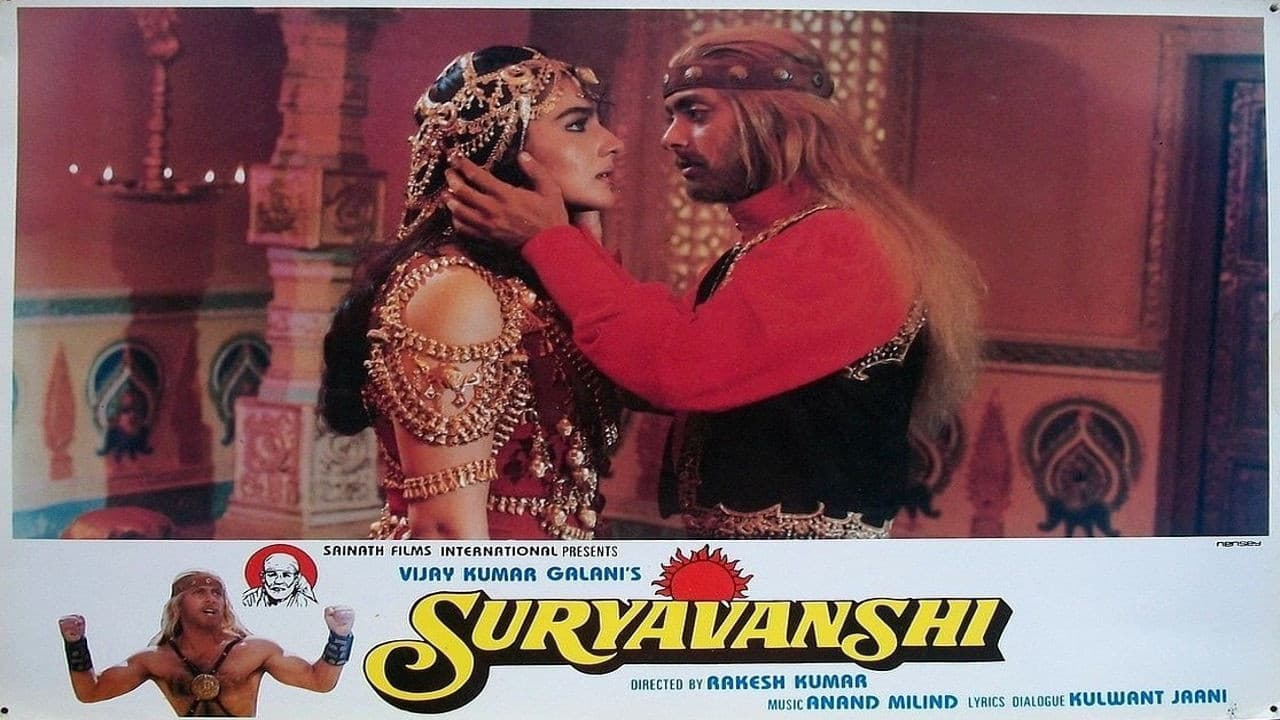









The story of Suryavanshi: An archaeologist's descent into the unknown
Suryavanshi tells the story of an archaeologist who unearths an underground palace buried beneath Sangramgarh, a discovery that should excite the academic world but instead awakens something the local community has long feared. The residents of the region aren't thrilled about the excavation—they've inherited warnings about leaving the past undisturbed, and they want the archaeologist to abandon the dig before it's too late. What unfolds is a clash between scientific curiosity and ancient superstition, between the modern desire to uncover history and the village's collective memory of why some things were meant to stay buried. The film's central tension isn't just archaeological; it's deeply personal, as the protagonist must navigate both the physical dangers of the excavation and the psychological weight of discovering that the locals' fears weren't mere folklore. It's a premise that could have been genuinely unsettling in the right hands.
Behind the making of Suryavanshi: Production, cast, and commercial disappointment
Suryavanshi arrived in 1992 as a romantic fantasy-horror film directed by Rakesh Kumar, produced by Vijay Kumar Galani and Kinney Galani under the Sainath Films banner. The film boasted a notable cast: Salman Khan in a lead role, alongside Sheeba and Amrita Singh—three recognizable names in Hindi cinema at the time. With a runtime of 174 minutes, the filmmakers clearly envisioned an expansive narrative, something ambitious enough to justify a nearly three-hour commitment from audiences. Yet despite the star power and production ambition, Suryavanshi failed to find an audience. The box office was unkind, and the film never achieved the commercial or critical momentum its makers had likely hoped for. According to contemporary reports, the film struggled to connect with viewers, and it's largely faded from mainstream memory—the kind of title that doesn't come up in casual conversations about '90s Hindi cinema. What's striking is that the film's failure didn't come from lack of resources or talent, but perhaps from a concept that was simply ahead of its time, or conversely, too confused in its genre ambitions to land effectively.
What makes Suryavanshi stand out: Ambition, genre-blending, and mixed results
What's most interesting about Suryavanshi—at least from a historical perspective—is its willingness to blend genres in an era when Hindi cinema was still finding its footing with horror and fantasy. The film doesn't choose between being a romance, a fantasy adventure, or a supernatural thriller; it tries to be all three at once. That's either a sign of creative ambition or narrative confusion, depending on your generosity as a viewer. Salman Khan's presence carries a certain charisma (he was already a rising star by 1992), and the supporting cast brings credibility to what could have been a purely pulpy premise. The underground palace concept has real visual potential—there's something inherently cinematic about exploring hidden chambers and uncovering ancient secrets. What's less clear from the film's legacy is whether the execution matched the concept. With an IMDb rating of 5.2 out of 10, it's fair to say audiences found the final product uneven. Some viewers might find it a fascinating artifact of a particular moment in Indian cinema—a time when filmmakers were experimenting with genre in ways that didn't always succeed, but that had genuine creative intent behind them. Others will likely find it difficult to sit through, especially given the 174-minute runtime. The thing nobody mentions is that sometimes the most interesting films are the ones that tried hard and missed—they tell us something about what was possible, what was being attempted, even if the results don't quite justify the ambition.
Where to stream Suryavanshi online
Suryavanshi is currently available on major OTT services, making it easier than ever to explore this piece of '90s Hindi cinema history from your couch. Rather than hunting through physical media or waiting for cable broadcasts, you can access the film through Movie OTT, which tracks current streaming availability across platforms so you don't have to check each service individually. The "Where to Watch" widget at the top of this page will show you exactly which streaming platform has Suryavanshi available in your region right now—availability shifts frequently, so it's worth checking there before you start searching. If you're the type who collects obscure films or enjoys '90s nostalgia, having instant access through streaming makes it a low-friction way to satisfy your curiosity without committing to a purchase.
Frequently asked questions
Q: Who directed Suryavanshi?
Suryavanshi was directed by Rakesh Kumar and produced by Vijay Kumar Galani and Kinney Galani under Sainath Films. The film was released in 1992 and featured a cast including Salman Khan, Sheeba, and Amrita Singh.
Q: What's the plot of Suryavanshi about?
The film follows an archaeologist who discovers an underground palace at Sangramgarh. Local residents fear the excavation will unleash something dangerous, and their warnings prove to have more truth to them than expected, blending archaeological adventure with supernatural elements.
Q: How long is Suryavanshi?
Suryavanshi runs for 174 minutes (just under three hours), making it a substantial commitment—though not unusually long for Hindi cinema of that era.
Q: Why did Suryavanshi fail at the box office?
While exact reasons aren't documented, the film's genre-blending approach and mixed critical reception likely contributed to its commercial underperformance. It remains a curiosity rather than a celebrated entry in '90s Indian cinema.
Q: Is Suryavanshi available to stream?
Yes. Suryavanshi is currently available on major OTT platforms. Check the "Where to Watch" widget on this page to see which service has it in your region.
Final thoughts on Suryavanshi
Suryavanshi isn't a masterpiece, and it's easy to understand why it didn't capture audiences in 1992 or since. But it's worth watching if you're curious about the experimental edges of Hindi cinema from that era—when filmmakers were still figuring out how to blend romance, fantasy, and horror into something cohesive. The film's failure is, in its own way, instructive. It reminds us that ambition doesn't always translate to execution, and that some ideas need the right moment, the right director, and the right audience alignment to work. If you've got nearly three hours to spare and a tolerance for uneven filmmaking in service of an interesting concept, Suryavanshi deserves a look. You might find it frustrating, or you might find it fascinating—either way, it's the kind of film that stays with you as a reminder of cinema's willingness to take risks, even when those risks don't pay off.