

The story of Swimming to Cambodia
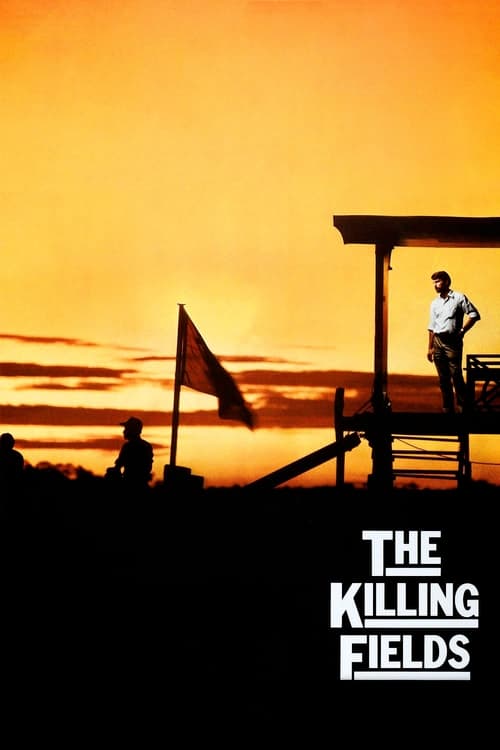
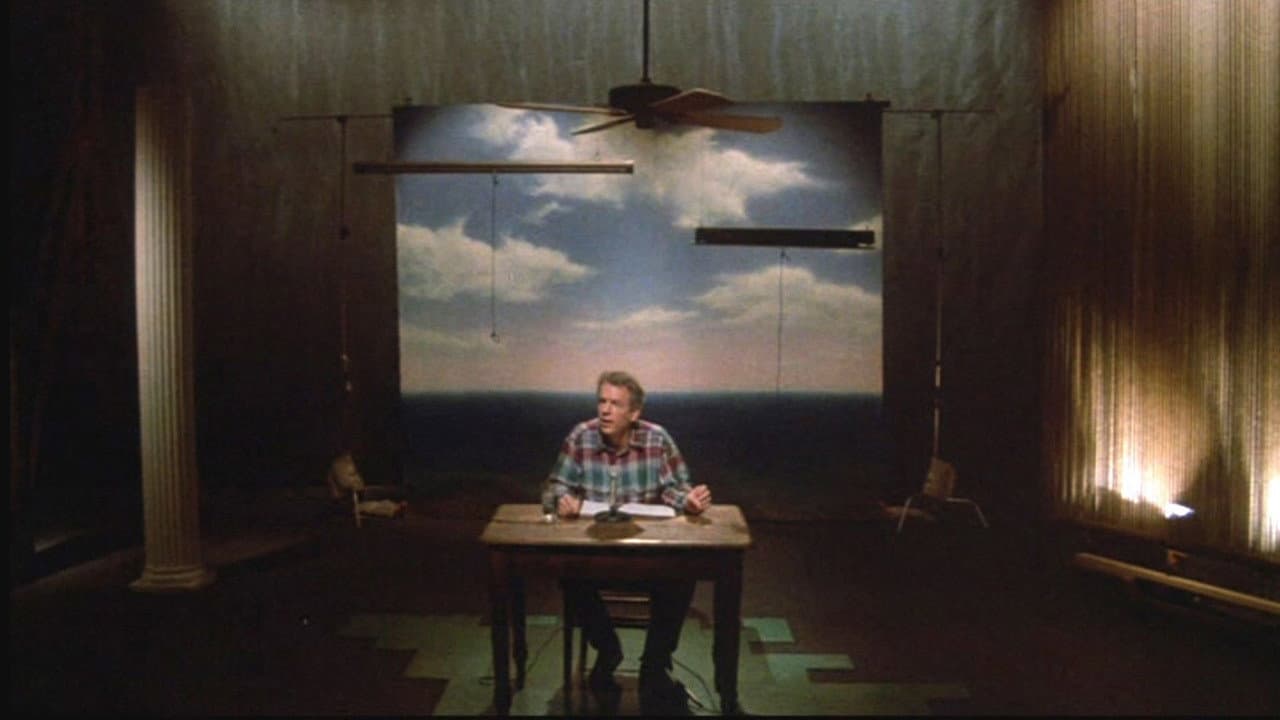
Swimming to Cambodia isn't what you'd expect from a film. There's no plot in the traditional sense, no dramatic arc, no supporting cast moving through scenes. Instead, Spalding Gray sits behind a desk—that's it. He talks. For 85 minutes, the entire film consists of one man recounting his experiences as a minor actor in the 1984 war film The Killing Fields, weaving in observations about Cambodia's political history, his own anxieties, and the absurdity of making a movie about genocide while staying in a luxury hotel. The genius isn't in what happens on screen. It's in what Gray makes you think about while he's sitting there, talking directly to you.
The monologue moves between his small role as a U.S. Ambassador's aide, the logistics of filming in Thailand (standing in for Cambodia), and deeper reflections on the Cambodian genocide under the Khmer Rouge—the historical backdrop of The Killing Fields itself. Gray's narration oscillates between self-deprecating humor and genuine moral questioning, creating something that feels less like a performance and more like being trapped in a conversation with someone who's seen something that shook him, and can't quite stop processing it.
Behind the making of Swimming to Cambodia
Swimming to Cambodia began as a stage play—Gray's one-man performance piece that he'd developed and refined over time. Jonathan Demme, the acclaimed director known for Silence of the Lambs and Stop Making Sense, recognized something cinematic in Gray's monologue and adapted it for film in 1987. Rather than open it up with flashbacks or location footage, Demme made a radical choice: keep it simple. Keep Gray at the desk. The production was lean, the approach almost anti-cinematic in its refusal to "open up" the material the way conventional wisdom would dictate.
The film earned nominations at the 1988 Independent Spirit Awards in four categories: Best Feature, Best Director (Demme), Best Actor (Gray), and Best Screenplay. It wasn't a box-office juggernaut—performance films rarely are—but it found its audience among critics and cinephiles who recognized what Demme and Gray had pulled off. The runtime of 85 minutes is deceptively short; it feels longer because you're locked in, listening, thinking. There's no padding, no filler. Every tangent Gray goes on feels earned, every joke lands because it's built on genuine observation rather than manufactured comedy. The film remains a testament to what two artists can accomplish when they trust their material and their audience's patience.
What makes Swimming to Cambodia stand out
What's striking is how Gray manages to be funny without being flippant about serious subjects. He'll crack a joke about his own vanity—obsessing over whether he'll be visible enough in The Killing Fields—and then pivot to discussing the estimated two million Cambodians killed by the Khmer Rouge. That tonal whiplash shouldn't work, but it does, because Gray never asks you to laugh at Cambodia or the genocide. He's laughing at himself, at the absurdity of his own concerns, which somehow makes the weight of history feel more present, not less.
Demme's direction is deceptively simple. The camera stays mostly static, occasionally pushing in slightly on Gray's face, letting his expressions and gestures carry the emotional weight. He's not performing in the theatrical sense—there's no big emotional crescendos, no dramatic pauses designed for applause. Instead, he's conversational, almost confessional. The thing nobody mentions is that this restraint is what makes it work. A flashier director might've added archival footage, might've cut away to scenes of Cambodia or film sets. Demme understood that the power lies in the intimacy of watching someone think out loud.
Gray's search for his "perfect moment"—a phrase that recurs throughout—becomes the emotional core. He's not just talking about acting or history; he's grappling with meaning itself, with how we find significance in our lives when we're surrounded by real tragedy. It's a performance about performance, about the gap between what we do and what matters. The 1987 release date gives it a particular Cold War anxiety too—this was made during a specific moment in American consciousness, and that context seeps into every digression.
Where to stream Swimming to Cambodia online
Swimming to Cambodia is available across major OTT services, and you can check the Where to Watch widget at the top of this page to see exactly which platforms currently have it in your region. If you're serious about exploring performance cinema or Jonathan Demme's directorial range beyond his mainstream thrillers, this is essential viewing. Movie OTT tracks streaming availability in real time, so you'll know instantly whether it's on the service you already subscribe to. It's the kind of film that rewards a dedicated watch—not background viewing, but something you sit down with intentionally, maybe even with a notebook nearby if you're the type to jot down thoughts.
Frequently asked questions
Q: Who directed Swimming to Cambodia?
Jonathan Demme directed the film, adapting Spalding Gray's stage monologue for cinema. Demme was also nominated for Best Director at the 1988 Independent Spirit Awards for the film.
Q: Is Swimming to Cambodia based on a true story?
Yes and no. Gray's experiences as an actor in The Killing Fields are real, as is the historical context about Cambodia he discusses. However, it's a personal essay filtered through his perspective and humor, not a documentary or biography.
Q: How long is Swimming to Cambodia?
The film runs 85 minutes, consisting entirely of Gray's monologue delivered from behind a desk.
Q: What is the IMDb rating for Swimming to Cambodia?
Swimming to Cambodia holds a 6.9/10 rating on IMDb, reflecting its status as a critically appreciated but niche film that doesn't appeal to all audiences.
Q: Can I watch Swimming to Cambodia if I haven't seen The Killing Fields?
Absolutely. While familiarity with The Killing Fields adds context, Gray's monologue works as a standalone piece. He provides enough background about both the film and Cambodia's history that you don't need prior knowledge to follow along.
Final thoughts on Swimming to Cambodia
Swimming to Cambodia is a film that shouldn't work, yet somehow does—brilliantly. It's proof that cinema doesn't need action, plot, or conventional narrative to be compelling. What it needs is honesty, intelligence, and a performer willing to sit still and think out loud. Spalding Gray gives you all three, and Jonathan Demme knows exactly how to film someone thinking. If you're tired of the same old streaming fare and want something that'll actually stick with you—that'll make you think about performance, history, ego, and meaning—don't sleep on this one. It's a masterclass in doing more with less.