







The story of Sword of Desperation
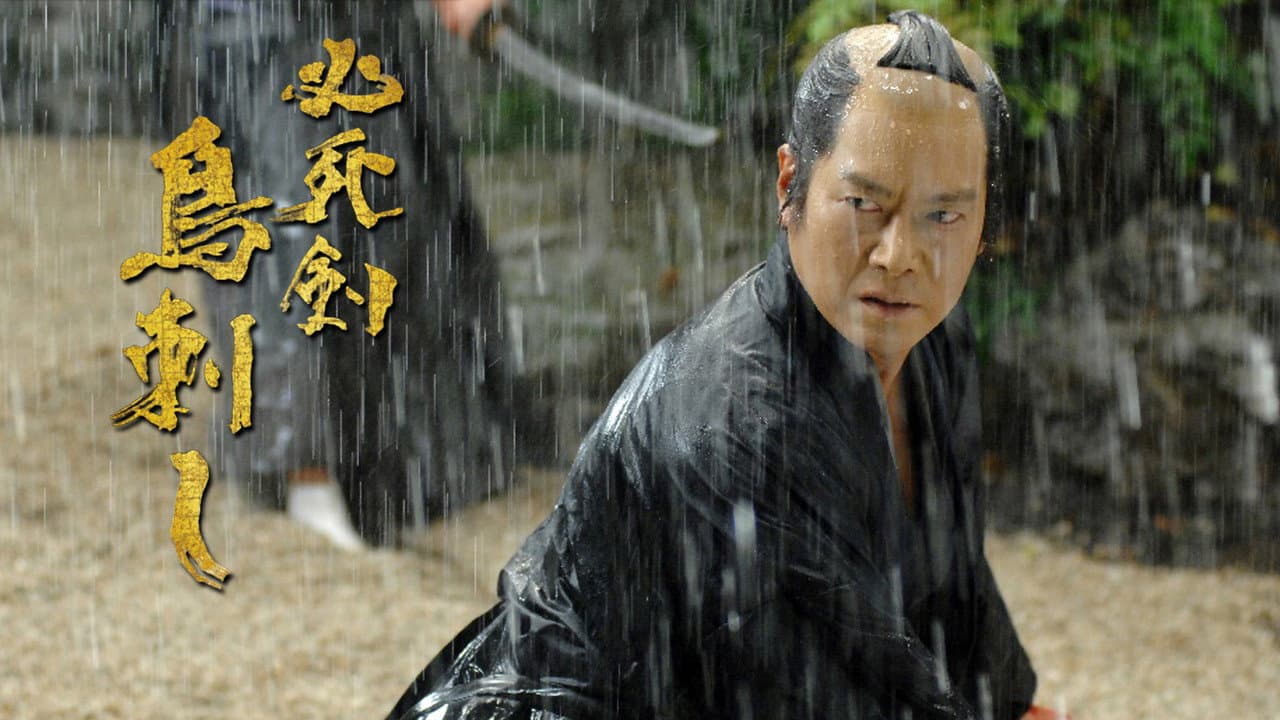
Sword of Desperation follows Kanemi Sanzaemon, a gifted but deeply conflicted swordsman navigating the rigid hierarchies and moral ambiguities of Edo Period Japan. Three years before the film's main timeline, Kanemi committed a crime that should have destroyed him—he killed Renko, the corrupt mistress of a powerful daimyo named Tabu Ukyou. What's striking is that he received an astonishingly lenient sentence, serving only one year in prison before being allowed to return to his clan. The leniency itself becomes a mystery that haunts him. Upon his return home, tragedy strikes again: his wife Mutsue dies, leaving Kanemi adrift in grief and guilt. It's in this darkness that his wife's niece, Satoo, enters his life—a young woman whose quiet devotion begins to pull him back from the brink. She doesn't judge his past; she simply helps him see a future worth living. Parallel to this emotional arc, Kanemi develops an unconventional sword technique called the "bird-catching" method, a fighting style born from desperation and ingenuity that will soon be tested against Hayatonosho Obiya, a fearsome warrior whose reputation precedes him. The collision of these two forces—personal redemption and martial combat—forms the film's beating heart.
Behind the making of Sword of Desperation
Sword of Desperation arrived in Japanese theaters on July 10, 2010, helmed by director Hideyuki Hirayama, who brought a careful, character-driven sensibility to what could have been a straightforward action vehicle. The film was adapted from a novel by Shūhei Fujisawa, a respected author of samurai fiction, with the screenplay crafted by Hidehiro Itō and Itaru Era. Itō also served as producer, ensuring the source material's thematic depth made it to screen. The production drew on considerable resources, with backing from Excellent Film, TV Asahi, Pony Canyon, Toei Company, Sankei Shimbun, and K DASH—a coalition that speaks to the film's prestige within the Japanese film industry. While the movie didn't become a massive box-office phenomenon, it found an appreciative audience among samurai-drama enthusiasts and critics who valued its refusal to reduce its protagonist to a simple hero or villain. At 114 minutes, the runtime allows Hirayama to breathe life into quieter moments between the set pieces, a choice that distinguishes it from more frenetic period action films. The production design and costume work reflect meticulous attention to historical detail without ever feeling stiff or academic.
What makes Sword of Desperation stand out
What really sets this film apart isn't just the swordplay, though the choreography is genuinely inventive. It's the willingness to sit with Kanemi's emotional wreckage and let that inform every decision he makes. Most samurai films treat guilt as a plot device; Sword of Desperation treats it as a living thing. The relationship between Kanemi and Satoo could've been maudlin in less careful hands, but instead it becomes the film's emotional anchor—there's a tenderness to their scenes together that makes his eventual choices feel earned rather than manipulated. I keep coming back to how the film refuses easy answers. Kanemi isn't redeemed because he wins a duel or because he's loved; he's redeemed because he chooses to stay present, to feel the weight of what he's done, and to build something fragile with another person. The bird-catching sword technique itself functions as a metaphor—a method born from constraint and ingenuity, not brute force. When we finally see it deployed in combat, it's both visually striking and thematically coherent. The ensemble cast, while not household names outside Japan, brings a grounded authenticity to their roles that prevents the melodrama from tipping into overwrought territory. The IMDb rating of 6.9/10 suggests a solid, well-regarded entry in the samurai canon that doesn't quite reach masterpiece status but absolutely merits your time.
Where to stream Sword of Desperation online
Finding Sword of Desperation has become easier thanks to the proliferation of streaming platforms carrying international cinema. The film is currently available on major OTT services—you can check the "Where to Watch" widget at the top of this page to see which platform has it in your region right now. Movie OTT aggregates real-time availability across multiple services, so you won't waste time hunting through apps only to discover it's not there. Japanese period dramas have found a growing audience on streaming platforms, and Sword of Desperation benefits from that expanded distribution. Whether it's available on your preferred service depends on your location and current licensing agreements, which is why the widget updates regularly. If you're a subscriber to any of the major streaming services, there's a solid chance it's already in your library.
Frequently asked questions
Q: Who directed Sword of Desperation?
Hideyuki Hirayama directed the film, bringing a character-focused approach to the samurai action genre. His direction emphasizes emotional depth alongside the combat sequences.
Q: Is Sword of Desperation based on a true story?
No, it's based on a novel by Shūhei Fujisawa, a respected author of samurai fiction. While it captures the historical period authentically, the characters and plot are fictional creations.
Q: How long is Sword of Desperation?
The film runs 114 minutes, giving the director sufficient time to develop both the action sequences and the intimate character moments that define the story.
Q: What's the bird-catching sword technique?
It's an unconventional fighting method developed by the protagonist Kanemi, born from necessity and ingenuity rather than traditional training. The technique becomes central to the film's climactic confrontation.
Q: What genres does Sword of Desperation blend?
The film combines action, thriller, and romance elements—it's not purely a combat showcase but rather a character study that happens to feature some of that combat.
Final thoughts on Sword of Desperation
Sword of Desperation deserves a place in your watchlist if you're hungry for samurai cinema that takes its emotional stakes as seriously as its action sequences. It won't blow your mind with revolutionary filmmaking, but it'll stick with you—the kind of film that lingers because it understands that redemption isn't a destination, it's a practice. Don't sleep on it just because it didn't dominate international film festivals. Sometimes the best films are the quiet ones that do their work without fanfare.