








The story of The Amazing Captain Nemo
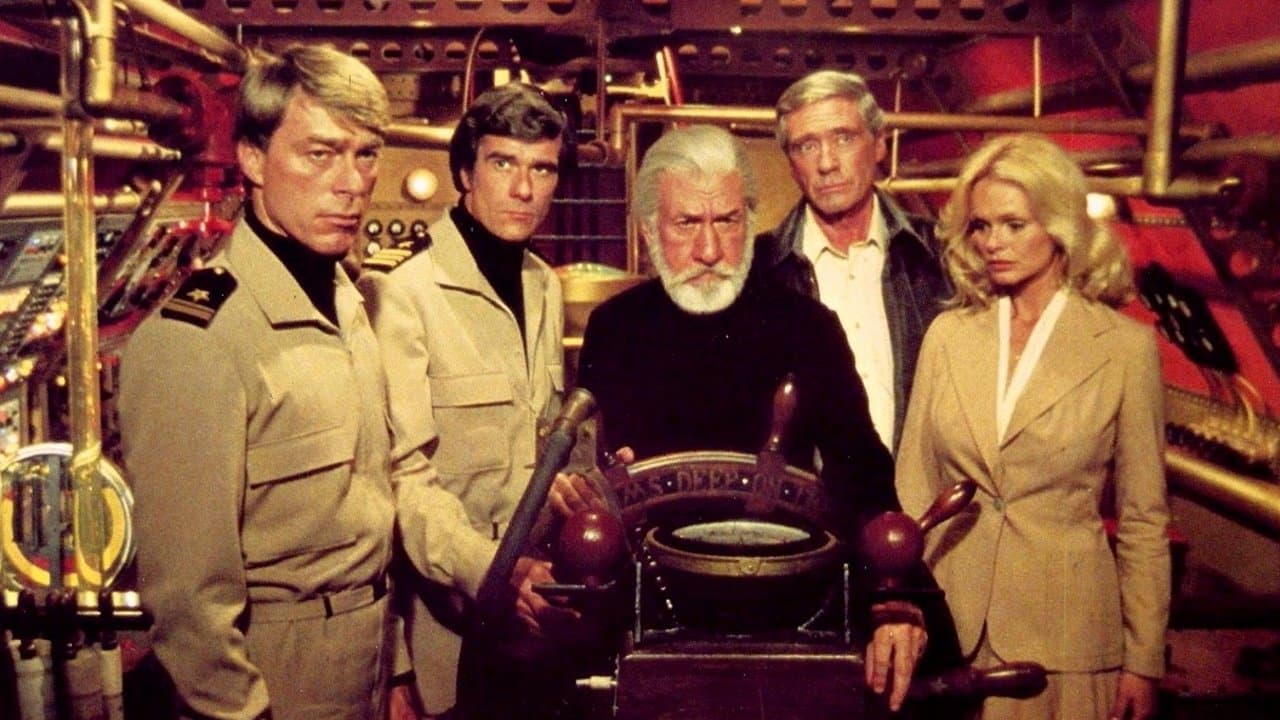
The Amazing Captain Nemo opens with a premise that feels ripped from a pulp comic: the legendary submarine captain, frozen in suspended animation beneath the sea for over a century, is discovered and revived by modern-day Navy personnel. But there's a catch. They don't wake him out of historical curiosity or scientific wonder—they need him. A fiendish mad scientist has emerged as a genuine threat to the world's ocean depths, and Nemo's expertise and his legendary vessel, the Nautilus, are their only hope. What unfolds across 98 minutes is a race against time, a collision between Jules Verne's 19th-century invention and 1970s Cold War anxieties, with an aging superhero forced to navigate both the literal ocean floor and the bewildering modern world he's left behind.
Behind the making of The Amazing Captain Nemo
The Amazing Captain Nemo didn't emerge from nowhere. It's a product of Irwin Allen Productions, the studio behind Voyage to the Bottom of the Sea, the campy but beloved TV series that ran from 1964 to 1968. Allen, a producer with an uncanny knack for turning high-concept sci-fi premises into television gold, saw an opportunity to mine the Captain Nemo mythology once more. The 1978 miniseries was written by six screenwriters—a committee approach that often signals studio interference, but in this case included Robert Bloch, the legendary horror writer behind Psycho. That pedigree alone suggested ambitions beyond simple exploitation.
Warner Bros. Television backed the production, giving it network legitimacy and resources. The runtime of 98 minutes was padded from television's original miniseries format, edited for theatrical or syndication release. What's striking is that nobody involved seemed to be making a cynical cash grab. The cast and crew genuinely attempted to honor Verne's source material while updating it for an era obsessed with environmental disasters, rogue scientists, and the untapped frontiers of deep-sea exploration. The film arrived in 1978, right when disaster movies were still box-office gold and when audiences hadn't yet tired of retro-futuristic aesthetics.
What makes The Amazing Captain Nemo stand out
Here's the thing about The Amazing Captain Nemo—it doesn't quite work, but it's fascinating precisely because it fails so earnestly. The performances anchor the piece even when the plot strains credibility. There's a genuine pathos in watching an actor embody a man displaced in time, struggling to comprehend jet aircraft and satellite technology when he last knew steam engines and electric lights. The fish-out-of-water angle could've been played for pure comedy, but the film treats Nemo's disorientation with a melancholy that feels unexpectedly human.
The production design is where you see the seams most clearly. The Nautilus set pieces are elaborate and lovingly constructed—all brass fittings and period-appropriate Victorian engineering—but they sit uneasily next to 1970s Navy bunkers with their orange paneling and chunky computer terminals. That visual collision is almost the entire movie in microcosm: a yearning for the romantic past battling against the mundane present. What's striking is that this tension was probably unintentional, but it works. The action sequences, while limited by the TV-movie budget, have a scrappy charm that modern blockbusters with unlimited resources somehow can't replicate. You believe the actors are genuinely in danger because the sets look like they could actually collapse.
Critically, The Amazing Captain Nemo sits at 5.417 on IMDb—respectable for a 1978 TV movie, though hardly a ringing endorsement. But that score doesn't capture what the film is actually doing. It's not trying to be a serious adaptation of Twenty Thousand Leagues Under the Seas. It's an homage to the adventure serials of an earlier era, a time capsule of how one generation imagined the future would look. That's not a flaw; that's the entire point.
Where to stream The Amazing Captain Nemo online
The Amazing Captain Nemo is currently available on major OTT services, making it easier than ever to revisit this curious artifact of 1970s sci-fi television. If you're hunting for where to watch it, Movie OTT tracks current streaming availability across platforms in real time, so you can see exactly which service has it in your region. Availability does shift—streaming rights are notoriously fluid—but the film pops up regularly on services that specialize in classic TV movies and genre content. The best approach is to check the Where-to-Watch widget at the top of this page for live, updated platform listings.
Frequently asked questions
Q: Is The Amazing Captain Nemo based on Jules Verne's novel?
Yes, it's loosely based on Twenty Thousand Leagues Under the Seas, the 1870 novel. However, the film takes considerable liberties, transplanting the Captain into the 1970s and reimagining him as a frozen time capsule rather than a contemporary character.
Q: Who directed The Amazing Captain Nemo?
The miniseries was directed by Alex March and Paul Stader, with production by Irwin Allen, the legendary producer behind Voyage to the Bottom of the Sea and other classic sci-fi television.
Q: How long is The Amazing Captain Nemo?
The film runs 98 minutes, edited from its original television miniseries format for theatrical or syndication release.
Q: What's the IMDb rating for The Amazing Captain Nemo?
It holds a 5.417 rating on IMDb, which reflects its status as a cult curiosity rather than a universally beloved classic—though that score doesn't tell the whole story about its charm.
Q: Why was Captain Nemo revived in this story?
Modern-day Navy officials wake him specifically to combat a dangerous mad scientist threatening the ocean depths, forcing the legendary captain to confront both the villain and a world transformed by a century of progress.
Final thoughts on The Amazing Captain Nemo
The Amazing Captain Nemo isn't essential viewing. It won't change your life or reshape your understanding of science fiction cinema. But if you're a completist hunting down every adaptation of Verne's work, or if you're drawn to the particular aesthetic of 1970s television sci-fi, it's absolutely worth ninety-eight minutes of your time. There's something oddly moving about watching a production this earnest reach for something grand and fall just short. The film's heart is in the right place—it loves its source material, it respects its cast, and it genuinely wants to entertain. That's rarer than you'd think.