The story of The Barefoot Contessa
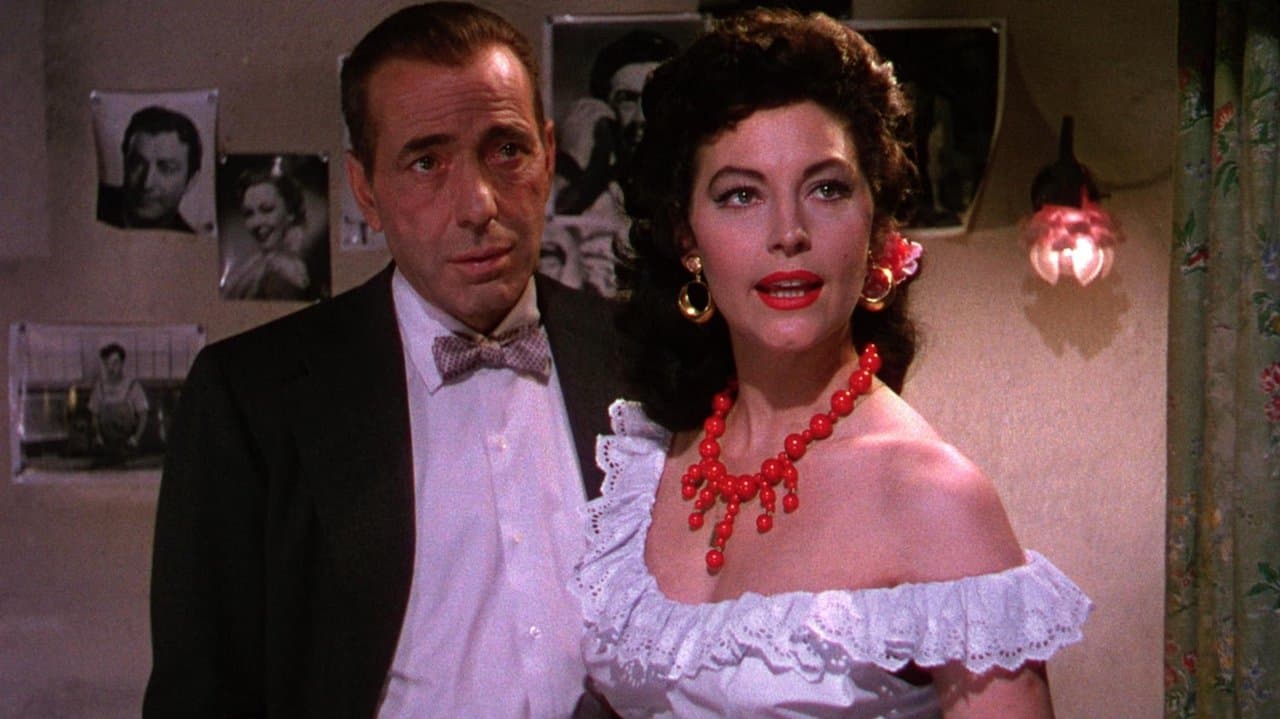
The Barefoot Contessa opens on a filmmaker at his lowest point. Harry Dawes is a once-celebrated director whose career has flatlined, his reputation in tatters, his prospects nonexistent. Then he walks into a Madrid nightclub and sees Maria Vargas dancing—a woman with a kind of raw magnetism that can't be manufactured or taught. She's got something. He knows it immediately. What follows is a character study wrapped in a Hollywood romance, one that follows Maria from the nightclub stage to the glittering sets of international cinema, and then deeper still into the machinery of fame and the men who profit from it. The world's most beautiful animal, as the tagline promises, but also a woman caught between her own desires and everyone else's designs on her future.
Behind the making of The Barefoot Contessa
The Barefoot Contessa arrived in 1954 as a prestige project from writer-director Joseph L. Mankiewicz, a filmmaker already known for his sharp, dialogue-driven dissections of power and ego. Produced by Figaro Incorporated Production, Transoceanic Film, and released through United Artists, the film assembled one of the era's most formidable casts: Humphrey Bogart as Dawes, Ava Gardner as Maria Vargas, and Edmond O'Brien as the wealthy, volatile producer Edwards. This wasn't a low-budget affair—it was a full-scale studio production designed to showcase Gardner's star power and explore the darker underbelly of the entertainment industry. The 128-minute runtime allowed Mankiewicz to build his narrative deliberately, layering in the social positioning and power politics that would become the film's thematic backbone. While the picture didn't dominate the box office in the way some studio executives hoped, it earned respect from critics and cinephiles who recognized Mankiewicz's unflinching look at how the film industry chews up and discards its brightest talents. The film's exploration of fame, desire, and the male gaze would influence Hollywood dramas for decades.
What makes The Barefoot Contessa stand out
What's striking about The Barefoot Contessa is how it refuses to sentimentalize any of its characters. Bogart's Dawes isn't a hero rescuing Maria from poverty—he's a man using her to rebuild his own career. Edwards isn't a villain twirling a mustache; he's a man shaped by wealth and entitlement, genuinely convinced that his money entitles him to possess her. And Maria herself isn't a helpless victim, though she's certainly vulnerable. She's intelligent, aware, and desperately seeking something real in a world where everyone sees her as a commodity. Gardner's performance is the engine here—she brings a kind of weary sophistication to the role, a woman who understands the game but can't quite escape it. There's a moment late in the film where she confronts the reality of what her life has become, and it's quietly devastating. The supporting cast—particularly O'Brien's spoiled, dangerous producer—adds texture and menace to the proceedings. Bogart's narration, which frames the entire story, gives the film a noir-adjacent quality that feels perfectly suited to its cynical view of Hollywood. The cinematography captures both the glamour and the emptiness of the world these characters inhabit. This isn't a film that tries to make you feel good about the entertainment industry. It does something harder: it makes you understand it.
Where to stream The Barefoot Contessa online
The Barefoot Contessa is available across major OTT services, and you can check the Where-to-Watch widget at the top of this page to see exactly which platforms are currently streaming it in your region. Since streaming rights shift regularly, Movie OTT tracks availability across all the major services, so you'll always know where to find it. Whether you're a classic Hollywood devotee or a Mankiewicz completist, the film's 128-minute runtime makes it a manageable evening—one that rewards close attention to dialogue and performance. The restoration quality on most streaming platforms does justice to the film's gorgeous black-and-white cinematography.
Frequently asked questions
Q: Who directed The Barefoot Contessa?
Joseph L. Mankiewicz wrote and directed the film. He was already known for his sharp, character-driven screenplays and his ability to extract nuanced performances from his actors.
Q: Is The Barefoot Contessa based on a true story?
No, it's a fictional narrative created by Mankiewicz. That said, the film draws on real dynamics within the Hollywood system—the exploitation of young talent, the power imbalances between producers and performers, and the machinery of starmaking. It feels true because it captures how these systems actually work.
Q: What is the runtime of The Barefoot Contessa?
The film runs 128 minutes, which gives Mankiewicz plenty of time to develop his characters and explore the moral complexities of his story without feeling rushed.
Q: Why does Humphrey Bogart narrate The Barefoot Contessa?
Bogart's narration frames the entire story, giving it a retrospective, reflective quality—almost like he's confessing his role in Maria's rise and fall. It's a device that adds a noir sensibility to the proceedings and makes the audience complicit in understanding his character's motivations.
Q: How was The Barefoot Contessa received by critics?
The film earned a 6.7 rating on IMDb and was respected by critics for its cynical, intelligent take on Hollywood power dynamics. It may not have been a blockbuster, but it's been reassessed over the decades as a sharp piece of social commentary wrapped in a romantic drama.
Final thoughts on The Barefoot Contessa
The Barefoot Contessa doesn't offer easy answers. It's a film about ambition, desire, and the cost of fame—and it refuses to let anyone off the hook, least of all the audience. Bogart, Gardner, and O'Brien are all excellent, and Mankiewicz's direction ensures that every scene carries weight. If you're looking for a classic Hollywood drama that actually has something to say about the industry, this is essential viewing. Stream it tonight.