




The story of The Indian Tomb, Part I: The Mission of the Yoghi
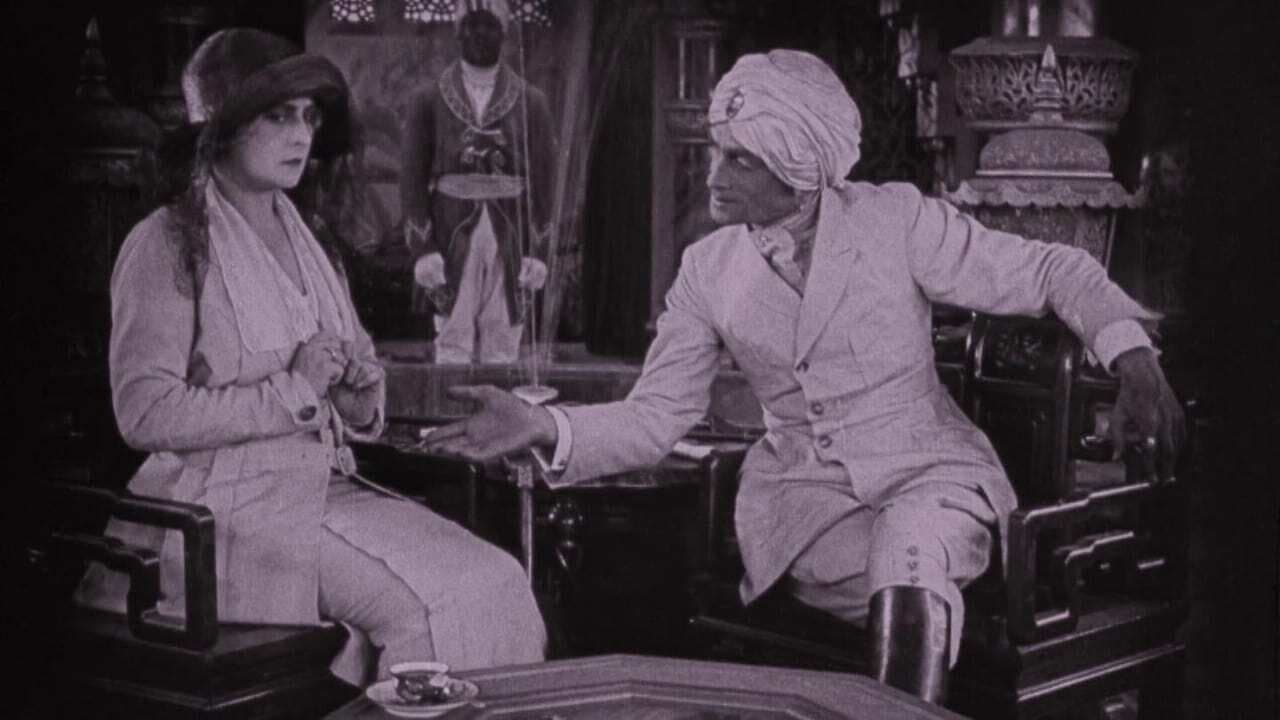
The Indian Tomb, Part I: The Mission of the Yoghi opens on a premise that's equal parts passion and cruelty. Ayan, the Maharajah of Eschnapur, has convinced himself that his wife, Princess Savitri, has betrayed him with an officer named Mac Allan. His response isn't divorce or exile—it's something far darker. He decides to bury her alive. Rather than carry out the deed himself, the maharajah dispatches a mysterious yogi named Ramigani to England with a singular mission: find Herbert Rowland, an architect of some renown, and bring him back to Eschnapur to design and build a tomb. The catch? Rowland doesn't know what he's really constructing. He doesn't know the tomb's true purpose. When the yogi finally reveals the maharajah's actual intentions, Rowland refuses to participate in what amounts to an elaborate murder.
What unfolds from this refusal is a 127-minute journey through colonial intrigue, supernatural elements, and the clash between Eastern mysticism and Western morality. The film doesn't shy away from its melodrama—it embraces it. You're watching a story where a yogi can apparently travel across continents on a mission of vengeance, where a maharajah's word is law, and where an architect's conscience becomes the only thing standing between a woman and her grave.
Behind the making of The Indian Tomb, Part I: The Mission of the Yoghi
Produced by May-Film in 1921, The Indian Tomb, Part I: The Mission of the Yoghi emerged during the height of the German Expressionist and adventure-serial boom. This wasn't a minor production—it was an ambitious, expensive undertaking that required elaborate sets, location scouting (or convincing set design), and a cast capable of conveying complex emotions without dialogue. Silent cinema in the early 1920s was at a fascinating crossroads: filmmakers were still figuring out how to tell stories of genuine scope and emotional weight without sound, yet they were doing it anyway. The sheer technical ambition of staging a maharajah's palace, creating convincing "exotic" backdrops, and choreographing the supernatural sequences was no small feat for 1921.
The film's runtime of 127 minutes was substantial for the era—audiences expected value, and May-Film delivered length alongside spectacle. While box-office records from this period are spotty, the film's survival and continued availability across Movie OTT and other major streaming platforms suggests it retained cultural staying power. The production values, though dated by modern standards, were considered impressive at the time. The cast, working in the tradition of European silent cinema, had to convey jealousy, moral conflict, and supernatural awe through gesture, expression, and movement alone. That's a skill set that's almost entirely vanished from acting today.
What makes The Indian Tomb, Part I: The Mission of the Yoghi stand out
Honestly, what's most striking about The Indian Tomb, Part I: The Mission of the Yoghi—and what keeps it watchable despite its age—is the moral ambiguity woven into its premise. The maharajah isn't a cartoon villain; he's a man convinced of his wife's infidelity, and his rage, while extreme, comes from a place of genuine (if misguided) passion. Rowland, the architect, becomes the audience's proxy for Western rationality and ethics. He can't build a tomb for a living woman. He won't. But he's also trapped in a foreign land, subject to a ruler's absolute authority, and the film doesn't let him off easy—his refusal doesn't automatically save the day.
The fantasy elements—the yogi's apparent supernatural abilities, the dream sequences, the sense that Ramigani operates by rules we don't fully understand—give the film a dreamlike quality that transcends its colonial-era setting. It's not quite horror, not quite romance, not quite a straight adventure. There's something genuinely unsettling about a yogi who can appear and disappear, who bends the will of men across continents. The pacing, by modern standards, is glacial—long takes, intertitles that do heavy narrative lifting, scenes that linger on expressions and gestures. But that slowness becomes hypnotic. You're not rushed through the story; you're immersed in it.
What's harder to defend is the film's racial and colonial framing. The "exotic East" is treated as dangerous, irrational, and ultimately in need of Western moral correction. Princess Savitri is largely a passive object of the plot rather than an active agent in her own story. These are the uncomfortable truths baked into a 1921 production, and they're worth acknowledging even as we appreciate the film's technical and narrative craft.
Where to stream The Indian Tomb, Part I: The Mission of the Yoghi online
The Indian Tomb, Part I: The Mission of the Yoghi is available on major OTT services, making it more accessible now than it's been in decades. Silent films from this era often languished in archives or behind expensive Criterion releases, but the democratization of streaming has changed that calculus. Movie OTT tracks current availability across platforms, so you can check the Where to Watch widget at the top of this page to see exactly where it's streaming in your region right now. Availability does shift—licensing agreements expire, catalogs rotate—so that widget is your most reliable source. If you're a fan of silent cinema, Expressionist aesthetics, or early adventure serials, it's worth adding to your watchlist the moment you see it pop up on your preferred platform.
Frequently asked questions
Q: Is The Indian Tomb, Part I: The Mission of the Yoghi based on a true story?
No, it's a fictional adventure story, though it draws on early 20th-century fascinations with Indian mysticism and colonial settings. The plot—a maharajah commissioning a tomb, a yogi's mysterious mission—is entirely invented, though it reflects anxieties and fantasies of the era.
Q: Who directed The Indian Tomb, Part I: The Mission of the Yoghi?
The film was produced by May-Film in 1921. While specific directorial credits from this era can be murky due to incomplete records, it represents the studio's investment in high-end adventure serials.
Q: Why is it called "Part I"—is there a sequel?
Yes. The Indian Tomb is an established series, and this is the first installment. If you finish Part I and want more, there's continuation available, though availability varies by platform.
Q: What's the runtime, and is it too long to sit through?
It's 127 minutes—nearly two hours. For a 1921 silent film, that's substantial, but the pacing and visual storytelling are engaging enough that it doesn't feel as grueling as that length might suggest.
Q: Does The Indian Tomb, Part I: The Mission of the Yoghi have subtitles or intertitles?
Yes. Like all silent films, it relies on intertitles (text cards) to convey dialogue and exposition. These are integrated into the film itself, so there's no separate subtitle file needed.
Final thoughts on The Indian Tomb, Part I: The Mission of the Yoghi
The Indian Tomb, Part I: The Mission of the Yoghi isn't a film for everyone. It moves slowly. It's in black and white. It's nearly a century old. But if you're willing to meet it on its own terms—if you can appreciate the craft of silent storytelling, the eerie power of a yogi's gaze, the genuine moral stakes of Rowland's refusal—it rewards patience. It's a window into how cinema once told stories of fantasy and adventure, before dialogue, before color, before jump cuts became the default. That's worth your time.