







The story of The Man Who Came to Dinner
The Man Who Came to Dinner tells the story of Sheridan Whiteside, a famous and famously acid-tongued theater critic who arrives in a small Midwestern town for a lecture. A simple accident forces him to stay in the home of an ordinary, well-meaning couple—and what begins as a temporary inconvenience spirals into absolute mayhem. The critic's sharp tongue, his demanding presence, and his parade of eccentric celebrity visitors turn the family's quiet life upside down. What makes the setup work isn't just the premise; it's the collision between Whiteside's urbane world and the earnest domesticity of his unwilling hosts. The play mines comedy from culture clash, from the gap between what people think they want and what they actually need, and from the sheer chaos that one personality can unleash on an entire household.
This 2000 broadcast captures that energy live. There's no safety net, no second take—just the electricity of theater happening in real time, which gives the comedy a different texture than you'd get from a polished film adaptation.
Behind the making of The Man Who Came to Dinner broadcast
George S. Kaufman and Moss Hart's original play debuted on October 16, 1939, at the Music Box Theatre in New York City, where it became a phenomenon. It ran for 739 performances and closed in 1941, then spawned revivals in New York and London—including a celebrated Savoy Theatre production starring Robert Morley and Coral Browne. The play's staying power across decades speaks to something timeless in its DNA: the humor doesn't depend on topical references or dated slang, but on character and situation.
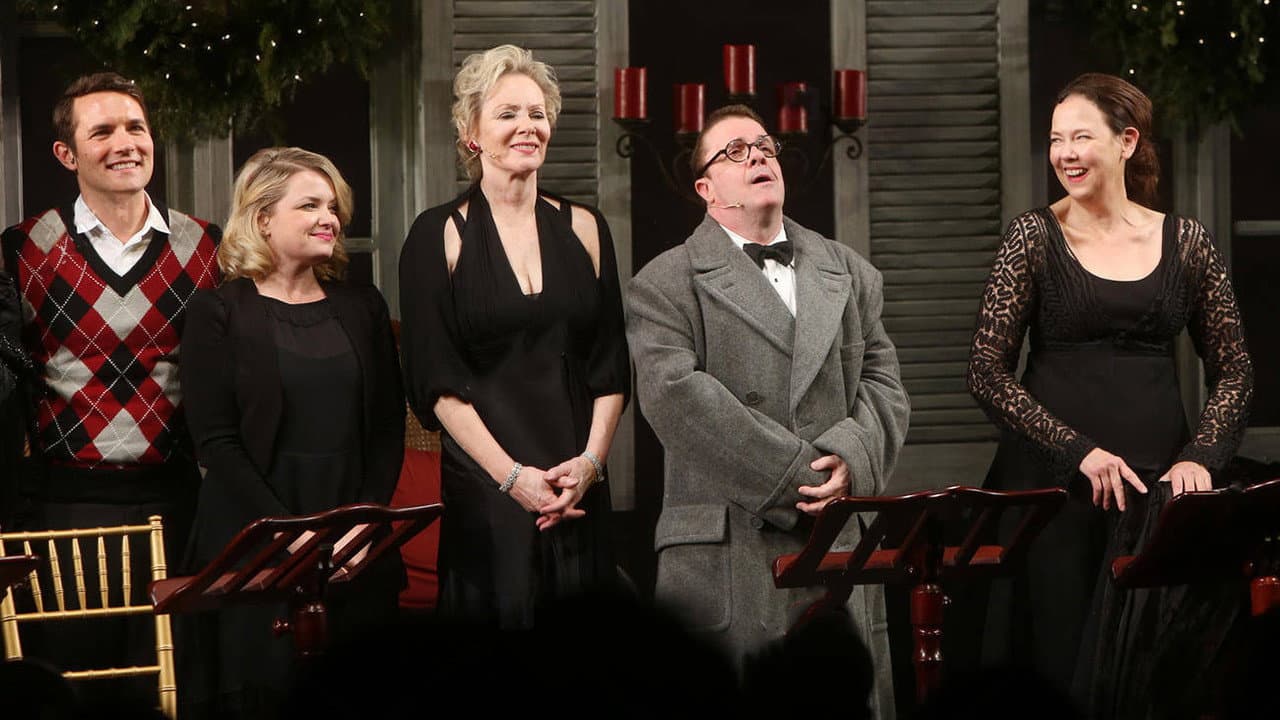
The 2000 Roundabout Theater Company revival brought the play back to New York audiences with fresh casting and renewed energy. Roundabout, one of America's most respected not-for-profit theater companies, has a track record of restaging classic comedies with meticulous attention to the original text while finding new life in the performances. This particular production was significant enough to be broadcast, preserving it for audiences who couldn't catch it live at the theater. The broadcast format—capturing the performance as an audience would experience it, rather than opening it up cinematically—means you're getting theater, not a movie. That distinction matters. It's 166 minutes of uninterrupted stage comedy, which is a commitment, but it's also a gift if you love watching actors work in real time.
The cast assembled for this revival brought serious theatrical credentials to every role, though the broadcast doesn't carry the kind of star-studded marquee names that might have drawn casual viewers. What it does have is ensemble work—the kind of intricate comedic timing that only comes from actors who've rehearsed together and performed together night after night.
What makes The Man Who Came to Dinner stand out
Honestly, what's striking about this play—even now, over 80 years after its premiere—is how well Kaufman and Hart understood human nature. Whiteside isn't just a villain or a caricature. He's someone who's so used to being the smartest person in the room that he's forgotten how to be anything else. The comedy comes from watching him slowly realize that the people around him aren't as easily dismissed as he thought. That's not a small observation. It's the kind of character arc that rewards good acting, and the Roundabout production clearly understood this.
The supporting characters—the family forced to host him, the various visitors, the romantic subplots that bubble up around Whiteside's presence—all get their own comedic moments. There's a scene where the family's son gets caught up in Whiteside's orbit, and you can feel the tension between wanting to escape this chaos and being seduced by it. That's where the real comedy lives, not in zingers alone but in the psychology of how people behave when their ordinary world gets invaded by someone extraordinary (or at least someone who thinks they are).
The IMDb rating of 7.4/10 reflects solid critical appreciation, which makes sense for a well-executed revival of a proven classic. It's not a five-star masterpiece that'll change your life, but it's genuinely funny and smartly played. The craft of the thing—the pacing, the blocking, the way actors have to hit their marks and their jokes in real time—becomes part of the appeal when you're watching a theater broadcast.
How to stream The Man Who Came to Dinner online
The Man Who Came to Dinner is available on major OTT services, and Movie OTT tracks current availability so you can find exactly where it's streaming right now. Since licensing changes frequently and availability varies by region, checking the platform-specific widget at the top of this page will show you the most up-to-date options. Whether you're watching on a dedicated streaming service or catching it through a broader platform's catalog, the broadcast format means you'll want to set aside time to sit with it—this isn't something you'll want to half-watch while scrolling your phone. The full 166-minute runtime is part of the experience, and the comedy rewards patience and attention.
Frequently asked questions
Q: Is The Man Who Came to Dinner based on a true story?
No, it's an original comedy written by Kaufman and Hart, though Sheridan Whiteside was reportedly inspired by the real theater critic Alexander Woollcott. The character's acerbic wit and demanding personality became iconic in theater history.
Q: Who directed the 2000 Roundabout production?
The 2000 broadcast preserves the Roundabout Theater Company's revival, though the specific director's name isn't detailed in the primary materials. What's clear is that Roundabout's artistic leadership understood how to honor the play's comedic architecture while bringing contemporary energy to the performance.
Q: How long is The Man Who Came to Dinner?
The broadcast runs 166 minutes—just under three hours. That's the full play without commercial breaks, so plan accordingly if you're settling in to watch.
Q: What's the tone of The Man Who Came to Dinner?
It's a comedy, but not a light farce. There's genuine character work underneath the jokes, and the play balances sharp wit with moments of real feeling. It's sophisticated humor that doesn't talk down to the audience.
Q: Why does this 2000 broadcast still matter?
Because it captures a live theatrical performance of a 60-year-old play at a moment when that play still had something to say. Theater broadcasts are historical documents—they preserve not just a script but a specific interpretation, a specific cast, a specific moment in a play's ongoing life.
Final thoughts on The Man Who Came to Dinner
If you're the kind of person who loves classic comedies, who doesn't mind sitting with a story that unfolds at theater's pace rather than cinema's, this is worth your time. The play's DNA is strong enough that even a competent production sings, and the Roundabout revival clearly brought care and craft to the material. You'll laugh—not constantly, but genuinely—and you'll watch skilled actors navigate some genuinely tricky comedy. That's not nothing. It's exactly what theater at its best delivers.