The Story of The Mirror Has Two Faces and Its Exploration of Self
André Cayatte's The Mirror Has Two Faces arrives as a compact but ambitious exploration of how we see ourselves versus how others perceive us. Released in 1958, this French-language drama centers on a protagonist confronting the gap between internal identity and external reality — a theme that'd feel fresh even today. The narrative unfolds deliberately, peeling back layers of character motivation and social expectation across its lean 93-minute runtime. What makes it particularly interesting is how Cayatte resists easy answers. He doesn't offer redemption or closure so much as a mirror held up to his characters' contradictions, forcing viewers to sit with discomfort rather than resolve it.
Behind the Making of The Mirror Has Two Faces and Its Influence
Cayatte co-wrote The Mirror Has Two Faces alongside Gérard Oury, who also appears in the cast alongside Michèle Morgan, Bourvil, Ivan Desny, and others. The film emerged during a fascinating period for French cinema — postwar European directors were experimenting with psychological realism and moral ambiguity, moving away from the escapism that had dominated during occupation. Cayatte himself was known for socially conscious filmmaking; his career spanned decades and included several courtroom dramas and character studies that interrogated French society. Though The Mirror Has Two Faces didn't achieve major international distribution at the time, it found an unexpected afterlife when Barbra Streisand optioned the concept for a 1996 American romantic comedy-drama remake. That later film, which starred Streisand alongside Jeff Bridges and Pierce Brosnan, brought the premise to a much wider audience — though it softened the original's harder edges considerably. The fact that Streisand's version became a Hollywood production speaks to something enduring in Cayatte's source material, even if the 1958 original remains the more austere and questioning work.
What Makes The Mirror Has Two Faces Stand Out in Postwar European Cinema
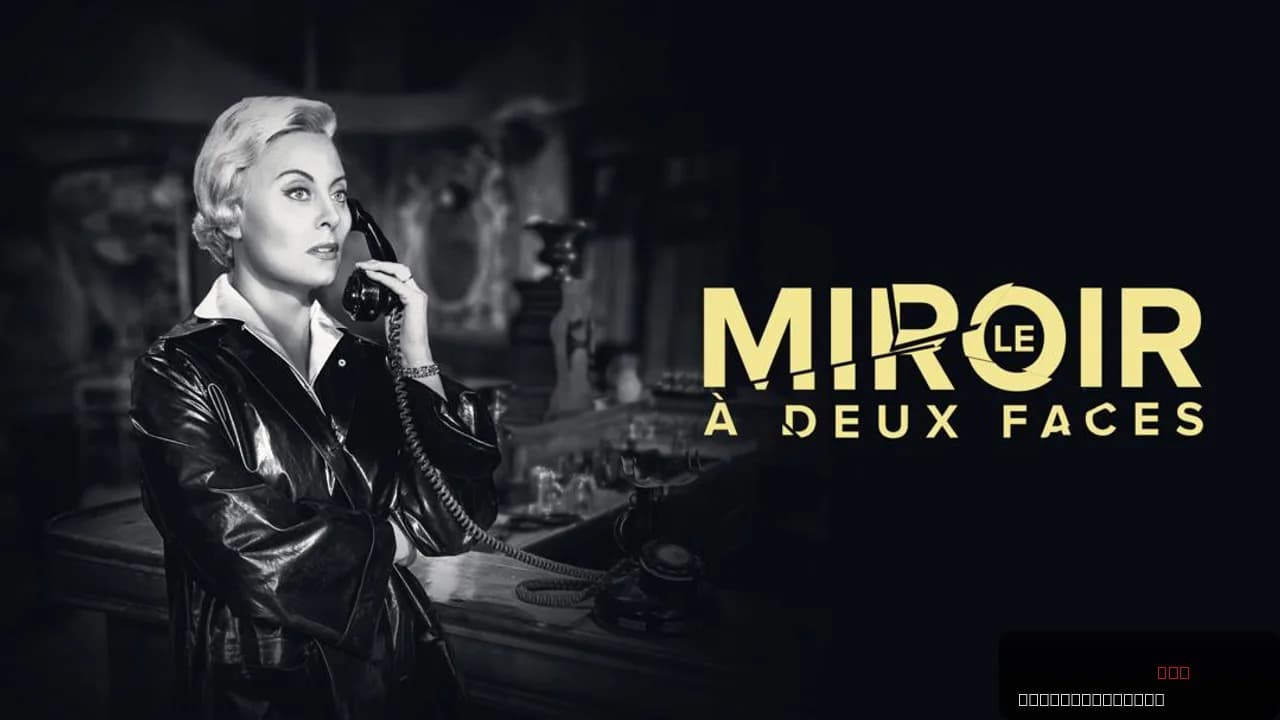
There's something quietly devastating about how Cayatte constructs this film. Rather than rely on melodramatic gestures, he trusts his ensemble cast to carry the weight of internal conflict through restraint and glances. Michèle Morgan, a legendary figure in French cinema, brings a particular gravity to her role — she doesn't perform emotion so much as withhold it, which somehow makes the character's vulnerability more piercing. The supporting performances from Bourvil and Ivan Desny add texture; they're not playing heroes or villains but ordinary people caught in the machinery of their own contradictions. What's striking is how the film refuses to judge its characters even when they're behaving selfishly or deceptively. That's not the same as excusing them — it's something more mature. The cinematography works in grayscale, which feels appropriate for a film so interested in ambiguity and shadow. There's no lush romanticism here, no sweeping orchestration trying to tell you how to feel. Instead, Cayatte lets silence do much of the work. A conversation ends. Characters turn away. The camera holds on an empty room. These aren't flaws in the film's pacing — they're the point. Hard to say if modern audiences will have the patience for this approach, but those who do will find something genuinely unsettling lurking beneath the surface.
Where to Stream The Mirror Has Two Faces Online
If you're hunting for The Mirror Has Two Faces, you can currently stream it on Disney+. It's the kind of film that benefits from a quiet viewing environment — no distractions, no phone — so streaming at home actually suits it better than a theatrical experience would at this point. Movie OTT tracks current availability across multiple platforms, so if you're looking for where obscure international classics have landed, checking the streaming widget at the top of this page will save you the hunting. The film's inclusion on a major platform is somewhat surprising given its age and relative obscurity in English-speaking markets, which suggests there's been a quiet reassessment of Cayatte's work among curators and archivists.
Frequently asked questions
Q: Who directed The Mirror Has Two Faces?
André Cayatte directed the 1958 French film, co-writing the screenplay with Gérard Oury. Cayatte was known for his socially conscious dramas and courtroom films throughout his career.
Q: Is The Mirror Has Two Faces based on a true story?
No, it's an original screenplay written by Cayatte and Oury, though it explores universal themes about identity and self-perception that feel drawn from real human experience.
Q: What's the connection between the 1958 French film and the 1996 Barbra Streisand remake?
Streisand's 1996 romantic comedy-drama was loosely based on Cayatte's original concept, though it significantly softened the tone and themes to appeal to mainstream American audiences.
Q: How long is The Mirror Has Two Faces?
The film runs 93 minutes, making it a relatively compact drama that doesn't overstay its welcome despite its deliberate pacing.
Q: Where can I watch The Mirror Has Two Faces?
The film is currently available on Disney+. Movie OTT's where-to-watch widget at the top of this page will show you all current streaming options.
Final Thoughts on The Mirror Has Two Faces as a Rediscovered European Classic
Cayatte's The Mirror Has Two Faces won't appeal to everyone. Its IMDb rating of 4.9/10 reflects that it's a divisive, austere work that prioritizes psychological complexity over narrative satisfaction. But that's precisely what makes it worth seeking out if you're interested in cinema that challenges rather than comforts. It's a film about people trapped by their own self-deceptions, and Cayatte refuses to offer easy escape routes. Watch it if you're in the mood for something genuinely unsettling — something that'll sit with you long after the credits roll and make you question your own mirrors.