Thierry Frémaux Says Hollywood Is Finally Opening Up — and the Oscars' AI Rules Prove It
TL;DR: Cannes director Thierry Frémaux has welcomed the Academy's new AI disclosure rules and expanded international eligibility as proof that Hollywood is turning outward, not inward. Speaking ahead of the 79th Cannes Film Festival, Frémaux invoked Francis Ford Coppola's Apocalypse Now as the last film made without digital artifice — and warned that AI carries a "high risk of lies." Here's what it all means for global cinema and where to find the films that matter.
Is Hollywood Actually Becoming More Global, or Is That Just Festival Spin?
Here's the honest answer: based on what Cannes General Delegate Thierry Frémaux said this week, there's real structural evidence it might be true. Speaking to Variety on May 11, 2026, ahead of the 79th Cannes Film Festival, Frémaux offered his most expansive public reaction yet to the Academy of Motion Picture Arts and Sciences' new rules — AI disclosure requirements for Oscar contenders, and an expanded eligibility pathway for international films that win top prizes at major festivals including Cannes, Venice, and Toronto. His read? Not a crisis. An opening.
"Hollywood is opening up to the world, embracing universality," Frémaux said. "For us, Cannes is all about that — it's about universality."
What the Oscars Actually Changed, and Why Frémaux Thinks It Matters
The Academy's updated framework — which takes effect for the 2027 Oscar cycle — does two things worth separating out:
- AI transparency: Productions must disclose the extent of generative AI use. Human authorship must remain central to creative work for eligibility consideration.
- International eligibility expansion: Films that win top prizes at six designated major international festivals can now qualify directly for Oscar consideration, bypassing some of the traditional submission gatekeeping.
Frémaux, who is marking his 25th year leading the Cannes selection, called the AI rules "obvious" — not groundbreaking, but necessary and overdue. According to Variety's report, he framed them less as regulation and more as a return to first principles. The Academy, in his view, is simply catching up to what serious cinema has always demanded: that what you see on screen actually happened, or was genuinely crafted by a human hand.
The international eligibility change, meanwhile, lands differently. It's a meaningful shift in Oscar politics — one that rewards festival prestige over studio lobbying, at least in theory. For Cannes, which has long operated as the de facto global arbiter of cinematic quality, it's a validation that Movie OTT readers tracking award-season contenders should pay close attention to.
Coppola's Helicopters and the Problem With Digital Everything
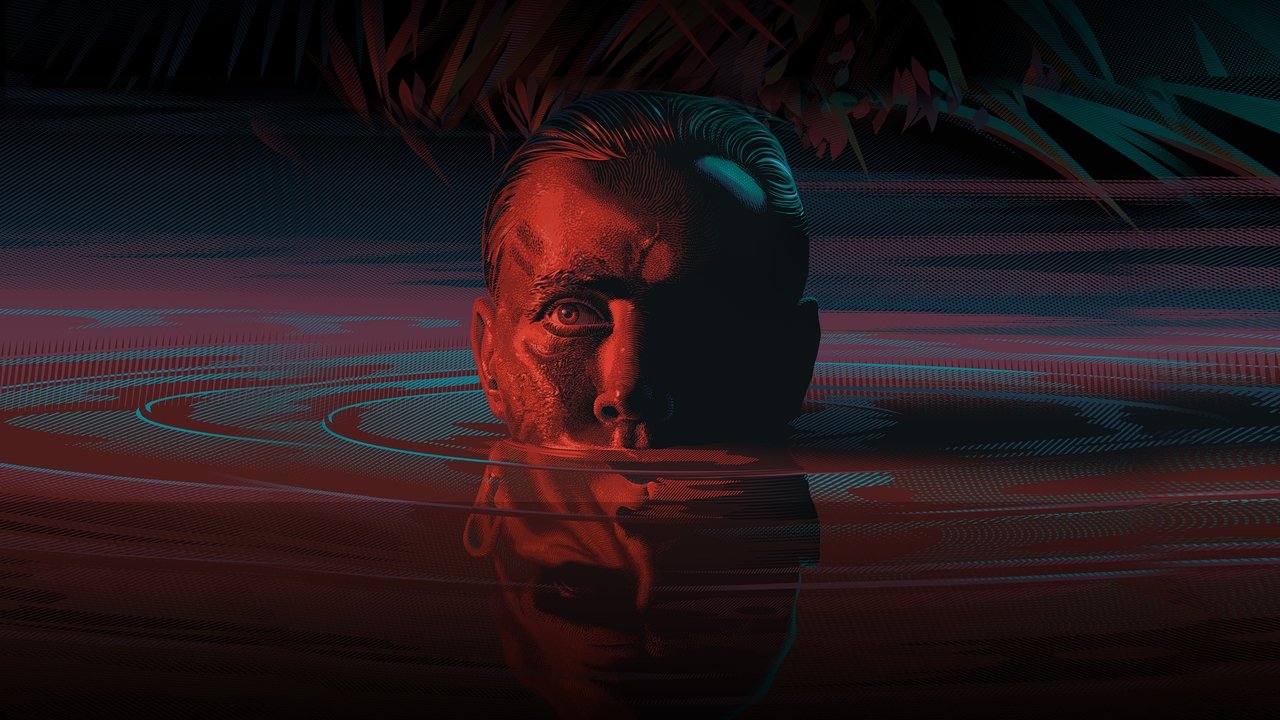
What's striking is how Frémaux chose to illustrate his point. He didn't reach for a contemporary example. He went back to Francis Ford Coppola's Apocalypse Now — specifically the Ride of the Valkyries helicopter sequence — and called it "the last organic film" he'd seen.
"The helicopters in the Valkyrie scene were the helicopters Francis Ford Coppola actually had," Frémaux said. "Today, with digital technology, a filmmaker can say: 'I have six helicopters — give me 15.' And then you no longer know what you're seeing. Even in arthouse films, there are digital effects everywhere now."
That's not a nostalgic complaint. It's a philosophical one. The issue, as Frémaux sees it, is that digital and AI augmentation introduces what he called a "high risk of lies" — a gap between what a film appears to be and what it actually is. I keep coming back to this framing because it cuts deeper than the usual "AI will steal jobs" discourse. He's talking about ontology. About whether cinema can still be trusted as a record of reality.
Frémaux has previously flagged AI's risks in blunter terms, including concerns about deepfake voice replication and the threats it poses to creators' rights — a thread he's pulled consistently over the past two years, as documented at Caligari.
Cannes' Own AI Policy, and How It Fits the Bigger Picture
Frémaux isn't just commenting from the sidelines. Cannes has its own skin in the game. For the 2026 Official Competition, the festival — under the direction of both Frémaux and Festival President Iris Knobloch — implemented a formal ban on generative AI in films submitted to its top tier. Technical AI tools, including VFX and color-grading assistance, remain permitted. But generative AI that replaces human creative decision-making? Out.
It's a distinction that matters, and it mirrors what the Academy is now attempting at the Oscar level. The global festival circuit — Cannes, Venice, TIFF, Berlin — is effectively setting the ethical framework that awards bodies are now scrambling to formalize. That's not a coincidence. It's influence.
Hollywood, meanwhile, is going through what Frémaux diplomatically described as "a major shake-up." Post-COVID. Post-writers' strike (which he pointedly noted was "linked to issues surrounding artificial intelligence"). Restructurings, mergers, streaming-platform dominance — all of it forcing a reckoning. Hard to say if the industry emerges leaner or just more consolidated. But Frémaux drew a historical parallel that's worth sitting with: he compared the current turbulence to Hollywood's 1960s crisis, the one that preceded the New Hollywood explosion of Arthur Penn, Martin Scorsese, Coppola, and William Friedkin. Dark before the dawn. Maybe.
Where This Lands for Indian Audiences and OTT Viewers
For Indian audiences, the Oscars' new international eligibility rules carry specific weight. Indian cinema has long been underrepresented in the Academy's international film categories despite producing some of the world's most-watched content. The expanded pathway — which now formally recognizes Cannes, Venice, Toronto, and three other major festivals as qualifying routes — opens a door that previously required navigating India's own Film Federation submission politics.
Films like All We Imagine as Light (Payal Kapadia's Cannes Grand Prix winner in 2024) demonstrated that Indian-origin films can compete and win at the highest festival level. Under the new Oscar rules, that kind of festival success translates more directly into awards eligibility. That's a structural change Indian filmmakers — and the distributors and streamers who back them — should be tracking closely.
On the streaming side, Movie OTT tracks current Indian availability across platforms including Netflix India, Prime Video India, Disney+ Hotstar, JioCinema, SonyLIV, and Zee5. Cannes competition titles typically arrive on Indian OTT platforms within six to eighteen months of their festival premiere, often through Netflix or MUBI deals. The 79th Cannes lineup — which includes no major Hollywood blockbusters but will screen The Fast and the Furious for its 25th anniversary at a Midnight Screening — is likely to yield several titles that land on Indian streaming within the 2026-2027 window.
For Indian viewers wanting to follow the awards-season pipeline, the Oscars-Cannes eligibility link now makes festival buzz more directly actionable. A Palme d'Or or Grand Prix winner is no longer just a prestige signal — it's a potential Oscar contender by rule.
Frémaux at 25 Years: What He Said, and What He Didn't
"When people say that America is turning in on itself, that's not true. In any case, Hollywood is opening up to the world, embracing universality. For us, Cannes is all about that — it's about universality."
That quote, delivered during his pre-festival press conference, is Frémaux at his most characteristically measured. Twenty-five years at the helm of the world's most prestigious film festival doesn't make you reckless with language. But it does make you precise. He knows what he's doing when he pushes back against the "America first" cultural narrative — he's positioning Cannes as the counterweight, the place where universality isn't a talking point but an operating principle.
He was also asked about France's upcoming presidential elections, with the far-right polling strongly. Frémaux declined to speculate on outcomes or their cultural implications, noting that the festival has historically operated across political cycles and that "in a year, we won't be talking about these elections anymore since they'll be behind us." Careful. Diplomatic. Exactly what you'd expect — and, frankly, probably the right call for an institution that depends on cross-political government support.
For Movie OTT readers tracking which Cannes titles to watch for on streaming platforms globally, the festival's opening night on Tuesday features an honorary tribute to Peter Jackson and the world premiere of The Electric Kiss, with the jury presided over by Park Chan-wook.
The 79th Cannes Festival: What's on Screen and What Comes Next
The 79th edition opens without the Hollywood tentpoles that have occasionally given Cannes its commercial shimmer. No franchise debut. No blockbuster world premiere. Just Fast and Furious nostalgia at midnight and what Frémaux promises is a lineup built around auteur vision — which, given the festival's new AI stance, is the whole point.
Park Chan-wook as jury president is a signal in itself. The director of Oldboy and Decision to Leave brings a sensibility that prizes formal rigor and emotional violence in equal measure — don't expect the jury to be kind to anything that feels algorithmically smoothed.
What's next: watch for the Palme d'Or shortlist to crystallize by late May, with awards-season campaigns for top winners launching immediately after. Under the new Oscar eligibility rules, a Cannes win in 2026 could translate directly into an Oscar nomination conversation for early 2027. Movie OTT will track streaming availability for competition titles across all major regions — India, the US, the UK, and Spain — as distribution deals are announced throughout the festival run.
The Oscars' AI rules are new. Cannes' position on generative AI is firm. And Frémaux, 25 years in, still sounds like someone who believes cinema can be saved. That's either inspiring or delusional. Probably both.