



The Story of 24 City: Urban Transformation and Lost Worlds
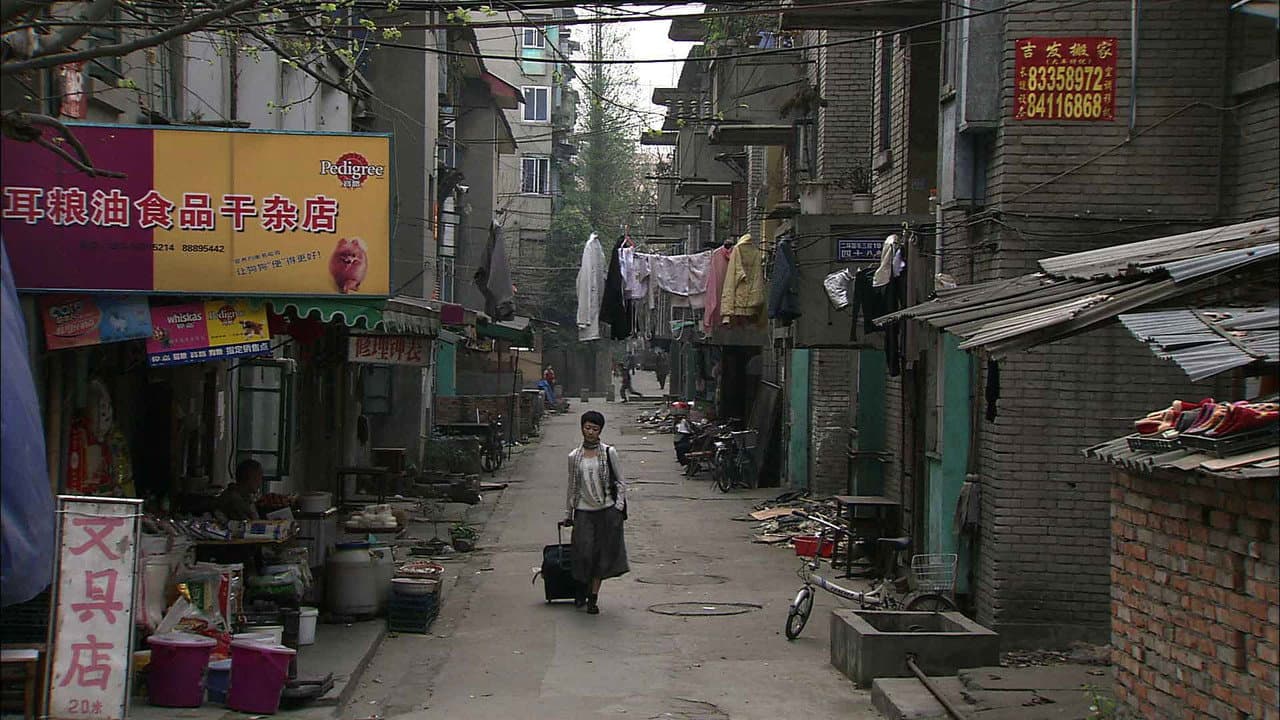
24 City is about what happens when a city decides to erase itself. The film follows the demolition of a decades-old state-run aeronautics munitions factory in downtown Chengdu, China, as it makes way for a gleaming luxury apartment complex bearing the same name. Director Jia Zhangke doesn't treat this as a simple real-estate story. Instead, he approaches the factory's disappearance as a archaeological dig into memory itself — interviewing workers, residents, and people connected to the site across three generations, from the 1950s through the present day. The result is a film that refuses easy categorization, blending documentary footage with dramatized scenes and performances, creating something closer to a fever dream about industrialization than a straightforward chronicle. What's striking is how Jia frames the factory not as a relic to mourn, but as a living archive of ordinary lives that the market is simply erasing.
Behind the Making of 24 City: Jia Zhangke's Docufiction Approach
24 City emerged from a distinctly ambitious production pipeline. Released in 2008 at 108 minutes, the film was developed by a constellation of production companies including Shanghai Film Group, Xstream Pictures, Bandai Visual, Bitters End, China Resources, and Office Kitano — a genuinely international co-production that gave Jia resources to pursue his unconventional vision. The director, already known for his elliptical style and willingness to blur documentary and narrative cinema, cast professional actors alongside real factory workers and former employees. This hybrid casting choice wasn't a gimmick — it was essential to Jia's method. By having actors perform the testimonies of real people, he created a strange doubling effect: the viewer is always aware they're watching performance, yet the emotional weight of the stories remains intact. The film didn't achieve major box-office returns, but it's the kind of work that builds reputation through festivals and retrospectives rather than multiplexes. On the critical circuit, it earned a 7/10 on IMDb, reflecting the polarized response such formally experimental work typically generates. Some viewers find the blurred lines between real and performed deeply moving; others find it frustratingly opaque. That tension is entirely intentional.
What Makes 24 City Stand Out: Memory, Modernity, and the Beautiful Woman
What makes 24 City resonate — and I keep coming back to this — is the way Jia refuses to let the viewer settle into a comfortable emotional position. He doesn't give you the satisfaction of a clear villain (greedy developers) or a clear victim (noble workers). Instead, he shows people adapting, compromising, and sometimes even benefiting from the factory's demolition, while also mourning what's lost. The performances are deliberately restrained, almost flat in the way that Jia favors. There's a famous sequence featuring a beautiful woman — an actress playing a former factory worker — delivering a monologue about her life, and the camera holds on her face with an almost uncomfortable stillness. It's not sentimental. It's observational in a way that makes sentiment feel cheap by comparison. The film's visual approach mirrors this: long takes, muted colors, compositions that treat the factory's scaffolding and the new apartment complex with equal visual weight. Hard to say if this is the most emotionally direct Jia has ever been, but it's certainly one of his most patient works. Critics have noted that 24 City functions as a portrait of China itself during a moment of radical transformation — the factory as metaphor for an entire nation's relationship with its past. What's rarely mentioned is how the film also works as a love letter to the people who inhabited these spaces, even as it refuses to romanticize their struggles.
Where to Stream 24 City Online
24 City is available on major OTT services, and you can check the Where to Watch widget at the top of this page to see exactly which platforms currently carry it in your region. Movie OTT aggregates streaming availability across multiple services, so you won't have to hunt through five different apps to find it. The film's experimental nature and slower pacing mean it's the kind of work you'll want to watch on a platform where you can control your environment — no ads cutting into the long takes, ideally. Whether you're streaming through a subscription service or renting it digitally, the 108-minute runtime is manageable for a single sitting, though the film rewards a second viewing once you've adjusted to Jia's particular rhythm.
Frequently asked questions
Q: Is 24 City a documentary or a drama?
It's both and neither. 24 City is a docufiction that blends real interviews and documentary footage with dramatized scenes performed by actors. Jia Zhangke intentionally blurs the line between what's real and what's performed, making the film's genre classification deliberately ambiguous.
Q: Who directed 24 City?
Jia Zhangke, one of China's most acclaimed contemporary filmmakers, directed and co-wrote the film. He's known for his formally experimental approach to cinema and his focus on how modernization affects ordinary Chinese lives.
Q: What is the factory in 24 City based on?
The factory is a real, decades-old state-run aeronautics munitions facility in Chengdu, China. The film documents its actual demolition to make way for the luxury apartment complex that gives the film its title.
Q: Do I need to know about Chinese history to watch 24 City?
While some familiarity with China's industrial era and post-1990s economic transformation helps, the film works primarily through emotional and visual language. The interviews and performances communicate across cultural boundaries, even if specific historical details might deepen your appreciation.
Q: How long is 24 City?
The film runs 108 minutes, which allows Jia's deliberate pacing to fully develop his themes without feeling rushed or bloated.
Final Thoughts on 24 City: A Film for Patient Viewers
If you're drawn to cinema that trusts its audience to sit with ambiguity and visual beauty, 24 City demands your attention. It's not a crowd-pleaser — the flat performances and glacial pacing will test some viewers' patience. But for those willing to meet Jia Zhangke on his own terms, it's a film that lingers long after the credits. The factory is gone now, replaced by apartments where people live their own ordinary lives, unaware of what stood there before. That's what 24 City captures: not nostalgia, but the strange vertigo of watching the world transform in real time.