The Story of Fata Morgana: Reality as Optical Illusion
Werner Herzog's Fata Morgana isn't a conventional documentary—it's a philosophical fever dream shot across the Sahara and Sahel deserts. The film captures literal mirages, those shimmering heat-born illusions that appear and vanish across endless sand, while Herzog's narration (written by film historian Lotte H. Eisner and performed with hypnotic restraint) recounts passages from the Popol Vuh, the ancient Mayan creation myth. What emerges is something far stranger than a nature film: a 76-minute contemplation on the nature of illusion itself, on what happens when a camera tries to document something that exists only in the space between perception and reality. Herzog seems less interested in explaining mirages than in asking whether the distinction between what's real and what we see even matters.
Behind the Making of Fata Morgana: Herzog's Desert Obsession
Fata Morgana was shot in 1968 and 1969 under conditions Herzog himself has described as extreme—though he's characteristically vague about what that actually entailed. The film emerged from Herzog Filmproduktion, the director's own production company, and represents one of his most experimental works, predating his more commercially visible efforts like Aguirre and Fitzcarraldo. Herzog didn't just point a camera at the desert; he traveled with a small crew into one of the planet's most inhospitable regions to capture optical phenomena that most filmmakers would dismiss as too abstract, too unreliable for narrative cinema. The result was released in 1971 (though some sources cite 1972), arriving at a moment when experimental documentary was still finding its vocabulary. It's not a film that won major festival prizes or generated box-office numbers—Herzog's work rarely did in those early years—but it's become a touchstone for anyone interested in how cinema can capture the uncapturable. The narration, drawn from Eisner's scholarly work on German Expressionism and film history, gives the images a mythic weight they might not otherwise carry, grounding the visual abstraction in ancient cosmology.
What Makes Fata Morgana Stand Out: The Hypnotic Power of Emptiness
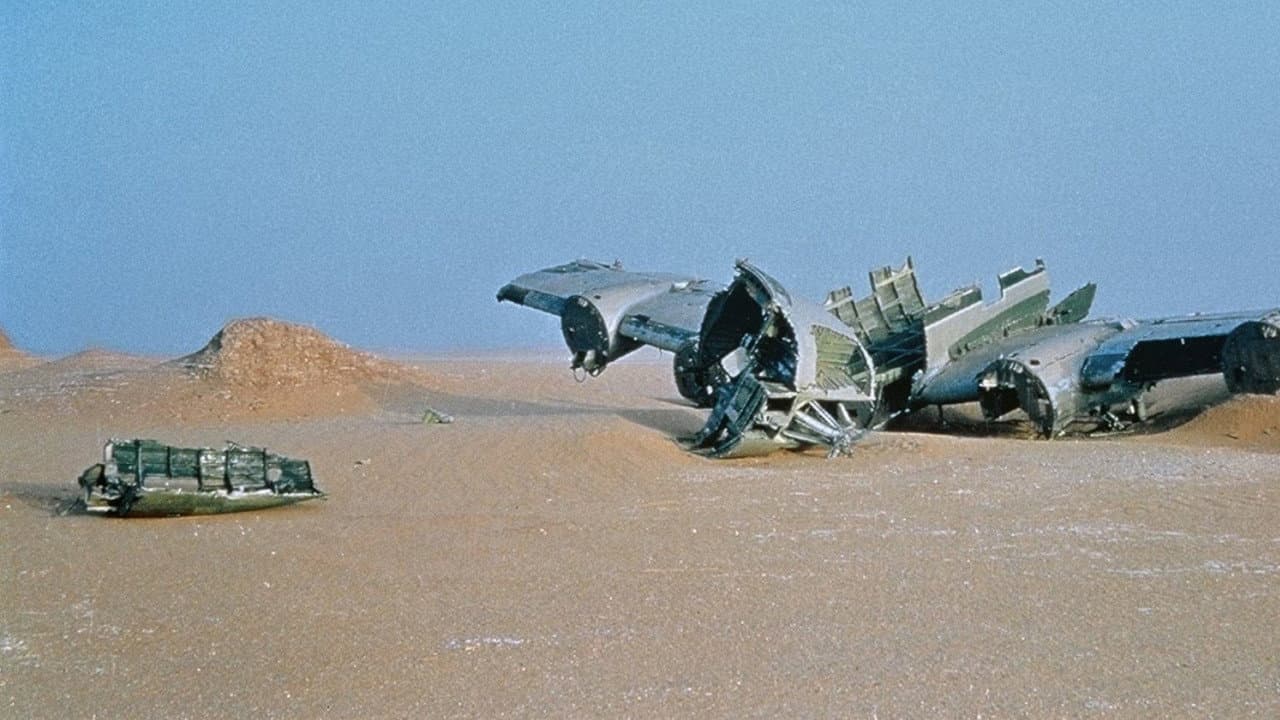
What's striking about Fata Morgana is how little happens and yet how much you feel watching it. There's no plot, no characters, no conventional dramatic arc—just long, patient shots of sand, sky, and the occasional caravan or settlement, interrupted by those impossible mirages that bend light and distance into something dreamlike. Herzog's decision to pair this visual minimalism with passages from the Popol Vuh creates an odd, almost surreal resonance. You're watching creation myths unfold over images of one of Earth's most barren landscapes, which somehow makes both the ancient words and the modern images feel equally mythic. The performances aren't human in the traditional sense; instead, the landscape itself becomes the performer, shifting and revealing itself according to light and heat and the camera's patient gaze. I keep coming back to the opening sequences—just trucks and camels moving through sand, shot with such deliberate slowness that you start to doubt whether anything is actually moving at all. That's Herzog's real subject. Not the desert. The act of looking. The way perception itself becomes unreliable when you stare long enough at emptiness. Critics have found the film difficult, sometimes impenetrable—it's not a work that explains itself or offers easy entry points. But that refusal to comfort the viewer, that insistence on sustained attention to phenomena that resist interpretation, is precisely what gives Fata Morgana its power. It's a film that trusts its audience to sit with discomfort, to accept that not everything needs to resolve into meaning.
Where to Stream Fata Morgana Online
Fata Morgana is currently available on major OTT services, and you can check the Where to Watch widget at the top of this page for real-time availability across your preferred platforms. Herzog's early experimental work isn't always easy to track down—streaming rights for archival and avant-garde films shift constantly—so if you're planning to watch, it's worth checking Movie OTT to confirm which services have it in your region right now. The film's relatively short runtime (76 minutes) makes it a manageable commitment for viewers curious about Herzog's more esoteric work, and many of the platforms that carry it also stock his later, more accessible documentaries and features, so you can build out a deeper Herzog retrospective if the experience hooks you.
Frequently asked questions
Q: Who directed Fata Morgana?
Werner Herzog directed Fata Morgana, the German filmmaker known for his obsessive, often dangerous approach to documentary and narrative cinema. This 1972 film represents one of his most experimental works, shot before he became widely known internationally.
Q: What is the Popol Vuh that's narrated in the film?
The Popol Vuh is the ancient Mayan creation myth, which Herzog's narration (written by film historian Lotte H. Eisner) recounts throughout the film. The pairing of Mayan cosmology with images of the Sahara creates the film's strange, dreamlike resonance.
Q: Is Fata Morgana based on a true story?
No—it's a documentary that captures real optical phenomena (mirages) in the Sahara and Sahel deserts, but it's structured more like a philosophical meditation than a narrative documentary. The mirages are real; the meaning Herzog finds in them is entirely his own interpretation.
Q: How long is Fata Morgana?
The film runs 76 minutes, making it a relatively brief but intensely concentrated viewing experience that doesn't overstay its welcome despite its slow, meditative pacing.
Q: Why is Fata Morgana so hard to find?
Early Herzog films, especially his experimental documentaries, don't always maintain consistent streaming availability. Rights issues and the niche audience for avant-garde work mean Fata Morgana cycles on and off platforms—which is why checking current availability on Movie OTT's streaming tracker is essential before you commit to watching.
Final Thoughts on Fata Morgana: A Film for Patient Viewers
Fata Morgana isn't for everyone. It won't give you plot, character development, or the satisfaction of narrative closure. What it will give you—if you're willing to surrender to its rhythm—is something rarer: a genuine artistic experience, a filmmaker's attempt to capture the uncapturable and force cinema to reckon with its own limitations. Herzog made this film because he was obsessed with mirages, with the question of what happens when perception fails, when the eye lies. That obsession translates directly into the viewing experience. Slow, patient, sometimes frustrating, occasionally transcendent. It's a film that rewards attention and punishes distraction. If you've watched Herzog's more accessible work and want to understand where his experimental impulses come from, Fata Morgana is essential. If you're new to his work, you might want to start elsewhere. But if you're the type of viewer who can sit with ambiguity, who doesn't need everything explained, who understands that cinema can be about asking questions rather than answering them—this is your film.