







The story of Kids Return: Two paths, one dead end
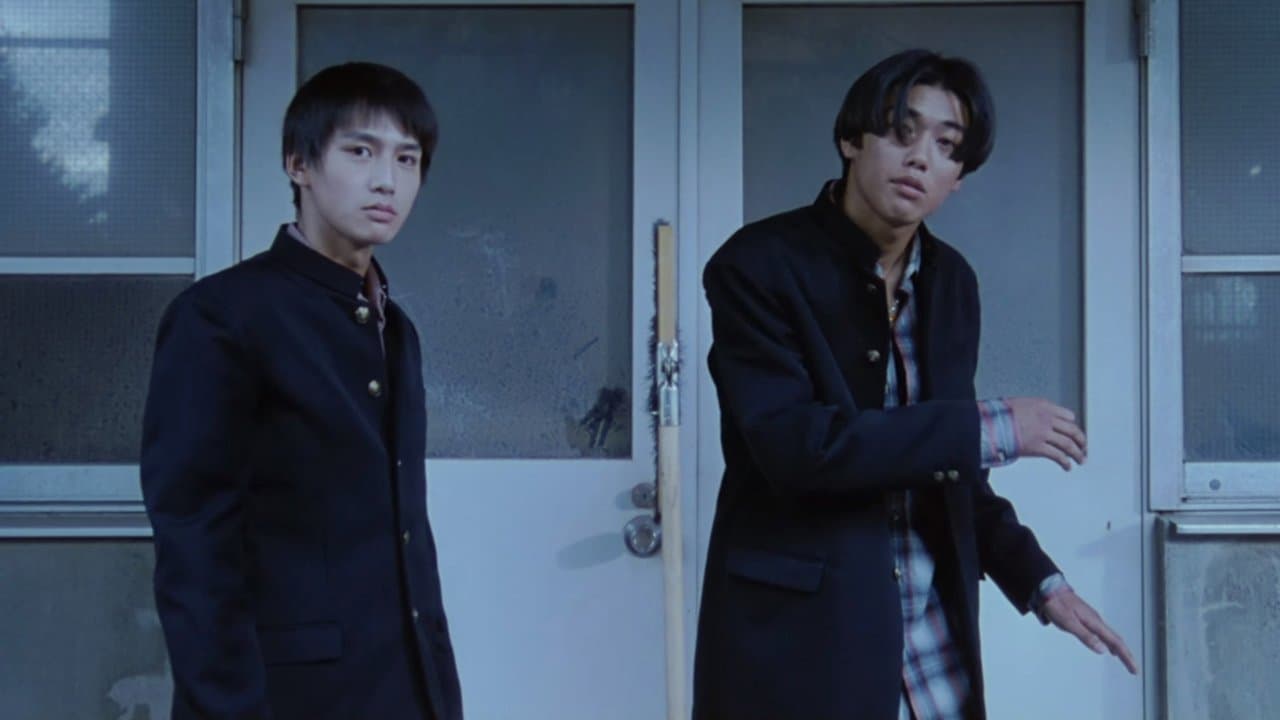
Kids Return opens on two restless high school troublemakers, Shinji and Masaru, whose days revolve around tormenting classmates and pulling pranks—the kind of low-stakes chaos that passes for entertainment when you're bored and directionless. When they finally drop out, the film splits their story in two: Shinji pursues boxing, drawn to the discipline and the possibility of legitimate success, while Masaru drifts into the yakuza underworld, seduced by quick money and the false promise of belonging to something larger than himself. What unfolds isn't a redemption arc or a cautionary tale wrapped in neat moral packaging. Instead, Kitano traces how both men discover that the world doesn't care much about their ambitions—that the ring and the gang both exact their own brutal prices, and that sometimes the toughest lesson isn't about failure, but about the cost of survival itself.
Behind the making of Kids Return: Kitano's impossible recovery
Kids Return emerged under extraordinary circumstances. In 1995, Takeshi Kitano suffered a catastrophic motorcycle accident that left half his body paralyzed, and doctors were skeptical he'd ever direct again. Yet within months of undergoing extensive surgery and physical therapy, Kitano returned to filmmaking with this project—a move that felt almost reckless at the time, given the speculation swirling around whether he could even function on a film set. The film was produced by Bandai Visual, Office Kitano, and Ohta Publishing, and it marked a decisive statement: Kitano wasn't just surviving; he was working. The 107-minute runtime allows Kitano space to linger on moments—long takes of characters sitting in silence, the texture of disappointment settling in real time—a directorial signature that would define much of his later work. Running 107 minutes, the film doesn't rush. There's no breathless pacing or manufactured urgency. Instead, Kitano's camera observes with a kind of patient cruelty, watching his characters bump against the walls of their own limited options. The film received respectable international distribution and has maintained a solid 6.9 rating on IMDb, though it never became a mainstream crossover hit in the way some might have expected from a director of Kitano's stature.
What makes Kids Return stand out: Patience, specificity, and the texture of dead time
What's striking about Kids Return is how little it relies on conventional dramatic beats. There's no big confrontation scene where Shinji calls out Masaru for joining the yakuza, no tearful reconciliation in the third act. Instead, the film trusts you to sit with boredom, with waiting, with the mundane reality of trying to build something when the deck is stacked. The boxing sequences aren't heroic—they're sweaty, unglamorous, and often painful to watch. When Shinji trains, you see the repetition, the soreness, the doubt creeping in. Masaru's yakuza life, meanwhile, reveals itself as a series of small humiliations and moral compromises that don't feel like a dramatic fall so much as a slow erosion of self. I keep coming back to one scene where Masaru sits in a yakuza office, and the camera holds on his face as he realizes he's trapped—not by external force, but by his own choices compounding into a cage he can't escape. That's the film's real power. It doesn't judge these characters; it just watches what happens when two kids with no safety net try to claw their way up in a system designed to keep them down. The performances are understated and naturalistic—no big emotional displays, just the quiet desperation of young men figuring out too late that neither path leads anywhere good. The craft here is deceptively simple: static camera angles, minimal scoring, long stretches where the only sound is ambient noise and dialogue. It's the opposite of flashy, which is exactly why it works.
Where to stream Kids Return online
Kids Return is available on major OTT services, and you can check the Where to Watch widget at the top of this page to see which platforms currently carry it in your region. Streaming availability shifts regularly, so Movie OTT tracks current placement across Netflix, Prime Video, Hotstar, and other services to save you the hunting. If you're planning a Kitano retrospective or just want to understand how he bounced back from career-ending injury, this is an essential starting point—and it's worth catching it wherever you can access it right now, since catalog rotation means it won't always be there.
Frequently asked questions
Q: Who directed Kids Return?
Takeshi Kitano wrote, directed, and edited the film. He made it in 1996, just months after recovering from a motorcycle accident that left half his body paralyzed—a remarkable feat of willpower and artistic commitment.
Q: Is Kids Return based on a true story?
No, it's an original screenplay by Kitano. However, it draws on themes of youth delinquency and social immobility that reflect real conditions in 1990s Japan, even though the specific characters and plot are fictional.
Q: How long is Kids Return?
The film runs 107 minutes, giving Kitano ample time to develop his characters and let scenes breathe without rushing toward convenient resolutions.
Q: What's the difference between Shinji and Masaru's paths in the film?
Shinji pursues professional boxing as a legitimate route to success, while Masaru joins the yakuza for quick money and status. Both discover that neither world offers the escape or respect they imagined.
Q: Where can I watch Kids Return right now?
Check the Where to Watch widget at the top of this page for current availability on your preferred streaming platform. Movie OTT updates platform listings regularly across all major services.
Final thoughts on Kids Return
Kids Return isn't a crowd-pleaser, and it won't leave you feeling uplifted or hopeful. What it will do is sit with you long after the credits roll—not because it's depressing, but because it's honest about how little control we have over the trajectories we're handed. Kitano made this film when everyone thought his career was finished. The fact that he did, and that he made something this patient and uncompromising, feels like its own kind of victory. If you're drawn to character-driven drama, Japanese cinema, or just want to witness a master filmmaker working through adversity, Kids Return demands your attention.