









The Story of Dolls: Three Tales of Impossible Love
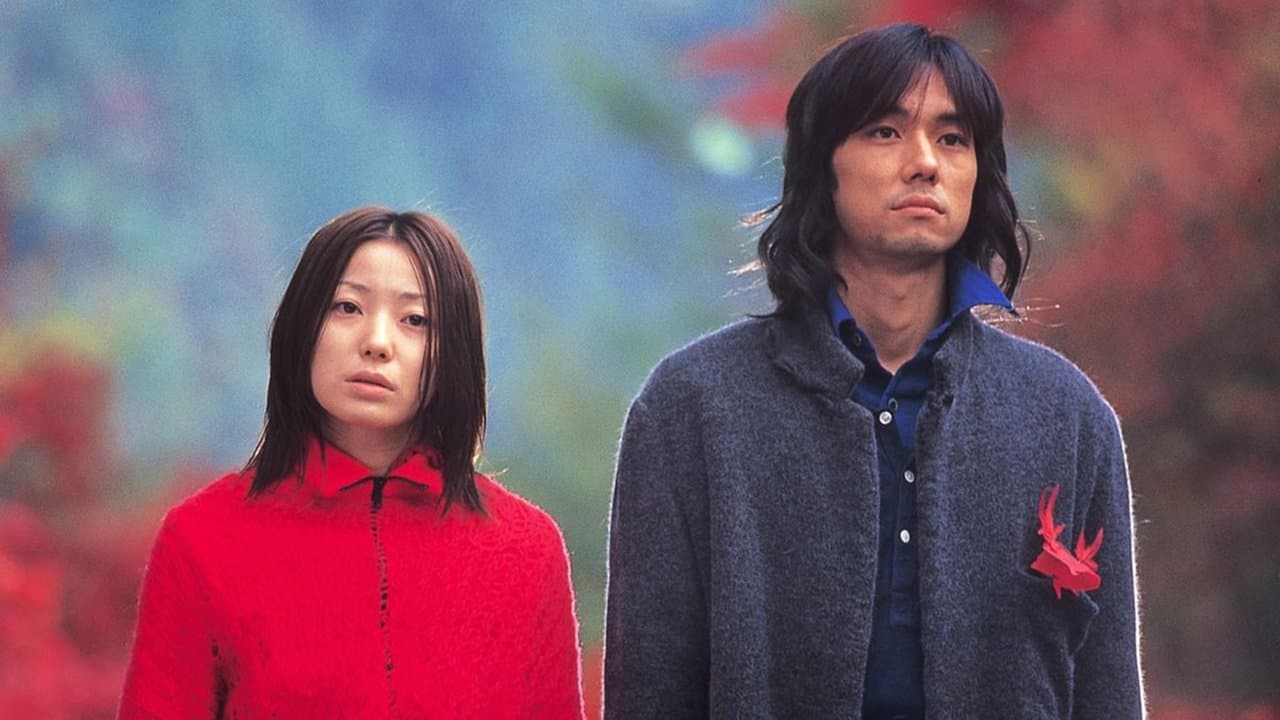
Takeshi Kitano's Dolls opens not with dialogue but with silence—the quiet, deliberate world of bunraku puppeteers moving their wooden charges across a stage. It's a choice that tells you everything about what's coming. The film weaves three separate love stories through this metaphor of puppetry, each one exploring what happens when people become trapped by their own devotion, by social obligation, by the cruel machinery of circumstance. The central narrative follows Matsumoto and Sawako, a young couple whose relationship faces destruction when Matsumoto's parents demand he abandon his true love for an arranged marriage to his boss's daughter. But Dolls refuses to be just their story. Instead, Kitano fractures the narrative into overlapping vignettes—a washed-up pop star searching for a lover she once knew, a yakuza hitman bound to his victim by an impossible debt of gratitude. Each story circles back to the same haunting question: what does it mean to love someone so completely that you'd rather die than live without them?
Behind the Making of Dolls: Kitano's Departure into Art Cinema
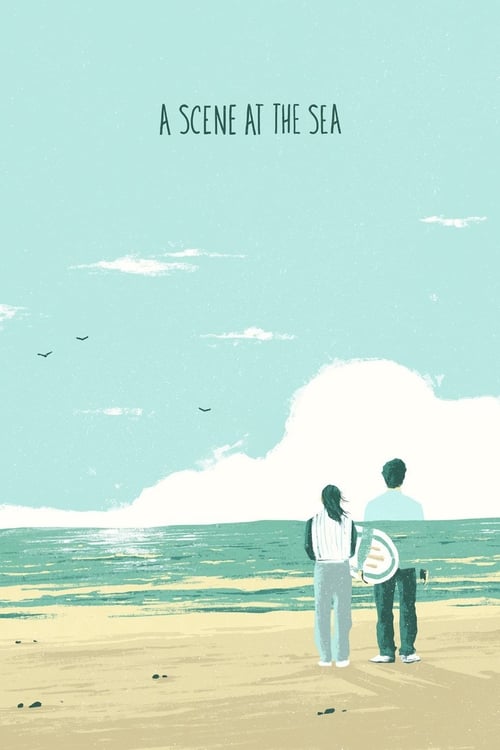
Released in 2002, Dolls marked a significant moment in Takeshi Kitano's career—a deliberate step away from the crime films and yakuza narratives he'd become famous for, and notably, one of the few films where Kitano doesn't appear on screen himself. The production brought together a constellation of Japanese creative talent: TV Tokyo, Bandai Visual, and his own Office Kitano collaborated on a project that was unabashedly artistic, refusing easy commercial appeal. Costume designer Yohji Yamamoto contributed striking period garments that blur the line between theatrical artifice and lived reality, adding another layer to Kitano's meditation on performance and authenticity. Running 114 minutes, Dolls demanded patience from audiences—something Kitano has never been willing to compromise on. The cinematography became the film's calling card, with critics and festival programmers alike recognizing that Kitano had created something formally audacious, a work that sat comfortably alongside his earlier non-crime film A Scene at the Sea (1991) in demonstrating his range beyond genre filmmaking. The film earned a 7.5/10 rating on IMDb, reflecting its status as a challenging but deeply rewarding work that appeals to serious cinephiles and patient viewers willing to sit with ambiguity and visual beauty.
What Makes Dolls Stand Out: Visual Poetry Meets Emotional Devastation
What's striking about Dolls is how Kitano uses the bunraku puppetry framework not as mere aesthetic window-dressing but as genuine thematic scaffolding. The puppets aren't decorative—they're mirrors. When you watch a wooden figure manipulated by unseen hands, you're watching a visual metaphor for how love constrains us, how society pulls our strings, how we're all performing roles we didn't choose. The performances anchor this conceptual framework in real human vulnerability. The actors playing Matsumoto and Sawako carry the weight of doomed romance without ever descending into melodrama; there's a restraint to their acting that makes the tragedy cut deeper. I keep coming back to how Kitano refuses to sentimentalize their suffering. He holds the camera still, lets scenes breathe, trusts that the audience will feel the ache without being told to feel it. The film's treatment of regret, broken engagement, and the possibility of suicide attempt threads through all three narratives—not exploitatively, but as a genuine exploration of how far someone will go for love, and whether that devotion is beautiful or destructive, or somehow both at once. Critics have praised the cinematography for its compositional elegance, the way Kitano frames characters against geometric backgrounds that make them look simultaneously intimate and isolated. It's a film that doesn't shout its brilliance; it whispers, and you have to lean in to hear it.
Where to Stream Dolls Online
Dolls is currently available on major OTT services—check the "Where to Watch" widget at the top of this page to see which platform carries it in your region right now. Streaming availability shifts frequently, so that widget will always show you the most current options. If you're using Movie OTT to track where films are streaming, you'll notice that challenging, slower-paced art films like Dolls can be harder to locate than mainstream titles, which is exactly why having a reliable aggregator matters. The film's 114-minute runtime makes it a substantial commitment—not something you'll finish during a lunch break—so you'll want to settle in on a platform where you can watch uninterrupted. Given its visual sophistication, watching on a screen larger than a phone is genuinely worth the effort.
Frequently asked questions
Q: Who directed Dolls?
Takeshi Kitano wrote, directed, and edited Dolls. It's one of his non-crime films and notably one where he doesn't act—a deliberate choice that allowed him to focus entirely on the visual storytelling and thematic architecture of the piece.
Q: Is Dolls based on a true story?
No, Dolls is an original work of fiction created by Kitano. However, it draws thematically from Japanese theatrical traditions, particularly bunraku puppetry, and explores universal emotions about love, fate, and social obligation that feel deeply rooted in human experience.
Q: What is the bunraku puppetry in Dolls about?
Bunraku—traditional Japanese puppet theater—serves as the film's central metaphor. Kitano uses it to suggest how love and social forces manipulate us like puppets, how we're all controlled by invisible hands, whether those belong to family, society, or our own overwhelming emotions.
Q: How long is Dolls?
The film runs 114 minutes, making it a moderately lengthy meditation that rewards patient, attentive viewing. It's not a quick watch, but the pacing is deliberate rather than slow.
Q: What genres does Dolls fit into?
Dolls is classified as drama and romance, though it's also an art film that defies easy categorization. It blends elements of tragedy, allegory, and visual poetry into something that resists conventional genre boundaries.
Final Thoughts on Dolls: A Film for the Patient and the Heartbroken
If you're looking for a film that respects your intelligence and your emotional capacity for complexity, Dolls demands your attention. It won't give you easy answers about whether love conquers all or destroys us—instead, it holds both truths simultaneously, the way real life actually works. This is cinema as visual art, as philosophical inquiry, as a conversation between Kitano and the viewer about fate, choice, and the beautiful, terrible cost of devotion. Watch it when you're ready to feel something you can't quite name.