




The Story of Outrage Coda: Crime, Exile, and Reckoning
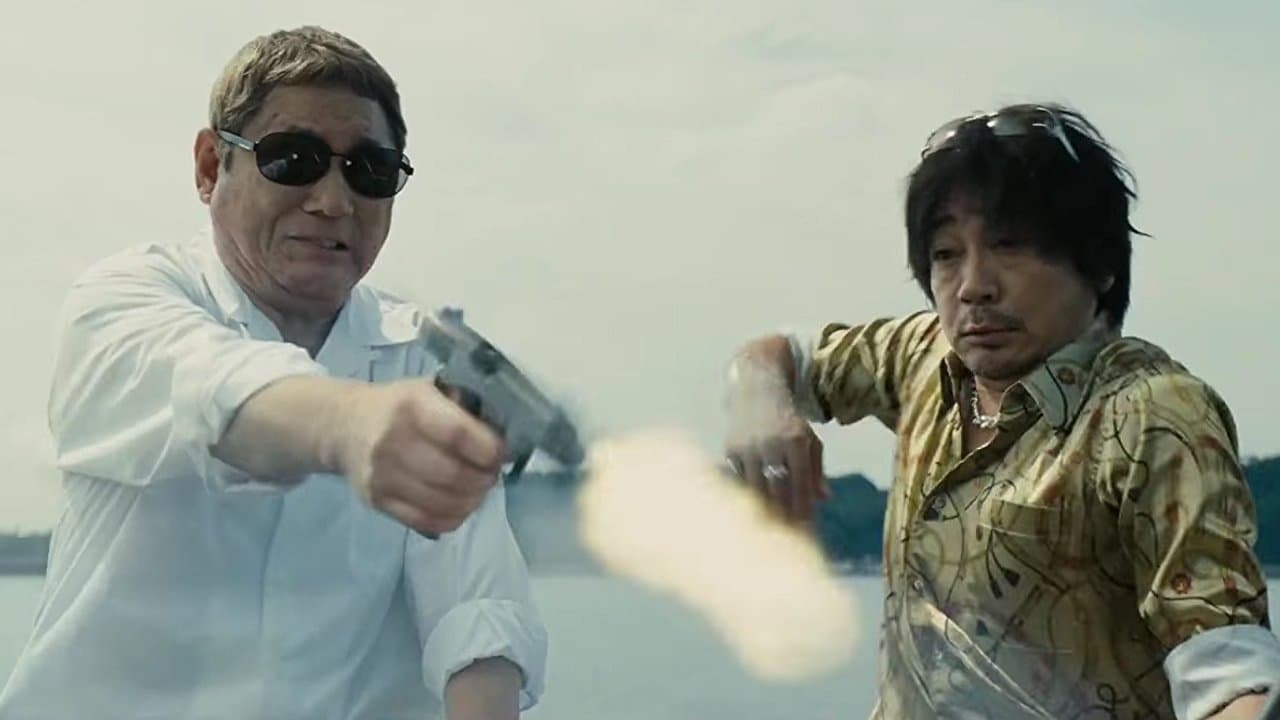
Outrage Coda picks up five years after the all-out war that tore through Japan's yakuza underworld. The former boss Otomo—played by Takeshi Kitano himself—has gone quiet, working as a fixer for Mr. Chang, a powerful operator in South Korea. He's built a life outside the violence, or so it seems. But when Chang's interests collide with the Hanabishi crime family back in Japan, and when Chang's life hangs in the balance, Otomo's exile ends. He returns to Japan to settle accounts once and for all. What unfolds is a final confrontation that will determine who controls the criminal landscape—and whether anyone can truly escape their past. It's the closing chapter of Kitano's Outrage trilogy, and it doesn't flinch from the cost of that reckoning.
Behind the Making of Outrage Coda: Kitano's Complete Vision
Outrage Coda arrived in October 2017 as the third and final installment of Takeshi Kitano's yakuza saga, which began with the original Outrage in 2010 and continued with Beyond Outrage in 2012. Kitano didn't just star in this film—he wrote it, directed it, and edited it, giving the trilogy a singular creative voice that's rare in modern cinema. The production brought together a significant roster of Japanese studios and distributors: TV Tokyo, Office Kitano, Bandai Visual, Warner Bros. Japan, Celluloid Dreams, and TFC all collaborated on the project. The film premiered out of competition at the 74th Venice International Film Festival in 2017, a prestigious nod to its artistic ambitions. Critically, it landed at 60% on Rotten Tomatoes and earned a Metascore of 58, positioning it as a respectable if not universally beloved conclusion. The film ran 104 minutes, giving Kitano enough room to build tension across multiple crime families, police corruption angles, and power struggles that span from Japan to Jeju Island in South Korea. Awards recognition included two wins and four nominations, acknowledging Kitano's technical craftsmanship even where critics remained divided on the narrative itself.
What Makes Outrage Coda Stand Out: Cynicism, Control, and Craft
What's striking about Outrage Coda isn't that it reinvents the yakuza genre—it doesn't, and it doesn't try to. Instead, Kitano doubles down on what made the first two films compelling: a cynical worldview where loyalty is currency, betrayal is inevitable, and violence is the language everyone speaks. The film's tagline, "All out of control," captures something true about the narrative. Nobody really wins here. Otomo returns not as a hero but as a man who understands that the only way out of the criminal underworld is to go through it one more time. Kitano's performance carries a weariness that's hard to fake—he plays a character who's seen too much, knows too much, and can't stop himself from wading back in. The supporting cast moves through the story like pieces on a board, and the camera watches it all with a kind of detached precision that won't let you off the hook either. What I keep coming back to is how the film treats power itself as a hollow thing. You can seize control of the underworld, but that control will consume you. The gang war, the revenge plots, the shifting alliances—they're all symptoms of a system that grinds people down regardless of their position in it. That's a bleak vision, and Kitano commits to it entirely.
Where to Stream Outrage Coda Online
Outrage Coda is available on major OTT services, and Movie OTT tracks current availability across all major streaming platforms so you can find it wherever it's currently streaming in your region. The "Where to Watch" widget at the top of this page shows you the exact platforms carrying it right now—whether that's Netflix, Prime Video, or other services in your area. Streaming availability changes frequently, so checking Movie OTT before you settle in ensures you're not hunting through the wrong apps. The 104-minute runtime makes it a perfect evening watch, and most platforms allow you to stream in HD or 4K depending on your subscription tier.
Frequently Asked Questions
Q: Is Outrage Coda the final film in the Outrage trilogy?
Yes. Outrage Coda completes Takeshi Kitano's three-film yakuza saga, which began with Outrage in 2010 and continued with Beyond Outrage in 2012. Kitano has stated this is the trilogy's conclusion, making it the definitive ending to Otomo's story.
Q: Who directed and starred in Outrage Coda?
Takeshi Kitano wrote, directed, edited, and starred in the film as the lead character, Otomo. His complete creative control over the project gives the trilogy a unified artistic vision that's uncommon in modern filmmaking.
Q: Do I need to watch the first two Outrage films to understand Outrage Coda?
While Outrage Coda stands on its own narratively, having seen the original Outrage and Beyond Outrage will deepen your understanding of the character dynamics, past conflicts, and the weight of Otomo's history. The trilogy builds on itself, so watching in order is recommended.
Q: What's the difference between the Metascore and Rotten Tomatoes ratings?
Outrage Coda holds a 60% on Rotten Tomatoes (Fresh) and a Metascore of 58, meaning critics were moderately positive but not unanimous. The film earned respect for its craft and performances, though some felt the narrative didn't fully justify the trilogy's ambitions.
Q: Where was Outrage Coda filmed?
While primarily set in Japan, portions of the film take place on Jeju Island in South Korea, reflecting the story's international crime-family dynamics and Otomo's exile across borders.
Final Thoughts on Outrage Coda
Outrage Coda isn't a feel-good conclusion. It's a film that understands the yakuza genre isn't about redemption or triumph—it's about the machinery of power grinding on regardless of who's in charge. Takeshi Kitano's trilogy closes not with a bang of heroism but with a quiet acknowledgment that some cycles can't be broken, only endured. If you're drawn to crime dramas that don't soften their edges, that won't let their characters off easy, and that trust you to sit with moral ambiguity, this one's worth your time. It's cynical, controlled, and entirely uninterested in making you feel good about what you've witnessed. That's exactly the point.