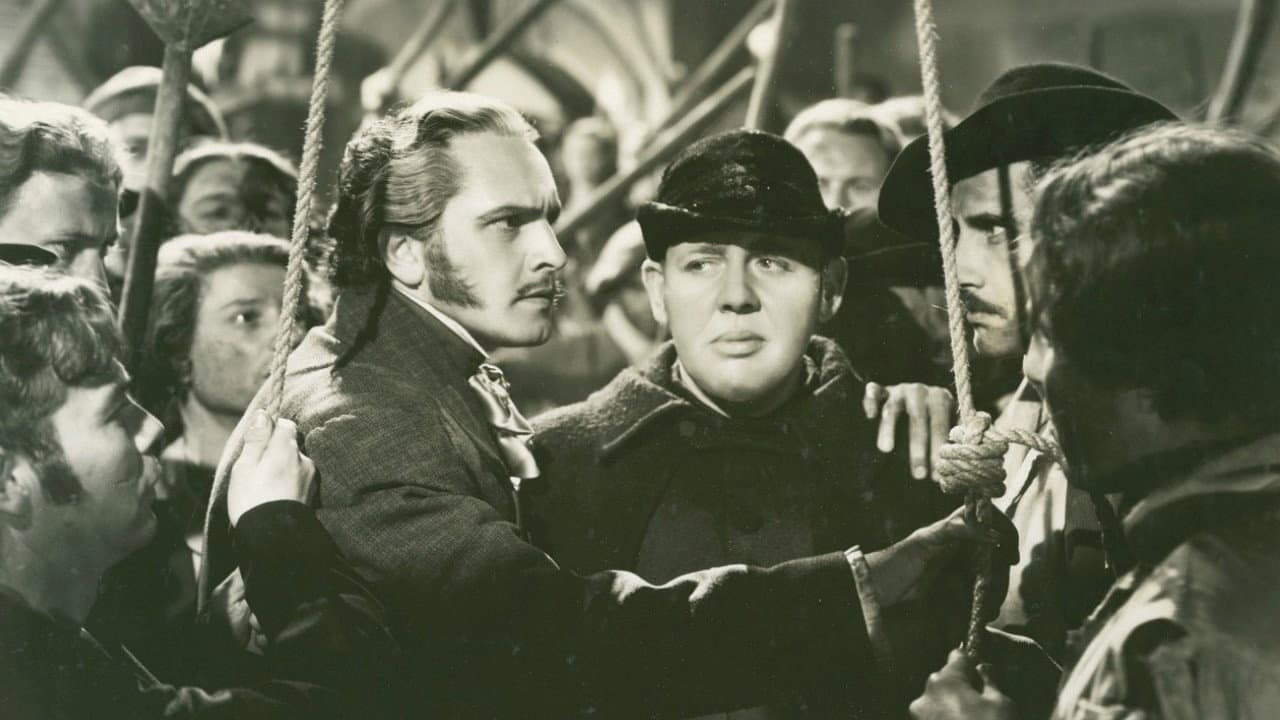
The story of Les Misérables and its timeless struggle
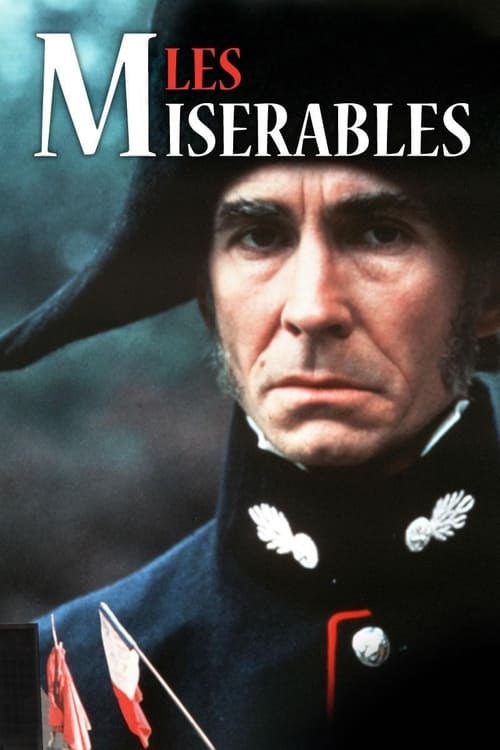
Les Misérables isn't just another period piece. It's a story about the cost of survival, the weight of conscience, and whether a man can ever truly escape his past. The film follows Jean Valjean, a prisoner released after nineteen years in chains for the crime of stealing a loaf of bread—a detail that haunts everything that follows. Once free, he attempts to build a new life, but Javert, a relentless police inspector, becomes his shadow, convinced that redemption is a lie and that Valjean's nature is fixed and unchangeable. Their pursuit consumes both men across the backdrop of 19th-century France, eventually pulling them into the student revolutions that would reshape the nation itself. What makes this narrative grip us still is that neither man is simply right or wrong. Valjean wants mercy; Javert demands justice. The film refuses easy answers.
Behind the making of Les Misérables and its Hollywood moment
This 1935 adaptation holds a peculiar place in cinema history. It was the last film produced by Twentieth Century Pictures before the studio merged with Fox Film Corporation to form the powerhouse that would become 20th Century-Fox—a historical footnote that matters because you can feel the ambition and resources poured into every frame. Director Richard Boleslawski, a veteran of silent cinema and early sound, brought both technical sophistication and emotional intelligence to Victor Hugo's sprawling novel. The screenplay by W. P. Lipscomb strips away some of Hugo's digressions and focuses the narrative tightly, which isn't always a loss; sometimes constraint breeds clarity.
Casting Fredric March as Valjean was inspired. March was already a major star—he'd won the Academy Award for Best Actor just years earlier—and he brings a worn, dignified weariness to the role that suggests a man who's learned the hard way that survival and living aren't the same thing. Charles Laughton as Javert is the film's secret weapon. Laughton had that rare gift of making obsession look like principle, and watching him track Valjean with grim, almost religious certainty is genuinely unsettling. The supporting cast rounds out the emotional landscape without overshadowing the central duel. The runtime of 108 minutes keeps the pacing brisk—not rushed, but purposeful. For a film adapted from a novel that runs nearly 1,500 pages, that's no small feat.
Why Les Misérables endures as a portrait of moral conviction
What's striking about this version is how it trusts the audience to sit with moral ambiguity. There's no villain here—only two men trapped by their own beliefs. Valjean's journey isn't about redemption performed for an audience; it's about whether he can believe in his own redemption when the law itself won't. Laughton plays Javert not as a caricature of bureaucratic cruelty but as a man genuinely convinced that order depends on punishment, that mercy is weakness. The film doesn't mock him for this. It shows us the loneliness of such certainty.
March's performance is quieter than you might expect. He doesn't declaim or gesture broadly. Instead, he communicates through restraint—a tightening of the jaw, a glance held a beat too long. There's a scene where Valjean must choose between saving himself and saving another, and March does almost nothing, yet everything shifts. That's acting. The cinematography (though I can't speak to all technical credits with certainty) has the shadowy, high-contrast look of early-to-mid 1930s Hollywood, which suits the moral darkness of the material. Light and shadow become metaphors without feeling heavy-handed. The dialogue, meanwhile, doesn't try to sound Shakespearean or archaic. These characters speak plainly about impossible things, which somehow makes the stakes feel more real.
One thing nobody mentions is how the film's treatment of revolution—those student uprisings that Valjean becomes entangled in—feels almost incidental to the main story. That's actually wise. Hugo uses the barricades as a testing ground for his characters' values. This film does the same, but doesn't let historical spectacle overwhelm personal consequence. It's a different kind of epic than we're used to.
Where to stream Les Misérables online
Les Misérables is available on major OTT services, and you can check the Where to Watch widget at the top of this page for current availability in your region. Streaming catalogs shift frequently—platforms rotate titles based on licensing agreements—so Movie OTT tracks where this 1935 classic is currently streaming to save you the hunt. Whether you're a fan of classic Hollywood drama or you're exploring how earlier generations adapted Hugo's masterwork, you'll find the film accessible on the platforms listed. The 108-minute runtime makes it an easy evening commitment, and the image quality on modern streaming services is often surprisingly good for a film of this age.
Frequently asked questions
Q: Is Les Misérables based on a true story?
No, it's based on Victor Hugo's 1862 novel of the same name, which is a work of fiction. However, Hugo was inspired by real events and social conditions in 19th-century France, and the character of Jean Valjean was partly inspired by real-life criminal cases and stories of redemption that Hugo encountered.
Q: Who directed Les Misérables and who stars in it?
Richard Boleslawski directed the film, with Fredric March playing Jean Valjean and Charles Laughton as Inspector Javert. This was one of the major Hollywood productions of 1935, released by Twentieth Century Pictures.
Q: How does this 1935 film version compare to the novel?
The film condenses Hugo's epic narrative significantly and removes several major subplots to fit the 108-minute runtime. While it follows the core story of Valjean and Javert's pursuit, there are many differences in detail and emphasis compared to the original text.
Q: What's the IMDb rating for this version of Les Misérables?
The film holds a rating of 7.138 out of 10 on IMDb, reflecting solid appreciation among classic film enthusiasts and general audiences who've discovered it through streaming platforms.
Q: Is this film appropriate for family viewing?
Les Misérables is a drama dealing with themes of crime, punishment, and moral conflict. While it contains no graphic violence by modern standards, the emotional intensity and mature themes make it better suited for older teens and adults rather than young children.
Final thoughts on Les Misérables as essential classic cinema
There's something about watching a 1935 film tackle questions that still matter—about justice, mercy, and whether people can change—that reminds you why cinema exists. This isn't a museum piece. It's a living argument between two men about the nature of human worth, and both of them can't be right, but both of them are sincere. If you're hunting for classic drama that doesn't feel dated or quaint, Les Misérables delivers. It's patient, it's intelligent, and it trusts you to think. That's rare in any era.