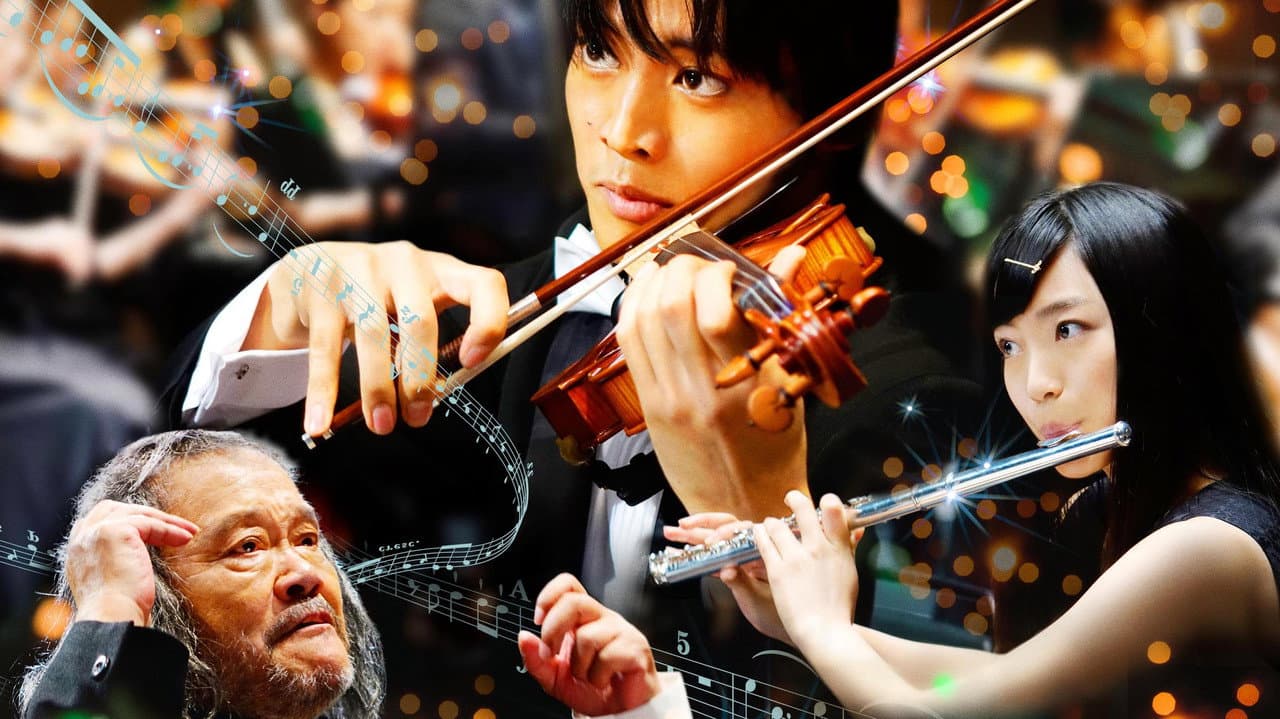










The story of Maestro! and its central conflict
Maestro! tells the story of an orchestra forced to shut down when economic recession cuts off funding. The musicians scatter, their careers interrupted, their futures uncertain. Then word comes: the orchestra will reform. It's a glimmer of hope — but not everyone gets called back. Only some members return for the first rehearsal, and when they play together for the first time since disbanding, something's clearly wrong. The sound is hollow, disjointed, nothing like what they once were. That's when conductor Tetsusaburo Tendou appears, stepping into the rehearsal room with a quiet authority that changes everything. What unfolds is less about fixing notes on a page and more about rebuilding something broken at a deeper level — trust, discipline, and the will to create beauty together again.
Behind the making of Maestro!
Maestro! emerged from a 2015 collaboration between Japanese production powerhouses Asmik Ace, WOWOW, and Shochiku, with support from dentsu, PARCO, and a network of regional broadcasters and corporate partners. Director Shotaro Kobayashi adapted the film from a manga by Akira Sasō, bringing the source material's emotional texture to the screen with considerable care. The ensemble cast includes Toshiyuki Nishida in the pivotal role of conductor Tendō, alongside Tori Matsuzaka as Kōsaka and supporting performances from Miwa, Yutaka Matsushige, and Kyusaku Shimada. Nishida, a veteran of Japanese cinema with decades of screen presence, carries the film's philosophical weight — he's the still center around which the chaos of the orchestra revolves. The film's 129-minute runtime allows space for character development that might feel rushed in a tighter edit; Kobayashi clearly trusted his actors and the material enough to let scenes breathe. Maestro! screened at the 2015 LA EigaFest, gaining recognition in North American festival circuits despite its distinctly Japanese sensibility and focus on classical music culture.
What makes Maestro! stand out as a character study
What's striking about Maestro! is that it resists the Hollywood template of the inspiring-coach-fixes-underdogs narrative. Yes, Tendō is the catalyst — but the film isn't really about him saving the day. It's about the orchestra members learning to save themselves. The early rehearsals are genuinely uncomfortable to watch; these aren't plucky amateurs — they're trained professionals who've lost their way, and the dissonance between what they know they should sound like and what they actually produce is almost painful. That tension matters. I keep coming back to how the film handles failure not as a plot device but as a lived experience. Musicians who've been told they're not good enough, who've sat at home wondering if their careers are over, now have to stand in front of each other and play badly. The shame of that — the vulnerability — that's what the film captures. Tendō doesn't deliver rousing speeches. He watches, listens, and occasionally offers a comment that lands like a koan: not an answer, but a question that forces the musicians to reconsider what they're doing. The performances, especially Nishida's quiet intensity, give the film an emotional credibility that might otherwise feel sentimental. IMDb users have rated it 6.4 out of 10 across 125 votes, a respectable middle ground that suggests the film finds an audience among those who appreciate understated character work over plot mechanics.
How to stream Maestro! online
Maestro! is available across major OTT services — you can check the Where to Watch widget at the top of this page for current availability in your region. Movie OTT tracks streaming rights across platforms in real time, so if you're hunting for where this title lives today, that's your best starting point. Availability does shift between services and regions, but the film's presence on multiple platforms means it's generally accessible whether you're subscribed to mainstream services or niche streaming options focused on international cinema. The 129-minute runtime makes it a solid evening watch, and the dialogue-heavy nature of the film (much of which unfolds in rehearsal rooms) means subtitles are essential for English-speaking viewers, though that's hardly a drawback — Japanese dialogue in a film about a Japanese orchestra feels, well, correct.
Frequently asked questions
Q: Is Maestro! based on a true story?
No, Maestro! is based on a manga by Akira Sasō rather than real events. However, the film's exploration of orchestra politics and the economic pressures facing cultural institutions reflects real challenges that Japanese orchestras and arts organizations have faced.
Q: Who directed Maestro! and what's his background?
Director Shotaro Kobayashi adapted the manga for the screen in 2015. While Kobayashi isn't a household name in Western cinema, his work on Maestro! demonstrates a strong grasp of ensemble dynamics and character-driven storytelling — the kind of skill that doesn't always make headlines but anchors a film's emotional core.
Q: What's the runtime, and is it a slow film?
Maestro! runs 129 minutes. It's contemplative rather than slow — there's a difference. The pacing allows for quiet moments between musicians, rehearsal sequences that build tension through musical performance rather than dialogue, and the gradual accumulation of trust and understanding. If you're looking for plot-driven momentum, you might find it patient. If you're open to character study, it'll hold you.
Q: Do I need to know about classical music to enjoy Maestro!?
Not at all. The film isn't a masterclass in orchestration; it's a story about people learning to work together. Understanding the basics of how an orchestra functions helps, but the emotional journey — the struggle to rebuild something broken — is universal enough that musical knowledge isn't required.
Q: Where can I find Maestro! to watch right now?
Check the Where to Watch widget at the top of the page for current streaming availability. Movie OTT keeps that information updated across all major platforms, so you'll know exactly where to stream it in your location.
Final thoughts on Maestro!
Maestro! isn't a film that'll blow your mind with plot twists or leave you sobbing in the theater. What it does instead is offer something quieter: a meditation on resilience, the fragility of artistic community, and the possibility of second chances. It trusts its audience to find meaning in the spaces between notes, in the awkward silence of a failed rehearsal, in the small moment when musicians finally lock in together and remember why they chose this difficult, beautiful life. If that sounds like your kind of film, don't sleep on it.