





The story of The Neon Bible
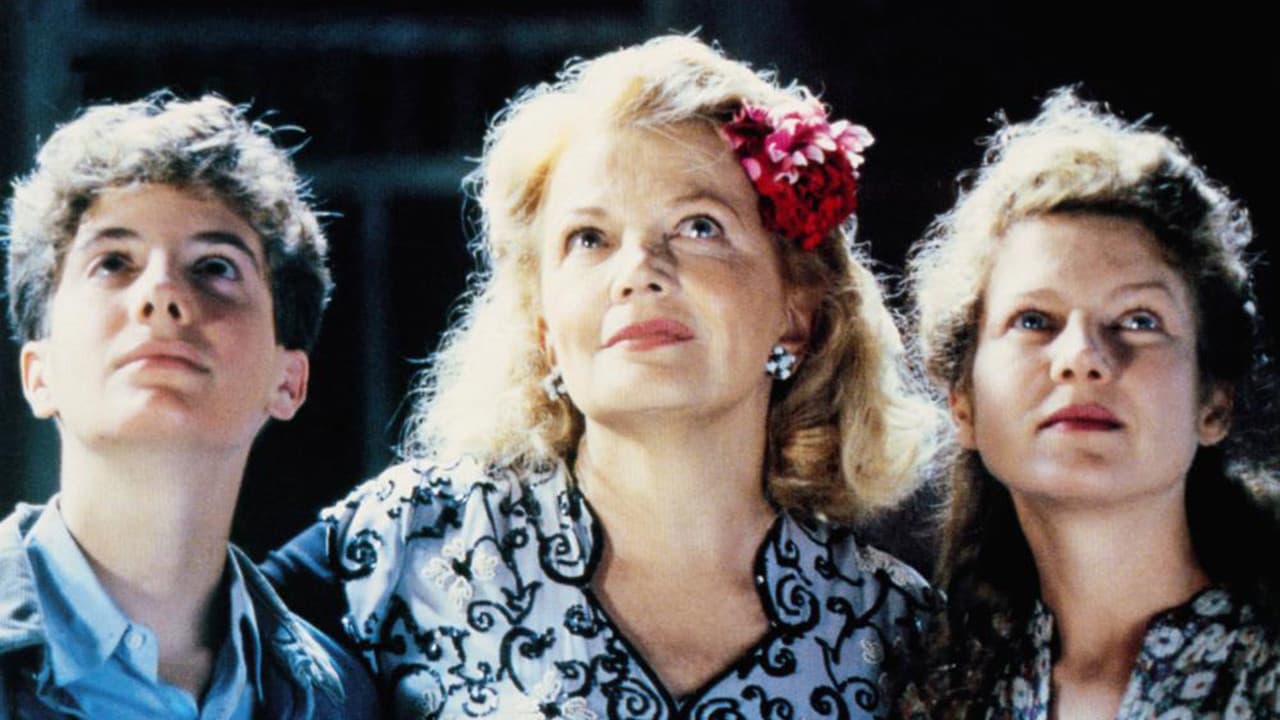
The Neon Bible opens on a train, where a teenager sits with his thoughts, drifting back to the formative years that brought him to this moment. What unfolds is a portrait of childhood in 1940s small-town Georgia—a world of limited horizons, economic hardship, and the kind of quiet damage that happens when families break apart. The film follows David as he navigates an abusive father, a mother who depends on him in ways no child should have to bear, and an aunt who works as a singer and represents a kind of freedom he can barely comprehend. It's not a plot-driven story so much as a mood piece, a series of moments that accumulate into something like understanding.
The narrative structure itself—that framing device of the train ride—creates a sense of reflection and distance. We're not watching events unfold in real time; we're watching memory work, which means we're always aware of how the past shapes the present. Davies uses this structure to ask an unspoken question: how do we survive our childhoods? What do we carry with us?
Behind the making of The Neon Bible
Terence Davies wrote and directed The Neon Bible, adapting it from John Kennedy Toole's novel of the same name. The production itself was an international effort, with Channel Four Films, Scala Productions, and several other companies coming together across multiple territories—Screen Partners Ltd., Iberoamericana Films Producción, Academy Pictures, and Three Rivers Production all had a hand in bringing it to screen. The film was shot on location in Georgia, with scenes filmed in Atlanta, Crawfordville, and Madison, capturing the period authenticity and landscape that grounds the story.
Davies had already established himself as a distinctive voice in British cinema by the time he made this film. His visual style—precise, painterly, often austere—translates remarkably well to the American South of the 1940s. The runtime is a lean 92 minutes, which works in the film's favor; there's no padding here, no scenes that don't earn their place. The cast, anchored by young Geno Rowlands in the central role of David, carries the emotional weight without ever feeling like they're straining for effect. It's the kind of understated ensemble work that doesn't always get noticed in awards conversations, but that's often where the real craft lives.
What makes The Neon Bible stand out
What's striking about The Neon Bible is how it resists easy sentiment. This could've been a melodrama—and honestly, the raw material invites that approach. A kid with a brutal father, a fragile mother, an absent parent. But Davies doesn't exploit any of it. Instead, he gives us scenes that feel observed rather than orchestrated, moments where characters sit in silence or speak in the careful, guarded way real people do when they're protecting themselves.
Geno Rowlands' performance is the anchor here—he doesn't play David as a tragic figure but as a kid trying to make sense of an incomprehensible adult world, which is far more interesting. There's a scene early on where David watches his father, and you can see something shift in his face, some small hardening. That's the kind of acting that doesn't announce itself. The supporting cast, particularly those around the family dynamic, gives the film its texture. These aren't caricatures of Southern Gothic types; they're people trapped in circumstances they didn't choose, doing their best or their worst depending on the day.
The visual language Davies employs—muted colors, careful framing, long takes that let scenes breathe—mirrors the emotional restraint of the characters. You're never watching someone emote at the camera. You're watching people exist, which somehow feels more true. When something does break through—a moment of genuine connection, or conversely, a flash of cruelty—it lands harder because the film hasn't been manipulating you with music and close-ups all along. The IMDb rating of 6.1/10 suggests the film didn't achieve mainstream popularity, and that's partly because it refuses to give audiences what they might expect from a drama about childhood trauma.
Where to stream The Neon Bible online
The Neon Bible is currently available on major OTT services, and Movie OTT keeps a running list of where you can find it. Since streaming rights shift regularly, checking the Where to Watch widget at the top of this page will show you the most current options—whether that's a subscription service, rental platform, or free ad-supported tier. Movie OTT tracks availability across the major platforms, so you don't have to hunt through five different apps to figure out where to watch it. It's a 92-minute commitment, so knowing where to find it matters.
Frequently asked questions
Q: Is The Neon Bible based on a true story?
No, it's an adaptation of John Kennedy Toole's novel of the same name. Toole wrote the book before his death in 1969, and it was published posthumously. While not a true story, it draws on themes and observations that feel deeply rooted in real experience.
Q: Who directed The Neon Bible?
Terence Davies both wrote and directed the film. Davies is a British filmmaker known for his distinctive visual style and emotional precision, bringing those same qualities to this American period story.
Q: What year does The Neon Bible take place in?
The story is set in the 1940s in small-town Georgia, during and around World War II. The framing device of the train ride happens in a later time period, but the bulk of the narrative is flashback.
Q: How long is The Neon Bible?
The film runs 92 minutes, making it a relatively compact drama that doesn't waste time on unnecessary scenes.
Q: Where was The Neon Bible filmed?
It was shot on location in Georgia, with filming taking place in Atlanta, Crawfordville, and Madison. Using real Southern locations grounds the film's sense of place and period.
Final thoughts on The Neon Bible
The Neon Bible isn't a crowd-pleaser, and it doesn't pretend to be. It's a film for viewers who can sit with discomfort, who appreciate restraint, and who understand that the most powerful moments in cinema often happen in silence. If you're drawn to character-driven dramas that don't spell everything out—films that trust you to read between the lines—this is worth seeking out. Davies made something genuinely singular here, a film that lingers in ways that aren't immediately obvious. Not every movie needs to be loved by everyone. Some just need to be seen by the right people.