
The story of The Wild Blue Yonder
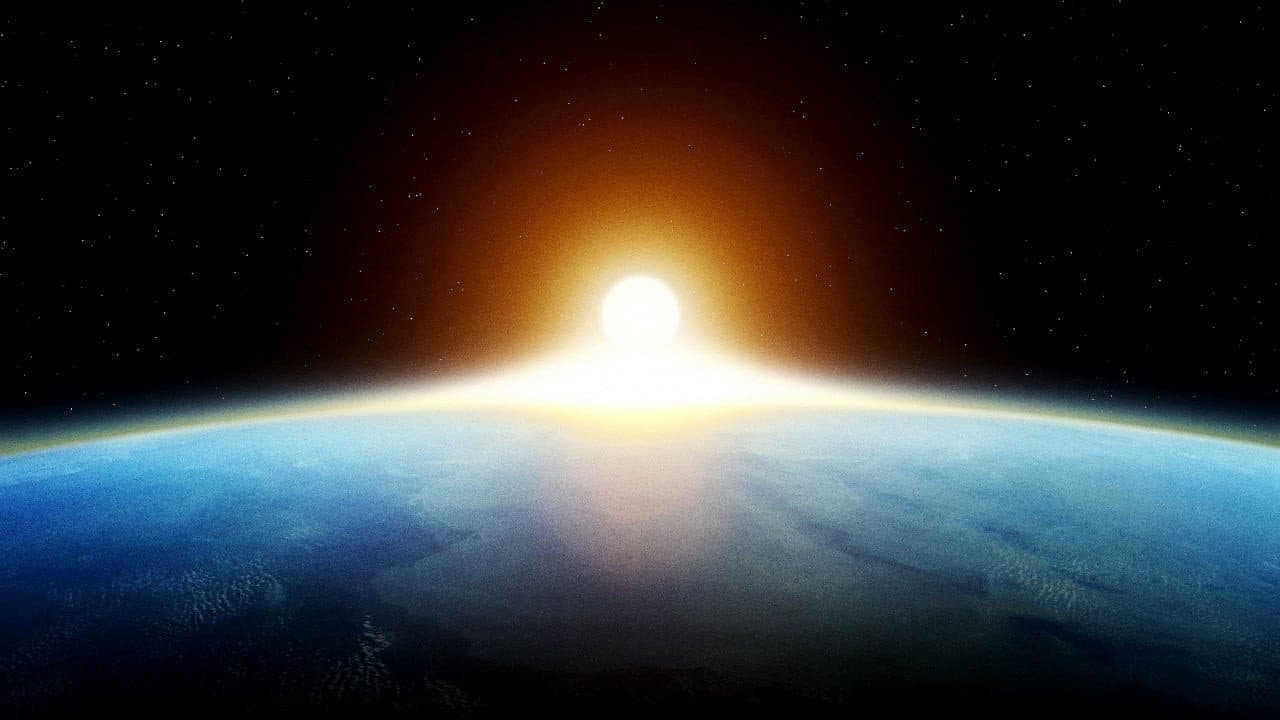
The Wild Blue Yonder unfolds as a cosmic conversation between two dying civilizations. An alien being narrates the history of his own planet's collapse and his people's repeated visits to Earth, observing humanity with a mix of wonder and dread. Meanwhile, human astronauts are desperately searching the cosmos for an alternate world—some habitable refuge where our species might survive after we've made Earth uninhabitable. It's a premise that sounds straightforward enough, but Herzog doesn't make straightforward films. The narrative doesn't follow traditional three-act structure; instead, it drifts, accumulates, whispers. You're not watching a plot unfold so much as eavesdropping on a meditation on extinction, resource depletion, and the cosmic indifference to our struggles.
Awards and recognition for The Wild Blue Yonder
When The Wild Blue Yonder premiered at the 62nd Venice Film Festival in 2005, it won the FIPRESCI Award—a distinction that matters in art-house circles but rarely makes mainstream headlines. The film also screened in competition at the Mar del Plata International Film Festival and the Sitges Film Festival, where it earned the "Carnet Jove – Special Mention" award. These aren't mainstream blockbuster accolades, but they signal serious critical respect from festival programmers who recognize Herzog's uncompromising vision. The 81-minute runtime is deceptively brief; Herzog packs philosophical weight into every frame. On IMDb, it holds a 6/10 rating—a score that reflects the film's divisive nature. Some viewers find it profound; others find it impenetrable. That divide tells you something important about what Herzog was attempting. He wasn't chasing universal appeal. Tetra Media, Werner Herzog Filmproduktion, and West Park Pictures Produktion collaborated on the production, bringing together European and international talent to realize Herzog's singular artistic vision.
What makes The Wild Blue Yonder stand out in science fiction
Here's what's genuinely strange about The Wild Blue Yonder: most of the footage isn't original cinematography at all. Herzog took documentary material—archival footage, scientific recordings, underwater sequences—and overlaid it with fictional narration, transforming found imagery into something entirely new. It's a technique he'd pioneered a decade earlier with Lessons of Darkness (1992), but in this film, the method feels even more radical, more haunting. The effect is disorienting in the best way. You're watching what appears to be scientific documentation, but the alien narrator is reframing everything, recontextualizing reality through an extraterrestrial lens. What struck me most is how this formal choice becomes thematic—the alien's perspective literally reshapes how we see Earth, our oceans, our cities. The narration isn't delivered with dramatic flair; it's measured, almost exhausted, as if the alien has already mourned both worlds and is simply bearing witness to the inevitable.
There's a loneliness that seeps through every scene. Not the melodramatic loneliness of isolation in space (though that's present), but something colder—the loneliness of watching civilizations fail, of understanding that intelligence doesn't guarantee survival, that consciousness might be a cosmic joke. The film doesn't offer hope, exactly, but it offers something rarer: honest reckoning. What's striking is that Herzog doesn't judge either species. The aliens aren't villains, and humanity isn't uniquely foolish. Both are trapped by the same gravitational pull toward self-destruction. If you're accustomed to sci-fi that resolves conflict through heroism or technology, you'll find The Wild Blue Yonder refusing to play that game.
Where to stream The Wild Blue Yonder online
The Wild Blue Yonder is currently available on major OTT services, so finding it won't require a treasure hunt. You can check the Where to Watch widget at the top of this page for real-time availability across platforms in your region. Streaming catalogs shift constantly—what's available today might rotate off next month—but Movie OTT tracks current availability across services so you don't have to hunt through five different apps. Since the film's runtime is just 81 minutes, it's a manageable commitment for a weeknight viewing, though you'll want an hour where you can actually focus. Herzog's work rewards attention; it punishes distraction.
Frequently asked questions
Q: Who directed The Wild Blue Yonder?
Werner Herzog, the legendary German filmmaker known for his documentary work and philosophical approach to narrative cinema, directed the film. Herzog has a distinctive style that blends documentary techniques with fictional storytelling, which is central to The Wild Blue Yonder's unique structure.
Q: Is The Wild Blue Yonder based on a true story?
No, it's an original science fiction concept, though it incorporates real documentary footage that Herzog recontextualizes through the alien narrator's fictional perspective. The narrative is entirely Herzog's creation, but the visual material often comes from actual scientific and archival sources.
Q: What is the runtime of The Wild Blue Yonder?
The film runs 81 minutes, making it a relatively compact viewing experience despite its philosophical scope and contemplative pacing.
Q: Why does The Wild Blue Yonder use documentary footage?
Herzog employs recontextualized documentary material as a formal choice, overlaying fictional narration onto real footage to create a hybrid form that blurs the line between science and science fiction. This technique transforms how we perceive familiar imagery.
Q: Where can I watch The Wild Blue Yonder?
The film is available on major OTT streaming services. Check the Where to Watch widget on this page for current availability, or visit Movie OTT's streaming tracker to see which platform has it in your region.
Final thoughts on The Wild Blue Yonder
The Wild Blue Yonder won't satisfy everyone. That's not a weakness; it's a feature. Herzog made a film for people who can sit with ambiguity, who don't need their sci-fi wrapped in action sequences and triumphant endings. It's a meditation disguised as a narrative—a whispered conversation between dying worlds that asks us to really listen. If you've exhausted the usual streaming sci-fi offerings and you're ready for something that'll actually stay with you, this is worth your time. Don't expect answers. Expect questions you didn't know you were asking.