
The story of Thunder Road
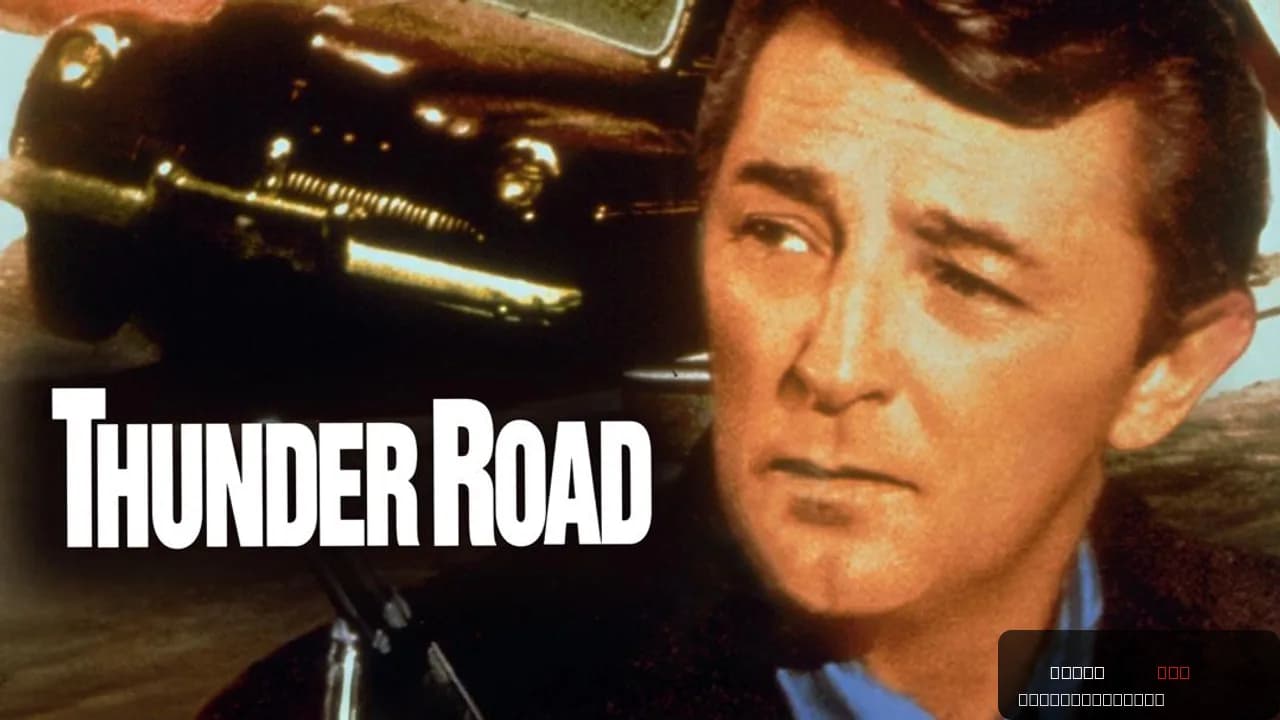
Thunder Road follows a war veteran named "Doolin" who returns to his mountain home expecting a quiet life, only to discover that running the family moonshine business is anything but peaceful. The film wastes no time throwing him into conflict on multiple fronts: a ruthless city hoodlum named Kogan is muscling in on their operation, while local law enforcement—represented by a determined cop—won't leave him alone. What starts as a simple homecoming becomes a high-stakes game where Doolin must navigate betrayal, violence, and the weight of choosing between family loyalty and survival. The 92-minute runtime keeps the tension taut, never letting the audience settle into comfort. It's a tale that could've been forgettable pulp, but the film's stylish execution and Mitchum's ease with the material elevate it beyond mere crime-picture mechanics.
Behind the making of Thunder Road
The origins of Thunder Road are genuinely interesting. Robert Mitchum didn't just star in the film—he actually conceived the story, basing it on an account from writer James Agee, a friend of his, regarding an alleged bootlegging incident that took place in Knoxville, Tennessee. The screenplay was then developed by James Atlee Phillips and Walter Wise, who drew inspiration from the infamous stretch of highway running from Harlan, Kentucky to Knoxville that locals called "Thunder Road"—a route notorious for moonshine transportation and law enforcement pursuits. Director Arthur Ripley brought the material to life with a distinctly Southern Gothic sensibility, crafting a film noir that feels rooted in actual Appalachian history rather than pure invention. The cast assembled around Mitchum included Gene Barry as the cop, Jacques Aubuchon as the menacing Kogan, and Keely Smith in a supporting role. While the film didn't become a box-office juggernaut, it carved out a lasting place in crime cinema, earning a respectable 6.4 rating on IMDb from audiences who've revisited it over the decades. The picture's visual style—all shadows and tight framing—gives it a weight that transcends its modest budget.
What makes Thunder Road stand out
Honestly, what's striking about Thunder Road isn't some revolutionary narrative—the plot is fairly straightforward, almost skeletal in its simplicity. What matters is the how. Mitchum looks genuinely at ease in the role, bringing a weary authenticity to a man caught between worlds, and that ease is contagious; you believe him because he isn't trying too hard. The film's visual language—the way Ripley frames scenes, the use of shadow and tight compositions—creates an atmosphere of creeping dread that doesn't rely on explosions or manufactured thrills. There's a scene early on where Doolin realizes just how much trouble he's inherited, and the camera work alone communicates the trap closing around him. Gene Barry, best known for his television work, brings a different kind of menace as the cop: he's not a villain, just a man doing his job, which somehow makes the conflict more tragic. What the film does better than most is capture the claustrophobia of a small-town crime world where everyone knows everyone, and betrayal can come from the most unexpected places. The Southern setting isn't just window dressing—it's integral to the story's DNA, a place where old codes and new threats collide.
Where to stream Thunder Road online
If you're looking to watch Thunder Road, you can currently find it on Prime Video. Movie OTT tracks where classic films like this one are streaming across all major platforms, so you can see current availability in one place rather than bouncing between a dozen apps. Since streaming rights shift constantly, it's worth checking the "Where to Watch" widget at the top of this page to confirm it's still available on your preferred service. Prime Video's library includes a solid selection of vintage crime films and noir titles, making it a natural home for a 1958 picture like this one.
Frequently asked questions
Q: Is Thunder Road based on a true story?
Not directly, but it's inspired by real events. Robert Mitchum based the story on an account from writer James Agee about an alleged bootlegging incident in Tennessee, and the film references the actual "Thunder Road" highway stretch between Harlan, Kentucky and Knoxville that was notorious for moonshine trafficking and police pursuits.
Q: Who directed Thunder Road?
Arthur Ripley directed the film, bringing a Southern Gothic sensibility to the crime narrative and creating the distinctive visual style that gives the movie its noir atmosphere.
Q: What year was Thunder Road released?
Thunder Road came out in 1958, placing it squarely in the post-war noir period when crime dramas were exploring darker American landscapes and moral ambiguity.
Q: How long is Thunder Road?
The film runs 92 minutes, a lean runtime that keeps the tension moving without unnecessary padding.
Q: What's the IMDb rating for Thunder Road?
Thunder Road holds a 6.4 rating on IMDb, reflecting solid audience appreciation from viewers who've discovered or revisited the film over the decades.
Final thoughts on Thunder Road
Thunder Road isn't a masterpiece that'll change your life, but it's a genuinely solid crime picture that rewards attention. If you're into vintage noir, Appalachian storytelling, or just want to see Robert Mitchum do what he does best—inhabit a morally compromised character with quiet intelligence—it's worth your time. The film's roots in real history, its atmospheric direction, and the quality of its performances make it stand out from routine B-movie fare. Don't expect flash or spectacle. Expect mood, tension, and a story about a man trapped by circumstance. That's enough.