

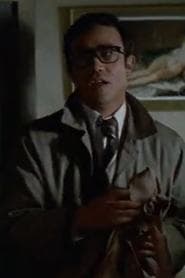
The story of Office Lady Diary: Affair of a She-Cat
Office Lady Diary: Affair of a She-Cat is a 75-minute psychological thriller that drops viewers into a claustrophobic nightmare. The plot centers on an unstable office lady who takes matters into her own hands—literally imprisoning her manager inside her apartment and attempting to seduce him. It's a premise that sounds almost absurd on the surface, but the film treats it with a kind of gritty seriousness that keeps you off-balance. There's no winking at the camera here. What unfolds is a tense, bizarre power dynamic that explores obsession, workplace hierarchies, and desire in ways that feel deliberately uncomfortable. The 75-minute runtime doesn't waste time; it plunges straight into psychological territory and rarely lets up.
Behind the making of Office Lady Diary: Affair of a She-Cat
Produced by Nikkatsu Corporation in 1972, Office Lady Diary: Affair of a She-Cat arrived during a particularly fertile period for Japanese exploitation and pink film cinema. Nikkatsu was churning out provocative content at a breakneck pace, and this entry in the OL nikki (Office Lady Diary) franchise represents the studio's willingness to push narrative boundaries. The OL nikki series itself was a recurring vehicle for Nikkatsu—a franchise that capitalized on the anxieties and desires swirling around Japan's rapidly modernizing workforce and the women entering it. Rather than trying to sanitize workplace dynamics, these films leaned into the messiness, the power imbalances, the sexual tension that more mainstream cinema pretended didn't exist. Office Lady Diary: Affair of a She-Cat is particularly brazen in that regard. Shot on a modest budget with a tight focus on two characters in a single location (the apartment becomes a pressure cooker), the film relies on performance and psychological tension rather than spectacle. It's the kind of low-budget filmmaking that can feel more intimate—and more unsettling—than bigger productions.
What makes Office Lady Diary: Affair of a She-Cat stand out in 1970s exploitation cinema
What's striking about this film is how it refuses easy moralizing. You might expect a 1972 exploitation picture to punish the female character for her transgression, to frame her as a cautionary tale. Instead, the movie seems genuinely interested in her psychology—her frustration, her desperation, the ways workplace hierarchies have left her powerless everywhere else. The manager, trapped in the apartment, becomes a kind of unwilling mirror for her own entrapment. There's a dark irony baked into the premise: he's literally imprisoned, but she's been metaphorically imprisoned all along by the systems she operates within. The performances carry a lot of weight here. Without big set pieces or plot twists to lean on, the actors have to sustain tension through presence alone—through the way they move through that confined space, the way they look at each other, the shifting power dynamics in their conversations. It's not groundbreaking cinema by any measure (the IMDb rating of 4.8/10 reflects a certain dated quality and the film's niche appeal), but there's something genuinely unsettling about it that lingers. The thing nobody mentions is how the film's exploitation elements are almost beside the point—the seduction subplot matters less than the psychological warfare, the way both characters are slowly breaking down in that apartment.
Where to stream Office Lady Diary: Affair of a She-Cat online
Finding Office Lady Diary: Affair of a She-Cat used to mean hunting through specialty video stores or waiting for a festival screening. These days, the film's availability has expanded considerably. You can check the Where to Watch widget at the top of this page to see which major OTT services currently have it in their catalog—streaming platforms have been increasingly willing to catalog deep cuts from Nikkatsu's back catalog as cult interest has grown. Movie OTT tracks current streaming availability across multiple platforms, so you don't have to bounce between three different apps trying to figure out where to find it. The streaming landscape shifts constantly, but if you're hunting for obscure 1970s Japanese cinema, the aggregator tools available now make it far easier than it was even five years ago. Just verify availability in your region before settling in.
Frequently asked questions
Q: Is Office Lady Diary: Affair of a She-Cat part of a series?
Yes—it's an entry in Nikkatsu's OL nikki (Office Lady Diary) franchise. The series explored various scenarios involving office workers, typically with an exploitation angle. You don't need to watch them in order, but it's worth knowing the film exists within a larger universe of similar Nikkatsu productions.
Q: How long is Office Lady Diary: Affair of a She-Cat?
The film runs 75 minutes, which is relatively short even by exploitation standards. That brevity works in its favor—the claustrophobic premise doesn't overstay its welcome.
Q: Who produced Office Lady Diary: Affair of a She-Cat?
Nikkatsu Corporation produced the film in 1972. Nikkatsu was a major Japanese studio known for pink films and exploitation cinema during this era, and they had a knack for turning out provocative content quickly and affordably.
Q: What's the critical consensus on this film?
The IMDb rating sits at 4.8/10, which reflects its status as a niche cult item rather than a widely beloved classic. It's the kind of film that appeals to genre enthusiasts, exploitation cinema historians, and people fascinated by 1970s Japanese cinema—not necessarily to general audiences.
Q: Is Office Lady Diary: Affair of a She-Cat based on a true story?
There's no evidence it's based on real events. It's an original exploitation screenplay designed to explore taboo workplace dynamics and psychological tension through a fictional scenario.
Final thoughts on Office Lady Diary: Affair of a She-Cat
Office Lady Diary: Affair of a She-Cat won't be for everyone. It's deliberately uncomfortable, visually dated, and rooted in a very specific moment in Japanese cinema. But if you're curious about how filmmakers in the 1970s tackled workplace anxiety, gender dynamics, and psychological horror on shoestring budgets, it's absolutely worth 75 minutes of your time. The film's refusal to look away from its own premise—to let the discomfort breathe—is what makes it memorable. Stream it when you need something that'll make you think, not just pass the time.