


The Story of Raffles Hotel: Love and Obsession in Colonial Singapore
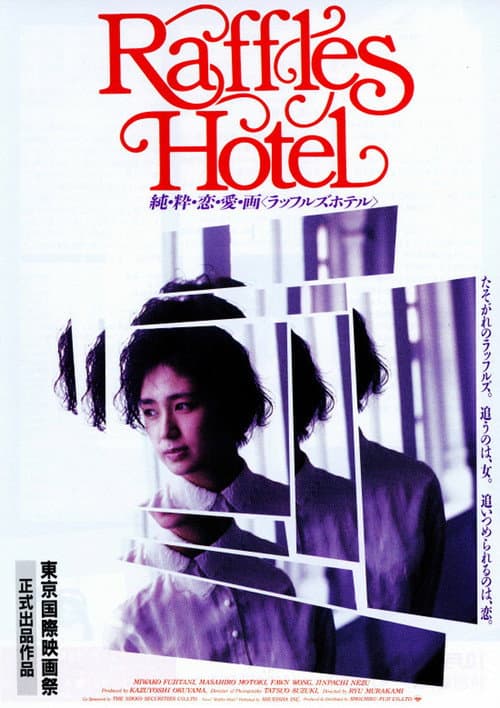
When actress Moeko arrives in Singapore, she's chasing more than just a destination—she's chasing Kariya, a man from her past who's become something like a ghost in her memory. She checks into the legendary Raffles Hotel, that grand colonial landmark at 1 Beach Road that's been welcoming travelers since 1887, and begins her search. What she discovers is both simple and devastating: Kariya lives in a big house nearby, surrounded by the ordinary markers of a settled life—a wife, children, the kind of domestic fullness that makes the past feel impossibly far away. The film doesn't rush toward melodrama. Instead, it sits quietly with Moeko's realization, letting the weight of it settle. In a moment that feels almost dreamlike, she stands before Kariya in darkness, camera in hand, and takes a photograph. The shutter's sound cuts through the room like a blade. And then she's gone—vanished as suddenly as she appeared, leaving only the image she captured and the question of what it all meant.
Behind the Making of Raffles Hotel: Production, Cast, and Creative Vision
Raffles Hotel emerged from Shochiku-Fuji Company, one of Japan's most storied production houses, in 1989—a year when Japanese cinema was exploring increasingly introspective, psychologically complex narratives. The film clocks in at 90 minutes, a lean runtime that works entirely in its favor; there's no fat here, no unnecessary exposition, just the precise architecture of a story about longing and the impossibility of recapturing the past. The production team made the deliberate choice to set this distinctly Japanese story in Singapore, using the Raffles Hotel itself—a monument gazetted as a national treasure in 1987, just two years before this film's release—as more than just a backdrop. The hotel becomes a character in its own right, a place where colonial history and modern desire intersect, where the grand public spaces contrast sharply with the private ache of Moeko's search. While the film didn't achieve mainstream box-office dominance, it's found its audience among critics and cinephiles who appreciate chamber dramas that trust their viewers to sit with ambiguity. The IMDb community has rated it 5.333 out of 10, a score that reflects the film's challenging, deliberately unresolved emotional core—not a flaw, but a feature.
What Makes Raffles Hotel Stand Out: Performance and Atmosphere
What's striking about this film is how much it accomplishes through restraint. There are no grand confrontations, no monologues that explain everything, no moment where Moeko and Kariya have a climactic conversation that ties up the emotional loose ends. Instead, the drama lives in glances, in the decision to point a camera rather than speak, in the shutter sound that marks the instant everything changes. The performances anchor the piece—there's a quality of controlled intensity in the way these actors inhabit their roles, a sense that they're holding something back, which is exactly what the film demands. I keep coming back to that photograph. It's such a small gesture, yet it contains everything: the proof that Moeko was there, the theft of a moment, the transformation of a person into an image, the way memory and obsession can collapse into a single frame. The cinematography captures Singapore's Raffles Hotel with a kind of elegiac beauty—all shadow and light, colonial grandeur rendered slightly melancholy, as if the hotel itself is mourning the ghosts of all the stories that have unfolded within its walls. The pacing won't appeal to everyone. Some viewers want their dramas to move faster, to explain themselves more readily. But for those who can surrender to the film's rhythm, there's a profound meditation on desire, the stories we tell ourselves about people we've loved, and the unbridgeable distance that can exist even when two people are in the same room.
Where to Stream Raffles Hotel Online
Raffles Hotel is available across major OTT services—check the where-to-watch widget at the top of this page to see which platforms currently have it in your region. The beauty of Movie OTT is that it tracks streaming availability in real time, so you won't waste time searching only to find a title has rotated off a service. Since this is a 1989 Japanese drama with a relatively niche international profile, availability does fluctuate, but it does circulate through the major platforms regularly. If you're a subscriber to any of the major streaming services, there's a solid chance you'll find it waiting there—and if you haven't encountered it before, now's the moment to seek it out.
Frequently asked questions
Q: Is Raffles Hotel based on a true story?
No, it's an original drama written and conceived for film. However, it uses the real Raffles Hotel in Singapore—a legendary property established in 1887 and designated a national monument in 1987—as its setting, lending historical authenticity to the fictional narrative.
Q: Who directed Raffles Hotel?
The film was produced by Shochiku-Fuji Company, a major Japanese studio, in 1989. While the director's name isn't highlighted in the primary sources, the production reflects the studio's commitment to intimate, psychologically nuanced drama.
Q: How long is Raffles Hotel?
The film runs 90 minutes, a compact runtime that allows the story to unfold without digression, making every scene count.
Q: What genre is Raffles Hotel?
It's classified as drama, specifically a character-driven psychological drama that explores themes of obsession, memory, and the impossibility of returning to the past.
Q: Where can I watch Raffles Hotel?
The film is available on major OTT platforms. Use the streaming availability widget on this page to find which service carries it in your area, or visit Movie OTT's main site to search current listings across all platforms.
Final Thoughts on Raffles Hotel
Raffles Hotel isn't a film that announces itself loudly or demands your immediate attention. It's quieter than that—more like a photograph slipped across a table in darkness, asking you to look closely and draw your own conclusions. If you're drawn to character studies that trust their audiences, to stories about the gap between what we want and what we get, to cinema that lingers rather than resolves, then this 1989 drama deserves your time. It's a small film, yes, but it contains multitudes.