







The Story of Four Days of Snow and Blood
Four Days of Snow and Blood tells the story of one of the most volatile moments in twentieth-century Japanese history: the 2.26 Incident of 1936. The film follows a group of radical ultra-nationalist military officers who launch a coup d'état, seizing the heart of Tokyo and assassinating several leading politicians in their attempt to reshape the nation's government. What unfolds over four brutal days is a collision between idealism and violence, between young soldiers convinced they're saving Japan and a state machinery determined to crush the rebellion. The film doesn't shy away from the chaos—the gunfire in the streets, the panic in government buildings, the impossible choices made under pressure. It's a story about how conviction, when weaponized, can tear a country apart.
Behind the Making of Four Days of Snow and Blood
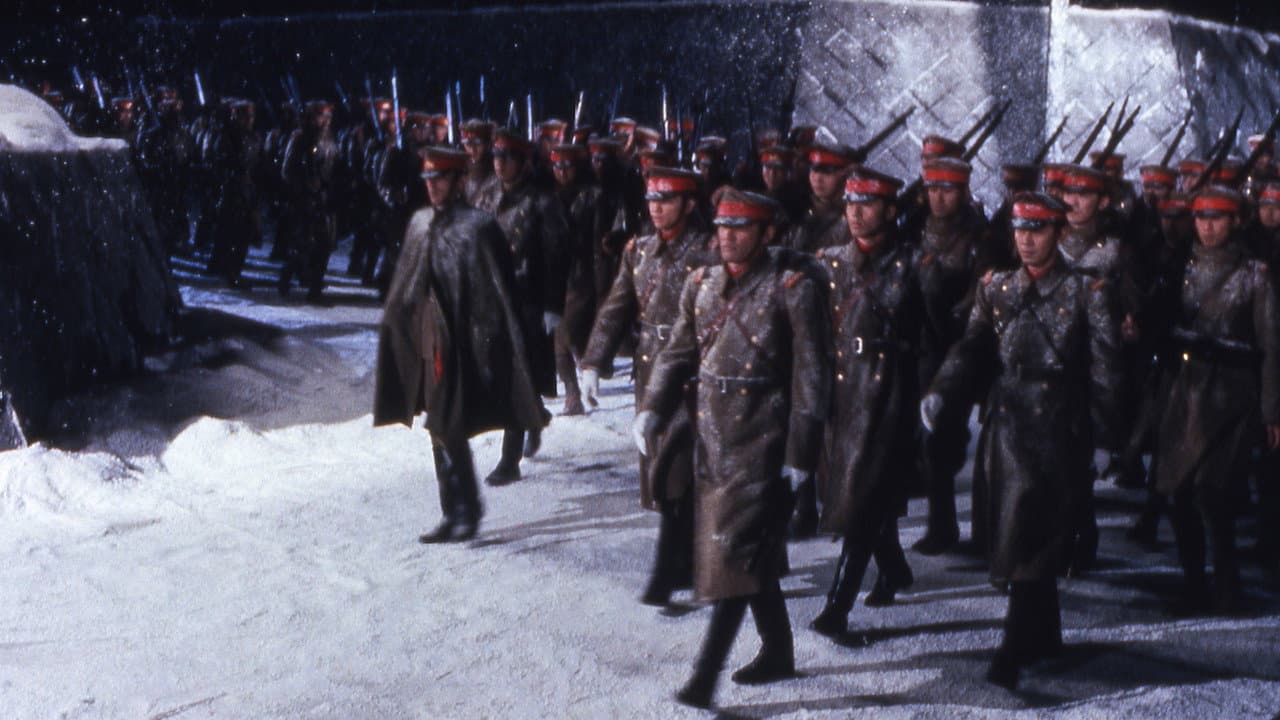
Four Days of Snow and Blood arrived in 1989 as a co-production between Shochiku and Fuji Company, two of Japan's most respected film studios. At 114 minutes, the film commands serious runtime to explore not just the events but the ideological fervor driving the insurgents. The picture earned a respectable 7.273 rating on IMDb, a solid score for a historical drama that doesn't simplify its subject matter for mass consumption. What's striking is how the film treats the 2.26 Incident—not as a footnote in history, but as a pivotal moment where Japan's political trajectory hung in the balance. The production design captures the winter atmosphere suggested by the title, with snow blanketing Tokyo as the coup unfolds, creating a visual metaphor for the cold calculus of power and ideology. Movie OTT tracks where you can access this kind of substantial historical cinema across multiple streaming platforms, making it easier to find serious international drama alongside mainstream releases.
What Makes Four Days of Snow and Blood Stand Out
The film's power lies in how it refuses easy moral clarity. These aren't cartoonish villains—they're officers who genuinely believe they're acting in Japan's national interest, even as their methods become increasingly brutal. The performances anchor the entire narrative, with actors conveying the psychological weight of men caught between loyalty, ideology, and the realization that their rebellion is failing. There's a particular scene where one of the conspirators watches the government's response unfold, and you can see the moment hope drains from his face—it's the kind of quiet, devastating acting that lingers long after the credits roll. What the film does exceptionally well is show how quickly political conviction can calcify into violence, and how institutions respond not with mercy but with overwhelming force. The cinematography uses the snowy Tokyo landscape to create visual isolation—these men are literally and figuratively cut off, trapped in their four-day rebellion. I keep coming back to how the film never judges, exactly, but it doesn't excuse either. It observes. It documents. It lets you draw your own conclusions about whether these men were idealists or fanatics (spoiler: they were probably both).
Where to Stream Four Days of Snow and Blood Online
Four Days of Snow and Blood is currently available across major OTT services, and you'll find the full list of platforms in the "Where to Watch" widget at the top of this page. The film's availability varies by region and subscription service, so checking that widget will show you exactly which streaming platform carries it in your area. If you're a subscriber to any of the major services, there's a good chance you already have access to this film without paying extra. Movie OTT's streaming aggregator makes it simple to see all your options at a glance—no more hunting across five different apps trying to figure out where something's playing.
Frequently asked questions
Q: Is Four Days of Snow and Blood based on a true story?
Yes. The film is based on the 2.26 Incident, an actual attempted coup d'état that took place in Japan on February 26, 1936. Radical ultra-nationalist military officers assassinated several leading politicians and briefly held central Tokyo before the rebellion was suppressed by government forces.
Q: How long is Four Days of Snow and Blood?
The film runs 114 minutes, giving the story ample time to explore both the historical events and the ideological motivations driving the conspirators.
Q: Who produced Four Days of Snow and Blood?
The film was produced by Shochiku-Fuji Company, a major Japanese film studio known for prestige drama and historical cinema.
Q: What genres does Four Days of Snow and Blood fall into?
The film is classified as Drama, War, and History—it's a serious historical drama rather than an action-heavy war picture, though violence is certainly present.
Q: What's the IMDb rating for Four Days of Snow and Blood?
The film holds a 7.273 rating on IMDb, reflecting strong critical appreciation for its thoughtful approach to a complex historical moment.
Final Thoughts on Four Days of Snow and Blood
Four Days of Snow and Blood isn't comfort viewing. It's a film that demands attention and rewards it with genuine insight into how political idealism can spiral into tragedy. If you're interested in Japanese history, military drama, or cinema that treats its audience like adults—that doesn't explain every motivation or wrap things up neatly—this 1989 film deserves your time. The performances, the cinematography, the refusal to sentimentalize—it all adds up to something memorable. Look for it on your preferred streaming service, and don't expect easy answers.