


The story of Sunflower unfolds across time and borders
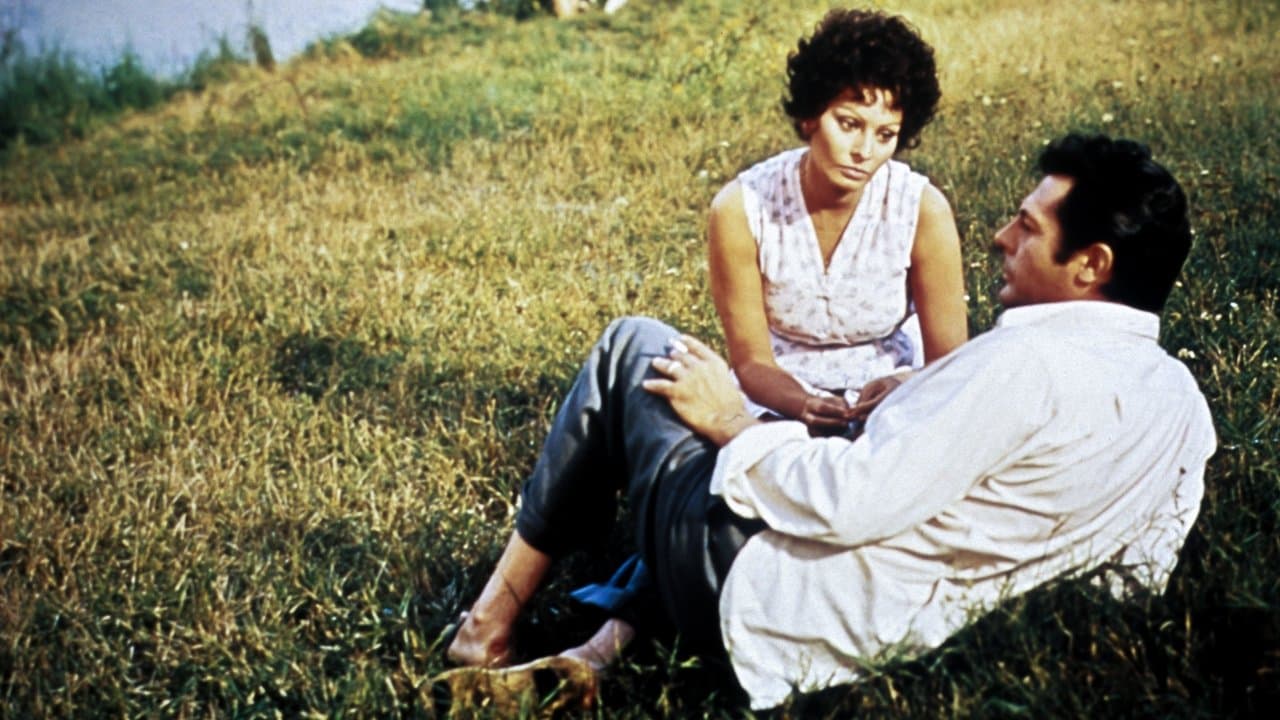
Sunflower tells the story of a woman whose refusal to accept loss becomes the engine of an entire film. After World War II, she won't believe her husband—missing on the Russian front—is truly gone. The narrative doesn't just dwell in her present-day search; it reaches backward into memory, reconstructing the brief, luminous courtship and marriage that defined their bond before the war tore them apart. Years pass. She clutches his photograph like a talisman and makes an impossible journey to Russia, determined to find him or at least discover what became of him. It's a premise that could feel melodramatic in lesser hands, but De Sica grounds it in something more profound: the question of whether love itself can survive the machinery of history.
What unfolds is neither a simple romance nor a straightforward war tragedy. Instead, it's a film that sits in the space between hope and heartbreak, asking whether faith in another person can endure when everything else has been scorched away. The flashbacks aren't just exposition—they're the emotional core, showing us why this woman's search matters at all.
Behind the making of Sunflower: An international production at the peak of De Sica's career
Vittorio De Sica, the legendary Italian neorealist director who'd given the world Bicycle Thieves and Umberto D., brought his formidable reputation to this ambitious 1970 co-production. Sunflower wasn't a small project: it was a sprawling international effort uniting Italy, France, the Soviet Union, and the United States through AVCO Embassy Pictures, Les Films Concordia, Mosfilm, and C. C. Champion. The scale of that collaboration—especially during the Cold War—speaks to the film's intended reach and ambition.
Production itself was a logistical feat. De Sica shot on location in the Soviet Union, with crews working near Moscow and in Poltava, a regional center in Ukraine. That choice to film in situ, rather than recreate Soviet landscapes on a studio lot, gives the film an authenticity that matters. You're not watching actors move through painted backdrops; you're watching them navigate real Soviet streets, real Soviet spaces—which adds a layer of tension and specificity to the woman's search.
The film earned a 7.5 rating on IMDb and ran 109 minutes, substantial enough to develop its emotional terrain without indulgence. At the time of release, it found an audience among critics and cinephiles who recognized De Sica's hand in the way he composed scenes, the restraint he showed in moments that could've been overwrought, and the way he trusted his performers to carry the weight of unspoken longing.
What makes Sunflower stand out: Performance, restraint, and the ache of searching
I keep coming back to how quietly devastating this film is. There's no grand orchestral swell telling you when to feel; instead, De Sica lets silences do the work. The performances—particularly the lead, which carries the entire emotional architecture of the film—operate in a register of controlled desperation. You see it in the eyes, in the set of the shoulders, in the way a woman holds a photograph like it's the only real thing left.
What's striking is that the film doesn't punish its protagonist for her refusal to accept death. That's not a flaw in her character; it's the thing that makes her human. She won't let the war have the final word. She won't accept that bureaucracy and distance and time have erased her husband. That stubborn insistence on meaning, on connection—it's both her strength and her tragedy. The flashback sequences, shot with a kind of golden-hour tenderness, show us exactly what she's holding onto: a love that was real, brief, and now fractured across continents and years.
The film's structure—cutting between past and present, between memory and search—creates a rhythm that mirrors how grief actually works. You don't move forward in a straight line. You circle back. You remember. You reach for what's gone. Hard to say if modern audiences will find that pacing slow, but there's a deliberateness to it that feels earned, not self-indulgent. De Sica knows what he's doing when he holds on a face, when he lets a scene breathe.
Where to stream Sunflower online
Sunflower is currently available on major OTT services, and you can check the Where to Watch widget at the top of this page to see which platforms carry it in your region. Streaming availability shifts, but Movie OTT tracks current listings across Netflix, Prime Video, and other major services, so you'll always know where to find it. If you're hunting for a 1970 war drama that doesn't fit the typical mold—one that's more interested in the interior life than in battle sequences—this is worth seeking out. The good news is it's more accessible now than it's ever been.
Frequently asked questions
Q: Who directed Sunflower?
Vittorio De Sica, the Italian neorealist master behind Bicycle Thieves and Umberto D., directed Sunflower in 1970. It represents one of his later works and showcases his continued interest in intimate human stories set against larger historical upheaval.
Q: Where was Sunflower filmed?
The film was shot on location in the Soviet Union, with scenes filmed near Moscow and in Poltava, Ukraine. That authentic Soviet backdrop was crucial to the story's emotional impact, particularly during the woman's search through unfamiliar terrain.
Q: How long is Sunflower?
The film runs 109 minutes, giving De Sica enough time to develop both the flashback sequences and the present-day search without feeling rushed or indulgent.
Q: Is Sunflower based on a true story?
While the film isn't adapted from a specific historical account, it draws on the very real experience of families separated by World War II and the Soviet front. Thousands of people did search for missing relatives after the war ended.
Q: What's the plot of Sunflower?
After WWII, a woman refuses to believe her husband, missing on the Russian front, is dead. Through flashbacks, we see their courtship and marriage; in the present, she travels to Russia with his photo, determined to find him or discover his fate.
Final thoughts on Sunflower
Sunflower is a film for viewers who don't need explosions or manufactured suspense to feel the weight of history. It's about the private, stubborn act of refusing to forget—of insisting that one person's life, one person's love, matters even when the world has moved on. De Sica made a lot of great films, but this one sits apart: it's a love story dressed as a war drama, or maybe a war drama dressed as a love story. Either way, it's worth your time.